News Summary
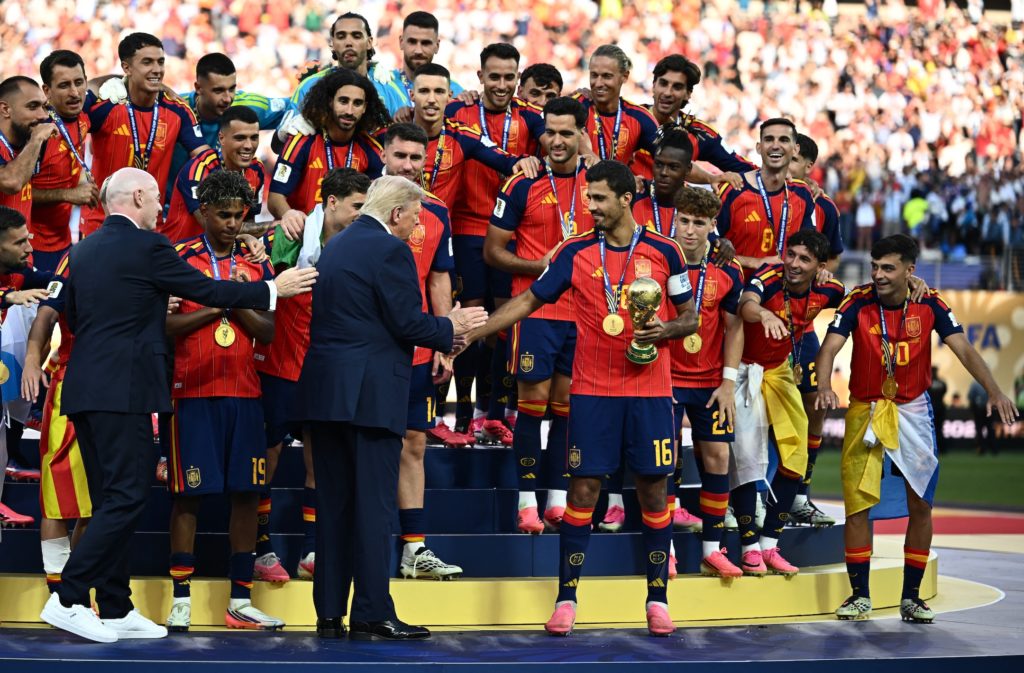
Reported facts: PBS NewsHour states Spain won the 2026 FIFA World Cup, received a celebratory welcome in Madrid, and that the win ended Argentina's recent title run associated with Lionel Messi. The piece reports the tournament contained notable highlights and unspecified controversies and that PBS's Stephanie Sy spoke with author Leander Schaerlaeckens about the event.
Attributed claims: The article characterizes the tournament as having "defied expectations" and refers to controversies without enumerating them; those characterizations are the article's framing rather than independently verified lists of events.
Uncertainty: The report does not detail the controversies referenced, nor does it provide independent corroboration for specifics about incidents, governance issues, or the scale and nature of any misconduct mentioned.
Source and Framing Analysis
The PBS NewsHour piece is a single, reputable media account that emphasizes celebratory imagery (a "hero's welcome") and a narrative of upset and drama. The framing spotlights Spain's triumph and the end of Argentina/Messi's recent dominance while broadly labelling some elements "controversial" without granular reporting in this summary. That leaves readers informed about outcome and tone but lacking specifics needed to judge the severity or type of controversies; the piece functions more as a high-level wrap-up and conversation prompt than an investigative record.
Biblical Reflection
Sport elicits strong loyalties and public celebration; Christians can rejoice in communal joy while testing victory against the virtues of humility, gratitude, and neighbor-love. The article's framing centers on triumph and disruption—Spain's win, the end of Argentina's title run, and a general note of controversies—without deep moral evaluation. From a Christian perspective, we should note both the good in shared celebration and the risk that fame, tribalism, or unexamined controversies can draw us away from truth and charity.
Biblical wisdom calls believers to celebrate others' successes with humility and to mourn abuses of power or unfairness wherever they appear. The report's emphasis on spectacle and the phrase "defied expectations" reflect a narrative of surprise and drama; Christians are invited to step back, ask what is actually at stake for vulnerable people, and hold sporting institutions accountable where justice or safety is implicated. At the same time, we can use public moments of joy to practice thanksgiving and hospitality, remembering that our identity is first shaped by Christ rather than by national or sporting victory.
Practically, Christians should avoid reducing sport to mere tribal identity or celebrity worship. Instead, use these moments to cultivate gratitude for shared human gifts, to critique systems that harm players or communities, and to model graciousness in victory and defeat. Where controversies point to wrongdoing (safety, corruption, exploitation), pursue truth and justice with the same courage and mercy that Scripture urges in other spheres of public life.
Scripture in context
- 1Philippians 2:1-11 — Paul's letter to the Philippians is a pastoral exhortation to a church experiencing internal tensions; in chapters 2 Paul calls believers to humility, unity, and to consider others' interests above their own, presenting Christ's humility and service as the supreme example. — In a sporting culture that often elevates stars and national pride, this passage invites Christians to model humility in victory and to prioritize the well-being of teammates, opponents, and communities over personal or national glory.
Faithful Response
Celebrate with gratitude: mark communal joy without allowing a sports victory to displace primary allegiances to Christ and neighbor.
Practice humility and sportsmanship: model gracious speech and behavior toward both winners and losers.
Seek truth and accountability: if controversies imply harm or injustice, ask for clear information, support just investigation, and advocate for the vulnerable (players, staff, or host communities).
Offer pastoral care: churches can provide spaces to process both elation and concern, especially for those affected by the tournament's negative impacts.
Reflection and Discussion
- 1Does our delight in a national sporting victory lead us toward gratitude and humility, or toward idolizing players, teams, or national prestige?
- 2What kinds of evidence does the report provide about the tournament's 'controversies,' and what further information would we need before making moral judgments?
- 3How should Christians weigh public celebration against calling for accountability when institutions connected to sport appear to have failed in fairness, safety, or integrity?
Sources
Reporting links are evidence inputs; Sanctuary News' biblical reflection is commentary.
This outlook currently relies on fewer than two linked sources. Broaden verification before teaching from it.
- 1.The highlights and controversies of the 2026 World Cupprimary_reporting