News Summary
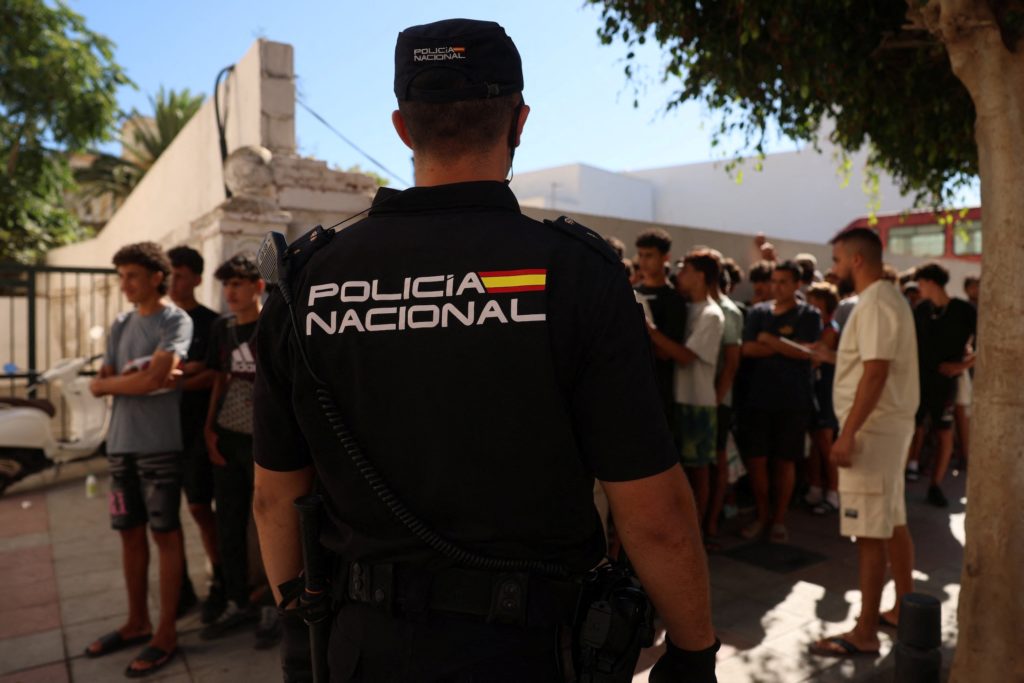
Spain's government under Prime Minister Pedro Sánchez has advanced a plan intended to grant legal status to some undocumented immigrants. In a separate, contemporaneous development, PBS NewsHour reported that 'tens of thousands' of migrants attempted to cross into the Spanish enclave of Ceuta from Morocco; that mass arrival has intensified public and political attention on Spain's immigration policy. The supplied reporting links the legalization plan and the Ceuta incident as related pressures on Spanish policymakers but does not supply the plan's text, eligibility rules, timeline, or detailed evidence about scale and impacts.
Source and Framing Analysis
The primary supplied source is a PBS NewsHour report. It neutrally names the chief political actor (Prime Minister Pedro Sánchez) and describes a governmental initiative to regularize undocumented migrants while drawing attention to a dramatic migrant crossing into Ceuta. The piece frames Spain as a focal point in a broader migration debate and connects the policy effort to a high-profile border incident, which elevates perceived urgency. Limitations and framing cautions: the report does not publish the policy text or implementation details (who qualifies, how quickly, projected numbers, enforcement changes or costs); it gives no direct quotes from migrants, affected communities, civil-society groups, Spanish or Moroccan officials, or EU institutions; and the reported scale of the Ceuta crossing ('tens of thousands') is stated without documentary sourcing in the supplied excerpt. Readers should treat the linkage between the legalization plan and the Ceuta crossing as contextual rather than as evidence that one caused the other. The reporting is factual in tone but incomplete for policy evaluation; additional primary documents and on-the-ground reporting are needed to verify specifics and impacts.
How sources covered this story
Sanctuary separately assesses reporting quality and alignment with Christian virtues. The virtues assessment considers truthfulness, dignity, compassion, justice, peacemaking, humility, and care for vulnerable people. It does not assess a publisher's faith or reward religious language.
Compare 1 reports
Reporting 75/100Virtues 78/100
- Distinctive contribution
- Names Prime Minister Pedro Sánchez and characterizes the policy as aimed at regularizing undocumented immigrants; highlights a recent, large attempted crossing into Ceuta that is influencing debate and scrutiny of the policy.
- Framing
- Frames Spain as central to the global immigration debate and presents the legal-status plan and the Ceuta crossing as interconnected developments that put Spain's immigration policy 'under the microscope.' Tone is neutral and descriptive.
- Omissions or uncertainty
- Does not provide specifics about the plan (eligibility criteria, timeline, number of people who would benefit, legal mechanisms), lacks sourcing or dates for the Ceuta crossing, gives no detailed figures or attribution for 'tens of thousands,' and offers no perspectives from migrants, Spanish or Moroccan officials, or EU actors. The excerpt leaves causes and consequences unexplained.
- Why these scores
- The excerpt is concise and factual, naming the key actor (Pedro Sánchez) and connecting policy to a salient event. It responsibly raises the issue without sensational language. However, it is brief and lacks specific data, sourcing, direct quotes, and policy details that would strengthen verification and depth; therefore it is solid but limited. The supplied text is neutral and non-dehumanizing, avoids sensationalism, and highlights scrutiny of policy—elements consistent with truthfulness, humility, and justice-sensitive reporting. It does not explicitly center migrant dignity or include compassionate voices, so it does not score higher for actively foregrounding human dignity or care for vulnerable people.
Biblical Reflection
A Christian outlook toward Spain's plan to legalize undocumented migrants should hold together mercy, justice, and the common good. Scripture calls the church to welcome and care for strangers and to protect the vulnerable, while also urging wise stewardship of public resources and concern for social stability. Christians can therefore: advocate humane and dignified treatment for migrants, insist on fair and transparent legal processes, and press leaders for policies that are administrable and sustainable. This posture rejects both dehumanizing rhetoric and simplistic policy slogans, pursuing truth with humility, mercy without sentimentality, and justice that seeks long-term peace and flourishing for all affected communities.
Scripture in context
- 1Luke 10:25–37 (Good Samaritan) — A parable in which a Samaritan shows mercy to a wounded stranger while religious authorities pass by, emphasizing active compassion that crosses ethnic and social boundaries. — This story calls Christians to active compassion across social and ethnic divides and invites reflection on who counts as 'neighbor' — a lens for pastoral and civic responses to migrants.
- 2Matthew 25:31–46 (Care for 'the least') — Jesus links final judgment to how people treated those in need—feeding, clothing, visiting the vulnerable—framing care for the hungry, strangers, and imprisoned as central to faithful life. — These verses press Christian communities to evaluate responses to migrants not only as policy preferences but as moral responsibilities toward those who are vulnerable.
Faithful Response
Pray for migrants, border communities (including Ceuta), and leaders making policy decisions; pray for wisdom, protection, and humane treatment.
Inform yourself and your community: seek the actual policy text, government briefings, and independent reporting before forming firm policy positions.
Support reputable local and national organizations that provide humanitarian aid, legal assistance, and trauma-informed care to migrants and asylum-seekers.
Engage civic processes constructively: write respectfully to elected officials, participate in public forums, and encourage policies that aim for fairness, clarity, and social stability.
Minister practically: congregations can offer short-term assistance (food, clothing, language access referrals) and partner with services that provide legal counseling and integration support.
Reflection and Discussion
- 1How does Scripture’s call to care for strangers shape my view of national immigration policy and enforcement?
- 2In what ways might fear, political identity, or media framing be coloring how I interpret reports about migrants and border incidents like Ceuta?
- 3Whose voices are missing from the public conversation about Spain’s legalization plan (for example, migrants themselves, local communities in Ceuta, NGOs), and how can I seek their testimony?
Sources
Reporting links are evidence inputs; Sanctuary News' biblical reflection is commentary.
This outlook currently relies on fewer than two linked sources. Broaden verification before teaching from it.
- 1.A look at Spain's plan to give undocumented migrants legal statusprimary_reporting