News Summary
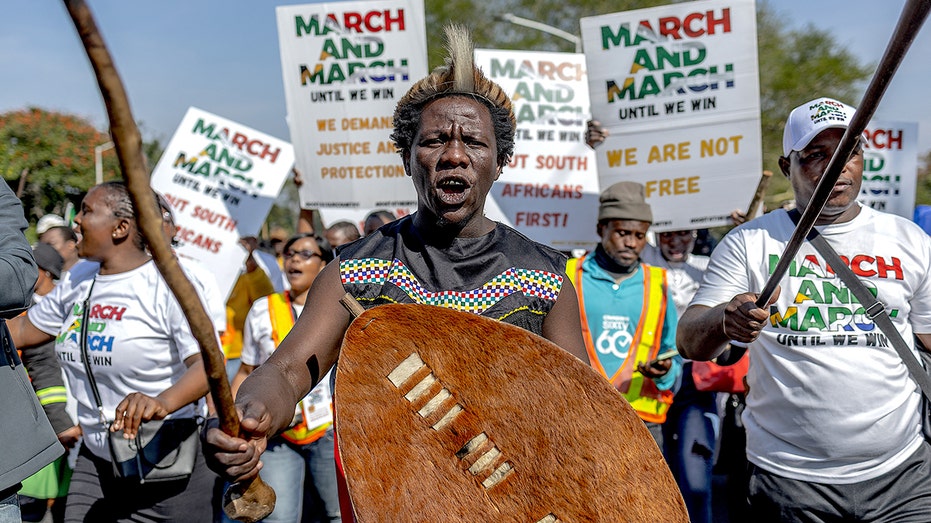
Reported facts: The article reports that over 160,000 immigrants fled South Africa and that a group named the "March and March" movement has been going house-to-house demanding foreigners leave; it also reports a 32.7% unemployment rate. Attributed claims and framing: The piece presents these events as part of a wider anti-immigrant backlash and links them to broader political trends in the West. Uncertainty: The supplied piece does not show independent sourcing for the number of people who fled, details about the movement's actions, the timeframe, or the origin of the unemployment figure; these elements are not corroborated within the supplied material.
Source and Framing Analysis
Material uncertainties include the lack of cited primary sources or independent corroboration for the displacement figure, the precise nature and leadership of the "March and March" movement, and the timeline of events. The headline's comparison to political battles in the West is interpretive framing rather than a documented causal claim and should be read as analysis rather than established fact.
Biblical Reflection
This report, as supplied, describes mass displacement and targeted anti-foreigner action in South Africa. Christians should attend first to the human reality: thousands of vulnerable people reportedly uprooted, and neighbors—whether citizens or newcomers—under threat and fear. The biblical witness repeatedly calls for the protection and fair treatment of the stranger and for justice when the vulnerable are harmed. That moral emphasis shapes how we read such reports: human dignity and safety are primary concerns.
At the same time, Christians must weigh the epistemic limits of the report. With important numbers and actions reported without visible sourcing, we should resist rushing to definitive judgments about causation or scale. The headline's analogy to Western political battles invites reflection on how narratives of scarcity and national identity are used politically; Christians should be cautious about accepting framing that simplifies complex social and economic causes into single actors or slogans.
Pastorally, our response should combine truth-seeking with mercy: seek reliable information, hold authorities and groups accountable for violence or forced displacement, advocate for the protection of the vulnerable, and pray and work for reconciliation and fair policy that addresses unemployment and social strain without scapegoating migrants. Love of neighbor requires both compassion for displaced people and honest engagement with structural causes.
Scripture in context
- 1Luke 10:25-37 (Good Samaritan) — In Luke's Gospel, Jesus tells the parable of the Good Samaritan in response to a question about who qualifies as 'neighbor.' The story critiques religious leaders who avoid the wounded stranger and commends a socially marginal figure who shows mercy across ethnic and social boundaries. — The passage challenges communities to see care for the wounded and displaced as not merely optional charity but central neighbor-love that crosses social and ethnic divides; it cautions Christians against using identity or fear to excuse neglect or harm toward vulnerable foreigners.
Faithful Response
Pray regularly for the displaced people, local communities, and leaders charged with public order and protection.
Seek reliable information before forming conclusions; prioritize sources with direct evidence (official counts, NGOs on the ground, multiple independent reports).
Support trusted humanitarian organizations providing shelter, food, legal aid, and trauma care to displaced migrants and host communities.
Advocate for policies that address structural causes—such as unemployment—while protecting migrants from violence and unlawful expulsion.
Model respectful language and resist xenophobic or dehumanizing rhetoric in personal and public conversation.
Reflection and Discussion
- 1How does a scarcity mindset—fear about jobs or resources—shape public responses to migrants, and how should that shape our moral evaluation of those responses?
- 2What evidence would we require before we accept claims that a particular movement caused mass displacement, and how does the absence of that evidence affect our moral or political conclusions?
- 3In what ways can Christians affirm both the need for lawful, just immigration policy and the equal dignity and protection owed to migrants and refugees?
Sources
Reporting links are evidence inputs; Sanctuary News' biblical reflection is commentary.
This outlook currently relies on fewer than two linked sources. Broaden verification before teaching from it.
- 1.South Africa’s illegal migration backlash mirrors political battles across the Westprimary_reporting