News Summary
Source and Framing Analysis
Free every morning
Get the Daily Briefing
The stories shaping today—sourced carefully and considered through Scripture. No outrage bait.
Confirm by email. Unsubscribe at any time.
How sources covered this story
Sanctuary separately assesses reporting quality and alignment with Christian virtues. The virtues assessment considers truthfulness, dignity, compassion, justice, peacemaking, humility, and care for vulnerable people. It does not assess a publisher's faith or reward religious language.
Compare 3 reports
- Distinctive contribution
- Specifically notes that the Minneapolis police department warned the public to stay away from the convention center area, adding public-safety guidance beyond the casualty report.
- Framing
- Public-safety oriented; emphasizes official warning and the need for the public to avoid the area.
- Omissions or uncertainty
- No casualty totals, injury severity, suspect information, timeline, or named sources are included in the supplied excerpt.
- Why these scores
- Provides useful contextual detail (official warning) and confirms core facts; clear and cautious in tone. Like other brief reports, it lacks fuller attribution, exact counts, and follow-up details, but responsibly communicates immediate public-safety information. Highlights public-protective guidance from authorities, which aligns with care for vulnerable people and community safety; maintains neutral, non-sensational language and preserves human dignity in the brief excerpt.
- Distinctive contribution
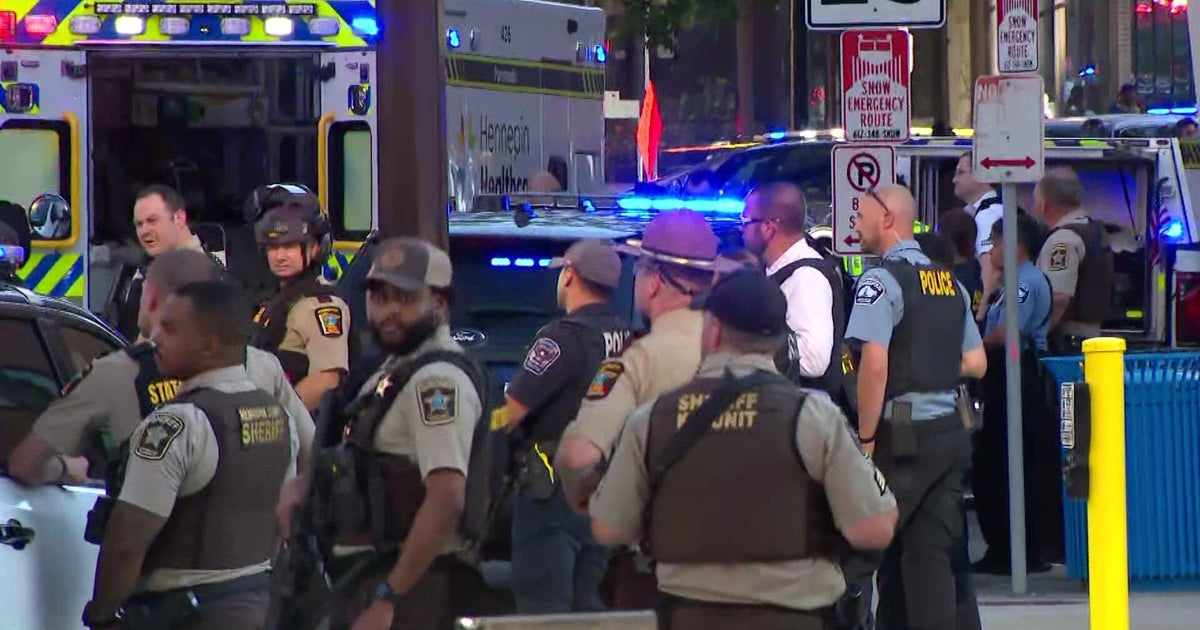
- Mentions the scale of police response ('dozens of police squads') and situates the incident specifically near the Minneapolis Convention Center with a time frame ('late Wednesday afternoon').
- Framing
- Straightforward, descriptive incident report focused on the immediate scene and who was injured.
- Omissions or uncertainty
- Does not provide total casualty counts, severity of injuries, information about suspects or motive, timeline of events, hospital destinations, or official quotes beyond the scene description.
- Why these scores
- Concise and specific for a breaking-incident notice: gives location and scale of response, attributes the scene observation implicitly to police presence. Lacks broader context and detailed sourcing (no named officials or exact casualty numbers), but accomplishes the purpose of an on-the-scene alert responsibly. Neutral, factual reporting that avoids sensational language and centers on public safety; provides information that could help the public avoid harm. Does not dehumanize victims; limited by brevity from offering compassionate detail or resources.
- Distinctive contribution
- Supplies a concise restatement that officers are among the multiple victims; no additional factual detail is present in the supplied excerpt.
- Framing
- Brief, incident-focused summary emphasizing that police were among the injured.
- Omissions or uncertainty
- No specifics on location beyond 'downtown', no timing, counts, injury severity, suspect status, official statements, or public-safety advisories in the excerpt.
- Why these scores
- Adequate as an immediate brief confirming the event, but less specific than other supplied snippets and lacking contextual or source detail. Responsible language but minimal depth. Neutral, factual language that does not sensationalize or dehumanize; provides basic information that may help public awareness. Score limited by brevity and absence of explicit concern for victims or community guidance in the excerpt.
Biblical Reflection
Scripture in context
This outlook does not yet include contextual Scripture citations. Do not treat a general biblical theme as an exegetical conclusion.
Faithful Response
Free every morning
Get the Daily Briefing
The stories shaping today—sourced carefully and considered through Scripture. No outrage bait.
Confirm by email. Unsubscribe at any time.
Reflection and Discussion
- 1Where in early coverage of this incident do we see limits or gaps in verified information, and how should that shape our responses as individuals and congregations?
- 2How can our congregation offer practical, sustained care to victims and first responders without turning this event into partisan talking points?
- 3What pastoral practices (presence, short prayer vigils, trauma-informed listening) does our community need to prepare in the aftermath of nearby violence?
- 4How will you personally guard against spreading unverified details while staying informed enough to help neighbors who may be frightened?
Sources
Reporting links are evidence inputs; Sanctuary News' biblical reflection is commentary.
- 1.Several victims, including two police officers, injured at shooting in downtown Minneapolisadditional_reporting
- 2.Police officers among 'multiple victims' shot in downtown Minneapolisadditional_reporting
- 3.Police respond to downtown Minneapolis shooting that injured 2 officers, othersprimary_reporting