News Summary
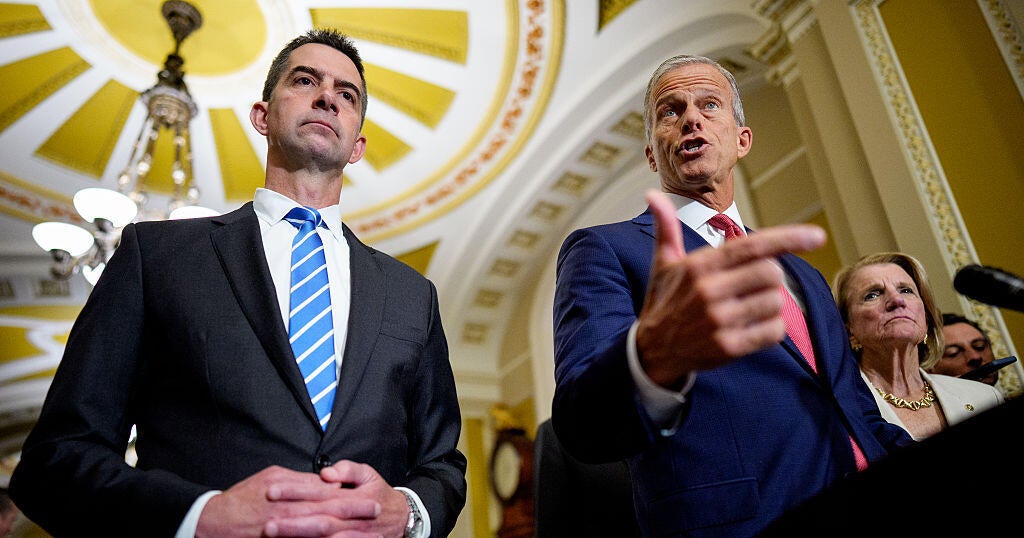
Senate Republicans on the Senate Intelligence Committee planned to hold a confirmation hearing for Jay Clayton as President Trump's nominee for Director of National Intelligence (DNI) on Wednesday. President Trump posted on Truth Social saying he was canceling the hearing and linking his cooperation on reauthorizing Section 702 of the Foreign Intelligence Surveillance Act to Senate action on other nominations and an elections bill; he also referenced the replacement of the U.S. Attorney for the Southern District of New York. Despite Trump's post, Sen. Tom Cotton, chairman of the Intelligence Committee, and Senate Majority Leader John Thune said the committee would proceed with Clayton's hearing as scheduled unless the president directs Clayton not to appear or withdraws the nomination. Clayton was announced as the president's pick after controversy over Bill Pulte serving as acting DNI prompted Democrats to refuse extension of Section 702 while Pulte was in line to assume the role. Section 702 authority expired late last week after Clayton's nomination came too late for Congress to act before that expiration. Clayton is described in reporting as a well‑regarded attorney with prior service as SEC chair and current leadership of the U.S. Attorney's Office in Manhattan. The committee had expected to vote on his nomination soon, but the president's public intervention introduced uncertainty into the confirmation timeline.
Biblical Reflection
This article describes a political standoff where personnel, national security law, and legislative leverage intersect. The immediate facts are straightforward, but the situation shows how partisan tactics can affect institutions entrusted with public safety. From a Christian perspective, using national security authorities and nominations as bargaining chips risks placing political advantage above stewardship of the common good and truthfulness in public discourse. The reporting is mostly descriptive; it doesn't evaluate the legality of the president's public statement or the merits of the bargaining positions, so readers should be cautious about inferring certainty from a single report. Christians should be attentive to whether leaders act with humility, transparency, and a commitment to protecting the vulnerable (including the nation’s security and the integrity of its institutions), and should resist narratives that normalize treating civic goods as partisan spoils.
Scripture in context
This outlook does not yet include contextual Scripture citations. Do not treat a general biblical theme as an exegetical conclusion.
Faithful Response
No prescribed response is offered. Consider the reflection prompts below in your own church context.
Reflection and Discussion
- 1What does it say about our priorities when authorization for intelligence collection and leadership of national security institutions become tools in political bargaining?
- 2How can Christians distinguish between legitimate political negotiation and actions that put public safety or institutional integrity at risk?
- 3When leaders make public claims on social platforms that contradict institutional processes, how should we weigh those claims while seeking the truth?
Sources
Reporting links are evidence inputs; Sanctuary News' biblical reflection is commentary.
This outlook currently relies on fewer than two linked sources. Broaden verification before teaching from it.
- 1.Original reportprimary