News Summary
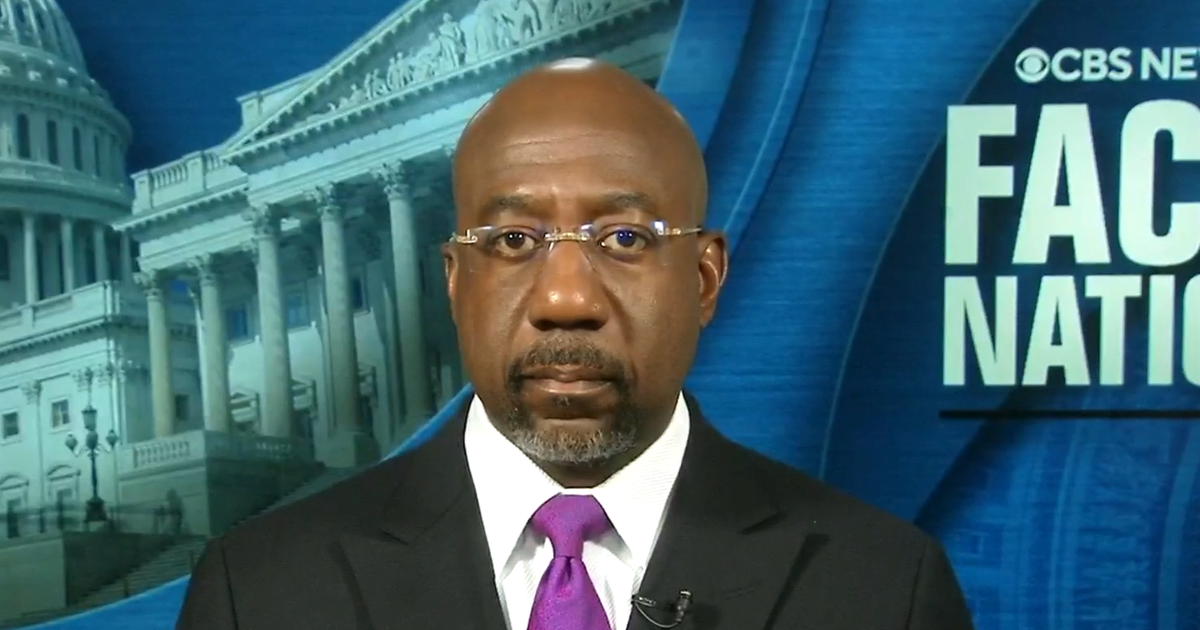
The transcript records a May 3, 2026 Face the Nation interview with Senator Raphael Warnock following a 6–3 U.S. Supreme Court decision that struck down a 2022 Louisiana congressional map creating a second majority-Black district. The three liberal justices dissented, arguing the ruling undermines aspects of the Voting Rights Act; the majority said it updated legal standards. Brennan summarizes that the decision narrows the application of Section 2 of the Voting Rights Act by making it harder to bring racial gerrymandering claims without proof of discriminatory intent. Warnock called the decision a severe blow to democracy and to people of color, referenced the 2013 Shelby v. Holder decision that limited Section 5 preclearance, and argued racial turnout gaps and discriminatory practices (poll moves, closures, longer lines, purges) have worsened since. He said Congress should reinstitute preclearance protections or otherwise update the law and urged passage of his bill to ban partisan gerrymandering; he said Democrats support necessary redistricting in response to Republican actions and defended the importance of descriptive representation. Brennan noted a record-high number of Black members in Congress (66 in 2025). Warnock and Brennan also referenced governors in several Southern states indicating interest in redrawing maps after the ruling.
Biblical Reflection
Warnock frames the Court's decision as both a legal shift and a moral crisis for racial equality and democratic participation. His claims mix legal interpretation, historical context (Shelby v. Holder), and empirical assertions about turnout and administrative practices that disproportionately affect Black and Brown voters. As with any political interview, the speaker’s role as an advocate shapes emphasis and language: Warnock highlights harms and calls for legislative remedies; the interviewer presses on inconsistencies and political tradeoffs. From a Christian/scriptural standpoint, two truthful convictions matter here: first, the Bible calls God’s people to pursue justice and protect those vulnerable to exclusion (so concern for fair access to voting aligns with biblical justice). Second, Christians are called to seek truth—so policy claims about causation (turnout trends, effects of legal changes) should be checked against evidence rather than accepted solely on partisan assertion. The underlying worldview in this piece emphasizes justice, representation, and the public good; opponents will emphasize legal standards, state autonomy, and procedural guardrails. Christians should therefore (a) sympathize with the biblical imperative to defend the marginalized and preserve equal civic voice, (b) insist on honest assessment of facts and motives rather than rhetorical extremes, and (c) engage civic remedies that promote fairness—whether legislative fixes, nonpartisan redistricting, or clearer judicial standards—while avoiding partisan tribalism that contradicts the Gospel’s call to love neighbor and seek common good.
Scripture in context
This outlook does not yet include contextual Scripture citations. Do not treat a general biblical theme as an exegetical conclusion.
Faithful Response
No prescribed response is offered. Consider the reflection prompts below in your own church context.
Reflection and Discussion
- 1What factual claims in the interview (turnout trends, effects of Shelby v. Holder, prevalence of administrative barriers) should be independently verified before forming a firm judgment?
- 2Are appeals to moral language (e.g., "devastating blow to democracy") clarifying the issue toward justice or amplifying partisan division—how should Christians weigh prophetic urgency against careful discernment?
- 3Which remedies (restoring preclearance, banning partisan gerrymandering, independent commissions) most faithfully pursue equitable representation while preserving lawful process and civic unity?
Sources
Reporting links are evidence inputs; Sanctuary News' biblical reflection is commentary.
This outlook currently relies on fewer than two linked sources. Broaden verification before teaching from it.
- 1.Original reportprimary