News Summary
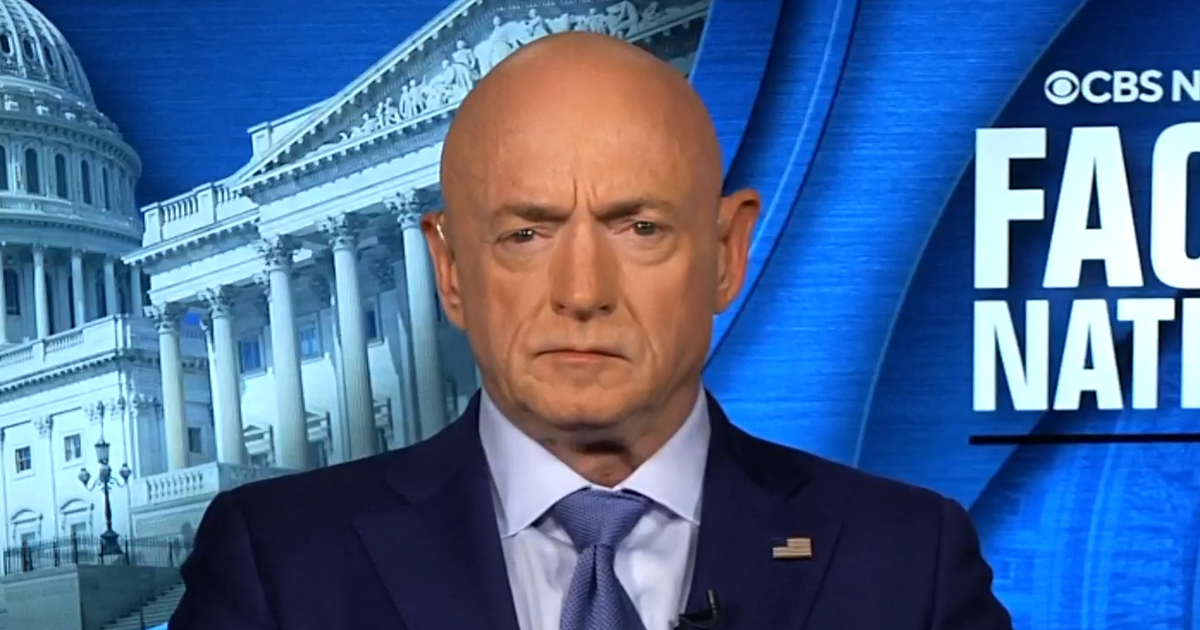
This is a transcript of a June 14, 2026 CBS 'Face the Nation' interview with Senator Mark Kelly. Key factual points: Kelly responded to the president's social-media reaction to an Israeli attack in Beirut, saying he agreed that sides should stand down and noting ongoing negotiations with Iran. He criticized the 2018 U.S. withdrawal from the JCPOA and said that the resulting Iran conflict has driven up energy and food costs for Americans. On munitions, Kelly cited testimony from Secretary Hegseth that rebuilding depleted stockpiles will take years and affirmed that large-scale strikes consume significant munitions, affecting U.S. posture and Ukraine assistance. He supports continued help to Ukraine, including co-manufacturing and drone support, and said he is unsure why a U.S.-Ukraine drone deal is delayed. On intelligence law, Kelly explained he voted against a bipartisan short- or long-term extension of FISA Section 702 until concerns about Bill Pulte's potential role in the Office of the Director of National Intelligence are resolved, saying presidential clarification that Pulte would have no role would open a clear path to renewal. He said he is still vetting Jay Clayton's nomination to be DNI. Regarding artificial intelligence, Kelly expressed concern about advanced models' capabilities and foreign access, endorsed careful government evaluation, and cited Anthropic as an example of a company willing to cooperate with regulators.
Biblical Reflection
Kelly's comments blend policy concerns (munitions, ally support, intelligence authorities, AI risk) with partisan critique of prior administrations. Many of his factual claims—such as munitions depletion following large air campaigns and the security risks of advanced AI—align with public testimony and reported government worries, and his insistence on vetting nominees and protecting sensitive authorities reflects legitimate stewardship of national security. At the same time, some language is political framing (assigning motive or blame in broad strokes) rather than neutral analysis. From a Christian pastoral lens, the interview raises tensions Christians should recognize: the call to protect the innocent and maintain national security (stewardship and neighbor-love) while exercising humility, truthfulness, and restraint in force and rhetoric. The piece invites scrutiny of how political loyalty, media framing, and short-term interests shape security decisions. Practically, Christians should prize careful truth-telling, advocate for protecting civilians and allies, and press for accountability and competence in appointments without descending into partisan demonization.
Scripture in context
This outlook does not yet include contextual Scripture citations. Do not treat a general biblical theme as an exegetical conclusion.
Faithful Response
No prescribed response is offered. Consider the reflection prompts below in your own church context.
Reflection and Discussion
- 1How does partisan framing in political interviews shape our perception of complex security issues, and what steps can we take to separate rhetoric from verifiable fact?
- 2When national security, civil liberties, and technological risk collide, how do we weigh stewardship of safety against the need for transparency and accountability?
- 3What indicators should Christians look for to determine whether leadership choices prioritize competence, justice, and care for neighbors rather than partisan advantage?
Sources
Reporting links are evidence inputs; Sanctuary News' biblical reflection is commentary.
This outlook currently relies on fewer than two linked sources. Broaden verification before teaching from it.
- 1.Original reportprimary