News Summary
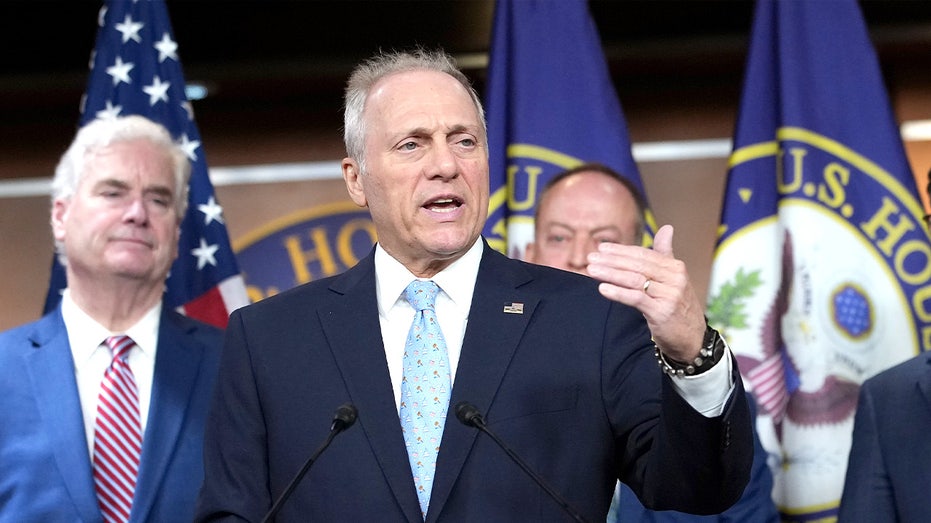
Reported fact: Fox News reports Rep. Steve Scalise compared Olive Garden's reported photo ID requirement for its unlimited pasta pass to the absence of a federal voter ID law. Attributed claims: Scalise's comment implies Democrats oppose voter ID measures and that a federal law is lacking. Uncertainty: The article does not provide independent confirmation of Olive Garden's policy, does not cite data on voter fraud or the effects of voter ID laws, and does not document Democratic positions or legislative context.
Source and Framing Analysis
The story is short and centered on a quoted political remark; it functions more as a report of rhetorical comparison than investigative policymaking analysis. Material uncertainties that affect the reader's understanding include whether Olive Garden actually enforces such an ID requirement, the factual legal landscape on voter ID (state-by-state variation versus any federal standard), and empirical evidence about voting irregularities and access impacts. The framing emphasizes a simple analogy without engaging those complexities.
Biblical Reflection
This item is primarily political rhetoric using a familiar consumer example to make a point about public policy. The analogy—private businesses checking ID for a paid service versus laws governing the franchise of voting—can be persuasive as a rhetorical device but is also a weak comparison in important respects: voting is a civil right regulated by constitutional and statutory law, while a restaurant's requirements for a promotional product are private-commercial decisions. The article reports Scalise's statement but offers no supporting evidence for broader claims about party positions or the practical effects of federal voter ID legislation.
From a Christian pastoral perspective, we are called to weigh speech by its honesty, charity, and service to the common good. Political persuasion that simplifies complex legal and moral differences into catchy analogies risks obscuring the realities that affect vulnerable neighbors—such as how different ID rules interact with access, transportation, and documentation barriers. A faithful response is to seek facts calmly, resist the reflex to adopt partisan soundbites, and advocate for policies that balance integrity with equitable access to the ballot.
Scripture in context
- 1Ephesians 4:15 — In its letter to the Ephesians, the author urges the church to grow toward maturity by speaking the truth while maintaining love and unity, correcting falsehoods and building up the community without tearing it down. — Public speech and political persuasion should aim to be both truthful and loving: that means testing claims, avoiding coarse or misleading comparisons that harm others, and seeking outcomes that protect both civic integrity and neighborly access.
Faithful Response
Verify claims before repeating: check the specific policy (e.g., Olive Garden's program rules) and authoritative information about voter ID laws in the relevant jurisdictions.
Listen to and name the real trade-offs in the voter ID debate—security, accessibility, and trust—and prioritize protections for those most likely to be disenfranchised.
Model civil speech: avoid amplifying analogies that oversimplify, and instead ask clarifying questions about how a proposed law would work in practice.
Reflection and Discussion
- 1How does this rhetorical comparison shape public imagination about voting, and does it make us more or less attentive to real barriers faced by marginalized voters?
- 2When politicians use consumer examples to criticize policy opponents, what important legal and moral differences might we be missing?
- 3How can Christians insist on both honest elections and broad, equitable access to the ballot without defaulting to partisan slogans?
Sources
Reporting links are evidence inputs; Sanctuary News' biblical reflection is commentary.
This outlook currently relies on fewer than two linked sources. Broaden verification before teaching from it.
- 1.WATCH: Scalise serves up Olive Garden reality check for Democrats in voter ID fightprimary_reporting