News Summary
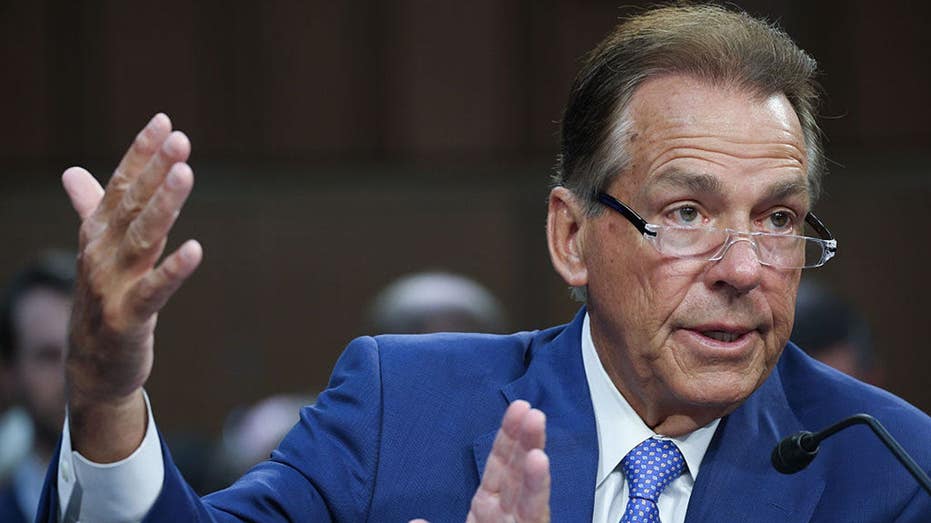
Fox News/Outkick reports that Nick Saban proposed that college football teams should play 12 games against Power Five opponents, eliminating easy non-conference matchups that he says weaken strength of schedule. The piece quotes Saban's position as a solution to perceived scheduling problems; it does not provide independent data, reactions from other coaches, administrators, or analysis of logistical, financial, or NCAA-rule implications.
Source and Framing Analysis
The article is a single-item sports opinion/feature reporting on a coach's view. It frames Saban’s statement as a straightforward 'solution,' without offering counterpoints, data, or voices from smaller programs, conference officials, or athletes. That framing can imply consensus or feasibility that the reporting does not substantiate.
Biblical Reflection
Nick Saban’s suggestion highlights tensions between competition and stewardship in college athletics. Scripture encourages humility, justice, and love of neighbor — virtues that point us to ask who benefits and who bears the cost when competitive structures change. While competitive integrity and stronger schedules can strengthen the legitimacy of rankings and playoffs, Christians should also weigh whether such a policy would marginalize smaller colleges, increase travel demands, deepen commercial pressure on student-athletes, or shift institutional priorities away from academic formation.
The Christian response is to apply prudence and compassionate curiosity: advocate for honest assessment of the proposal’s costs and benefits, especially for vulnerable stakeholders. That includes student-athletes whose health, academics, and finances might be affected, and smaller programs whose existence and community impact may rely on revenue and exposure from easier non-conference scheduling. Pursue truth by seeking diverse sources of evidence — financial analyses, health and academic impact studies, and voices from affected campuses — before endorsing top-down fixes.
Finally, Christians involved in athletics should keep the practices of fair play, humility in victory, and mercy in defeat central. Competitive sports can form character and cultivate community when governed by policies that balance excellence with human flourishing. Encourage administrators and coaches to center the welfare of students and the common good when discussing systemic changes.
Scripture in context
- 1Philippians 2:3-4 — Paul, writing to the church in Philippi, urges believers to reject selfish ambition and conceit and instead to value others above themselves, looking to others’ interests as well as one’s own; the letter addresses unity and humility within a community facing external and internal pressures. — Applied to sports policy discussions, this passage calls leaders and fans to consider how proposals affect all parties — especially the less powerful — and to weigh prestige or advantage against the needs and dignity of student-athletes and smaller institutions.
Faithful Response
Pray for wisdom for coaches, athletic directors, and university leaders as they consider scheduling policies.
When discussing sports policy publicly, emphasize questions of fairness, student-athlete health, and educational mission rather than only rankings or revenue.
Encourage local churches and campus ministries to support student-athletes holistically — academically, spiritually, and physically — regardless of conference affiliation.
Reflection and Discussion
- 1Who benefits most from proposals that concentrate competition among elite programs, and who might be disadvantaged?
- 2How should the church weigh excellence and competition against concerns for justice, access, and the flourishing of smaller communities?
- 3What questions of student-athlete welfare should be non-negotiable when considering structural changes to college sports?
Sources
Reporting links are evidence inputs; Sanctuary News' biblical reflection is commentary.
This outlook currently relies on fewer than two linked sources. Broaden verification before teaching from it.
- 1.Nick Saban has the best solution for fixing the problems with college football schedulingprimary_reporting