News Summary
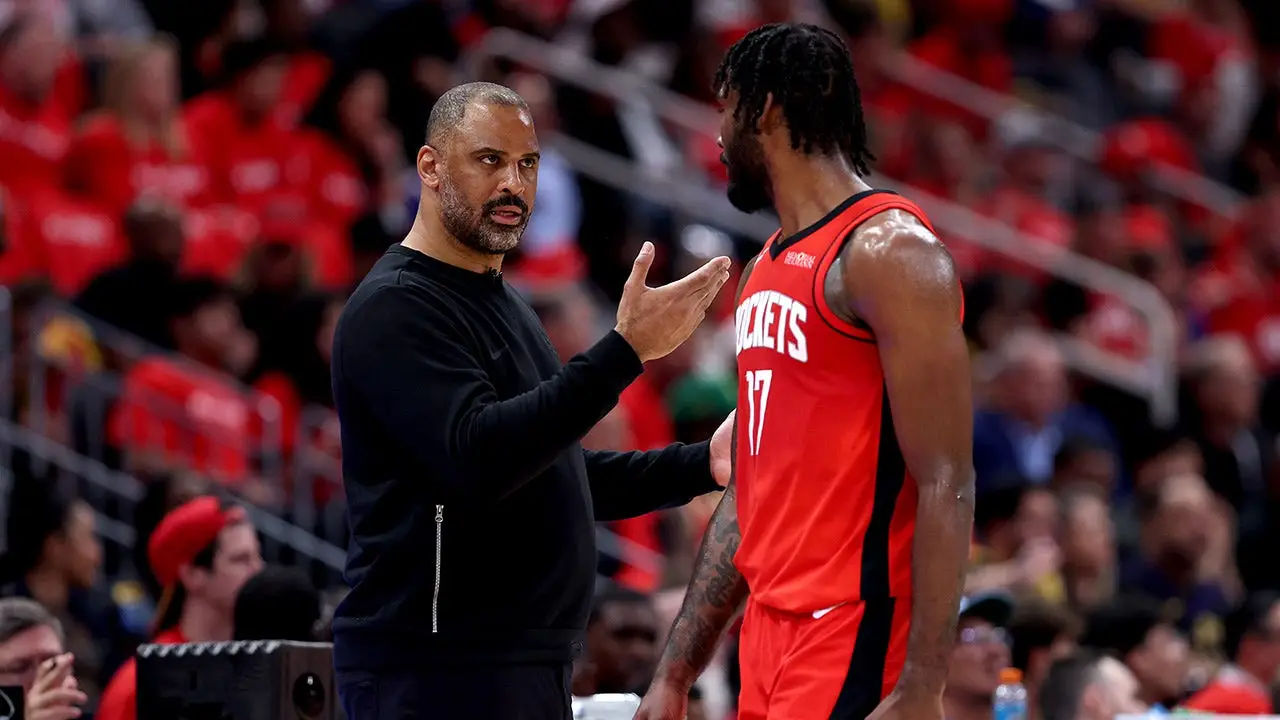
On April 24, 2026, at the Toyota Center in Houston, the Houston Rockets blew a late six-point lead in the final 25 seconds of regulation and lost to the Los Angeles Lakers 112-108 in overtime in Game 3 of their first-round NBA playoff series. With roughly 25 seconds remaining, Marcus Smart was fouled on a three-point attempt and made all three free throws to cut Houston's lead to three. LeBron James then stole the ball from Reed Sheppard and hit a 3-pointer to tie the game at 101 with 13 seconds left. The Lakers outscored the Rockets 11-7 in overtime. LeBron James finished with 29 points, 13 rebounds and six assists, playing over 45 minutes. Kevin Durant did not play for the Rockets in Game 3 due to a sprained ankle after already missing Game 1 with a knee injury. After the loss, Rockets head coach Ime Udoka publicly told his team to 'grow up,' noting the players' playoff experience and the need for greater maturity. The Rockets now trail the series 3-0; no NBA team has overcome a 3-0 deficit to win a playoff series.
Biblical Reflection
The article reports a high-pressure sports moment and highlights a coach's blunt public rebuke. On one level, the coverage is straightforward: it chronicles a late-game collapse, key plays that changed the result, and a coach's emotional reaction. The framing emphasizes failure and the urgency of the situation, which fits sports reporting but can amplify blame and dramatize a human response. From a Christian perspective, this event raises themes of leadership, accountability, and maturity. Udoka's call for the team to 'grow up' is an attempt at corrective leadership amid disappointment; Scripture affirms that discipline and correction, when done rightly, can produce growth (Hebrews 12:11). At the same time, public rebukes can wound if they lack grace (Proverbs 15:1), so Christians should weigh both truth and charity when evaluating such moments. The article's implicit worldview prioritizes immediate results and toughness; a biblical worldview also values humility, patient restoration, and refining character through setbacks. Viewers should resist quick moralizing or vilifying individuals and instead see this as an occasion to consider how accountability, encouragement, and repentance operate together in teams and communities.
Scripture in context
This outlook does not yet include contextual Scripture citations. Do not treat a general biblical theme as an exegetical conclusion.
Faithful Response
No prescribed response is offered. Consider the reflection prompts below in your own church context.
Reflection and Discussion
- 1Does the article's focus on a blunt public rebuke encourage constructive correction, or does it amplify shame and spectacle?
- 2How should leaders balance candid accountability with grace so that discipline leads to growth rather than discouragement?
- 3When we see failure under pressure, do we default to blame or to looking for opportunities for character formation and humble restoration?
Sources
Reporting links are evidence inputs; Sanctuary News' biblical reflection is commentary.
This outlook currently relies on fewer than two linked sources. Broaden verification before teaching from it.
- 1.Original reportprimary