News Summary
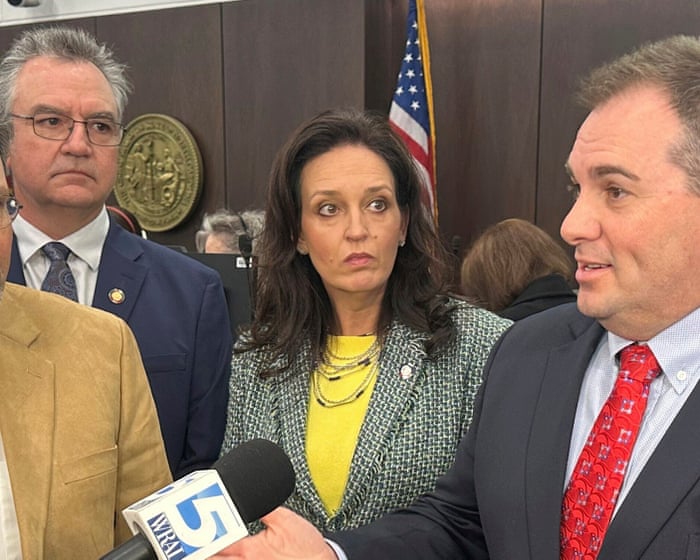
The Guardian reports that North Carolina Republicans selected state lawmaker Jennifer Balkcom on Monday to replace incumbent U.S. Rep. Chuck Edwards on the ballot for the 11th congressional district after Edwards dropped his re-election bid. The article states that a U.S. House investigation concluded Edwards’ conduct toward younger female staffers likely amounted to sexual harassment. Balkcom will face Democratic nominee Jamie Ager in the November 2026 midterm election. The report also situates the race in local political context—noting the district’s prior Republican lean and Democratic hopes that low presidential approval and local frustration over Hurricane Helene recovery could make the contest competitive—but the primary source documents and direct statements are not included in the supplied reporting.
Source and Framing Analysis
Primary source for these items is a single Guardian story supplied for this cluster. The article attributes the characterization of Edwards' conduct to a U.S. House investigation rather than asserting it independently, which is responsible attribution. However, the underlying House report, direct quotes from Edwards, Balkcom, party officials, or the full text of the investigative findings are not supplied in the excerpt. The piece blends straightforward reporting of the nomination and withdrawal with interpretive electoral context (competitiveness tied to presidential approval and Hurricane Helene recovery). That framing is useful background but is analytical rather than documentary; readers should not conflate it with the investigative findings themselves. Additional primary documents (the House investigative report, official withdrawal/nomination statements, and GOP selection procedure notes) and multiple independent reports would strengthen verification.
How sources covered this story
Sanctuary separately assesses reporting quality and alignment with Christian virtues. The virtues assessment considers truthfulness, dignity, compassion, justice, peacemaking, humility, and care for vulnerable people. It does not assess a publisher's faith or reward religious language.
Compare 1 reports
Reporting 78/100Virtues 82/100
- Distinctive contribution
- Names Jennifer Balkcom as the Republican replacement candidate, states that Edwards dropped his re-election bid after a US House investigation concluded his conduct toward young female staffers likely amounted to sexual harassment, and identifies Jamie Ager as the Democratic nominee for North Carolina's 11th district.
- Framing
- Concise, factual news framing that attributes the sexual-harassment characterization to a US House investigation and situates the replacement as a response to that finding; neutral tone without apparent editorializing.
- Omissions or uncertainty
- No details of the House investigation (specific findings, timeline, or evidence) are provided; no quotes from Edwards, Balkcom, party officials, or Ager; no explanation of the GOP selection process for the replacement; minimal biographical information about Balkcom; no polling or district partisan context.
- Why these scores
- The excerpt is clear, concise, and responsibly attributes the harassment assessment to a US House investigation rather than asserting it as undisputed fact. It delivers the key news elements needed for readers, but is limited in depth and lacks direct sourcing, quotes, investigative detail, or contextual background about the candidate selection process or district dynamics. The language is cautious and attributive (reducing risk of unfair accusation), presents facts without sensationalism, and avoids dehumanizing or exploitative framing. The piece lacks explicit expressions of compassion or restorative context for alleged victims, which prevents a higher score, but it responsibly reports the finding and the political consequence.
Biblical Reflection
This episode touches on two public goods Christians care about: truthful accountability and the health of civic life. If the reported investigation is accurate, institutional accountability was activated; at the same time, voters and neighbors rightly need clear information about how representation will affect recovery and everyday wellbeing. Christians should neither weaponize harm for partisan gain nor minimize the experiences of those harmed. Appropriate responses include seeking primary information, supporting fair investigatory processes that protect the vulnerable, offering pastoral care to those affected, and assessing replacement candidates by character and commitment to the common good rather than only partisan identity.
Scripture in context
- 1Matthew 18:15–17 — Jesus gives guidance for addressing wrongdoing within a community: attempt private correction, then bring witnesses, then bring matters before the community when the person refuses to listen, with restoration as the aim. — This passage highlights Christian obligations present here: to take allegations seriously through proper channels that can establish facts and offer opportunity for repentance and restoration, and to protect the community—especially those vulnerable—when private correction is insufficient.
- 2Micah 6:8 — A summons to act justly, love mercy, and walk humbly with God as a guide for public life and relationships. — When public leaders fall short, the community’s response should pursue justice for harmed persons, show mercy where appropriate, and practice humility in judging incomplete or contested reports.
Faithful Response
Listen first to survivors and to primary records; avoid turning allegations into partisan ammunition. Support processes that seek facts while protecting confidentiality and safety. Provide pastoral care and practical support to anyone affected by misconduct. Evaluate Jennifer Balkcom and other candidates on their record, competence, and demonstrated commitment to serving the vulnerable and restoring trust. Pray for truth, restoration for the harmed, fair procedure, and for the polity to reflect mercy and justice.
Reflection and Discussion
- 1How do we hold both to a commitment to truth and to compassionate care for people implicated in public allegations?
- 2When leadership fails, what concrete steps should neighbors and congregations take to protect vulnerable people and to encourage institutional reform?
- 3Are we allowing partisan assumptions to determine whether we believe or dismiss claims of misconduct, and how can Scripture reshape that response?
- 4How should local material concerns (for example, disaster recovery) factor into our evaluation of replacement candidates for public office?
Sources
Reporting links are evidence inputs; Sanctuary News' biblical reflection is commentary.
This outlook currently relies on fewer than two linked sources. Broaden verification before teaching from it.
- 1.Republicans name candidate to replace Chuck Edwards after sexual harassment investigationprimary_reporting