News Summary
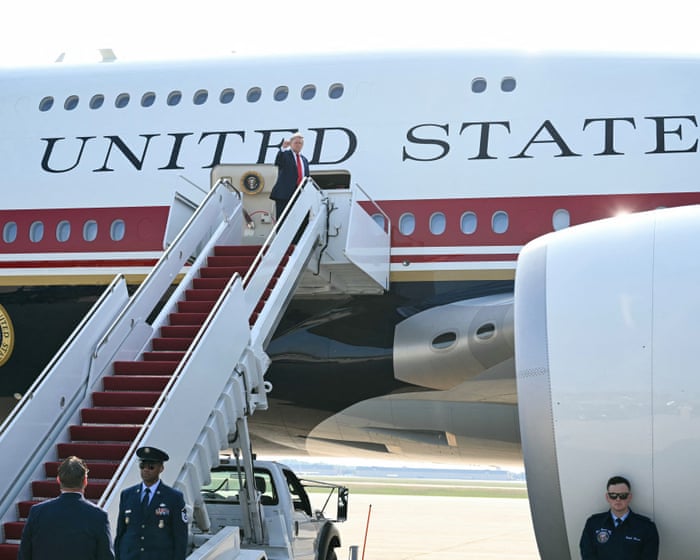
Reported facts: The Guardian reports (citing the New York Times) that President Trump switched aircraft in Turkey after U.S. officials determined there was a credible threat from Iranian proxy forces targeting him and Air Force One. Trump flew to Ankara on a Qatari-donated Boeing 747-8 and returned on the older Air Force One. Attributed claims: The assessment of a "credible threat" and the identification of Iranian proxy forces as the source are attributed to unnamed U.S. officials in the reporting. Uncertainty: The article provides no on-the-record confirmation from the Secret Service, Department of Defense, White House, or other named agencies, and it does not specify the nature, timing, or technical means of the alleged threat.
Source and Framing Analysis
The Guardian article relays reporting attributed to the New York Times; it is secondary reporting rather than an official statement. Material uncertainties include: which specific U.S. agencies/officials made the threat assessment, what intelligence underlies the claim, the precise timeline, and whether any direct attempts were made. The report highlights the difference in defensive capabilities between the two planes, which frames the episode around perceived vulnerability — a point that can heighten reader alarm in the absence of technical or official detail.
Biblical Reflection
News reports of threats against political leaders rightly raise questions about safety, prudence, and transparency. Christians are called to seek truth and to pray for those in authority while also resisting fear, rumor, and partisan exploitation. When a report rests on anonymous official assessments and a single journalistic source, we should treat its factual core carefully: it may accurately reflect classified assessments, but it also leaves important evidentiary gaps.
From a pastoral perspective, the story reminds us of the biblical call to care for neighbors (including leaders), to value life and peace, and to practice wise stewardship of public trust. That means praying for protection, urging responsible transparency where possible, and refusing to use such news merely as political ammunition. We should lament violence and its threats, seek justice for those who foment or enable it, and work toward policies and prayers that aim at de-escalation and the protection of innocent life.
Scripture in context
- 11 Timothy 2:1-2 — In the pastoral epistles Paul instructs Timothy about the life of prayer in the church, urging intercession for kings and all in authority so that Christians may lead peaceful, godly lives. Historically this was practical counsel for minority communities living under pagan rulers. — This passage supports the practice of praying for public leaders, including for their safety, wisdom, and for societal peace; it frames political concern as a matter for prayer rather than partisan celebration or resentment.
- 2Matthew 5:9 — Part of Jesus’ Sermon on the Mount, this beatitude commends peacemakers as blessed and identifies them as children of God, within a larger call to righteousness that subverts revenge and retaliation. — When news highlights threats and the possibility of retaliation, this passage calls Christians to prioritize peacemaking, de-escalation, and wise pursuit of justice rather than amplifying fear or calls for vengeance.
Faithful Response
Pray intentionally for leaders, security personnel, and for de-escalation between hostile actors.
Resist rapid partisan amplification; evaluate unconfirmed reports with humility and seek verified information before sharing.
Encourage civic engagement that supports both safety and accountability—ask leaders for responsible transparency where it does not compromise security.
Care pastorally for those affected by fear or anxiety when high-profile threats are reported.
Reflection and Discussion
- 1How should my commitment to truth and love shape how I react to reports that rely on anonymous official sources?
- 2What does faithful citizenship look like when security concerns are real but public information is limited?
- 3In this moment of reported threat, where can the church witness to calm, courageous peacemaking rather than fear or escalation?
Sources
Reporting links are evidence inputs; Sanctuary News' biblical reflection is commentary.
This outlook currently relies on fewer than two linked sources. Broaden verification before teaching from it.
- 1.Trump switched planes in Turkey earlier this month because of threat from Iran proxy forces – reportprimary_reporting