News Summary
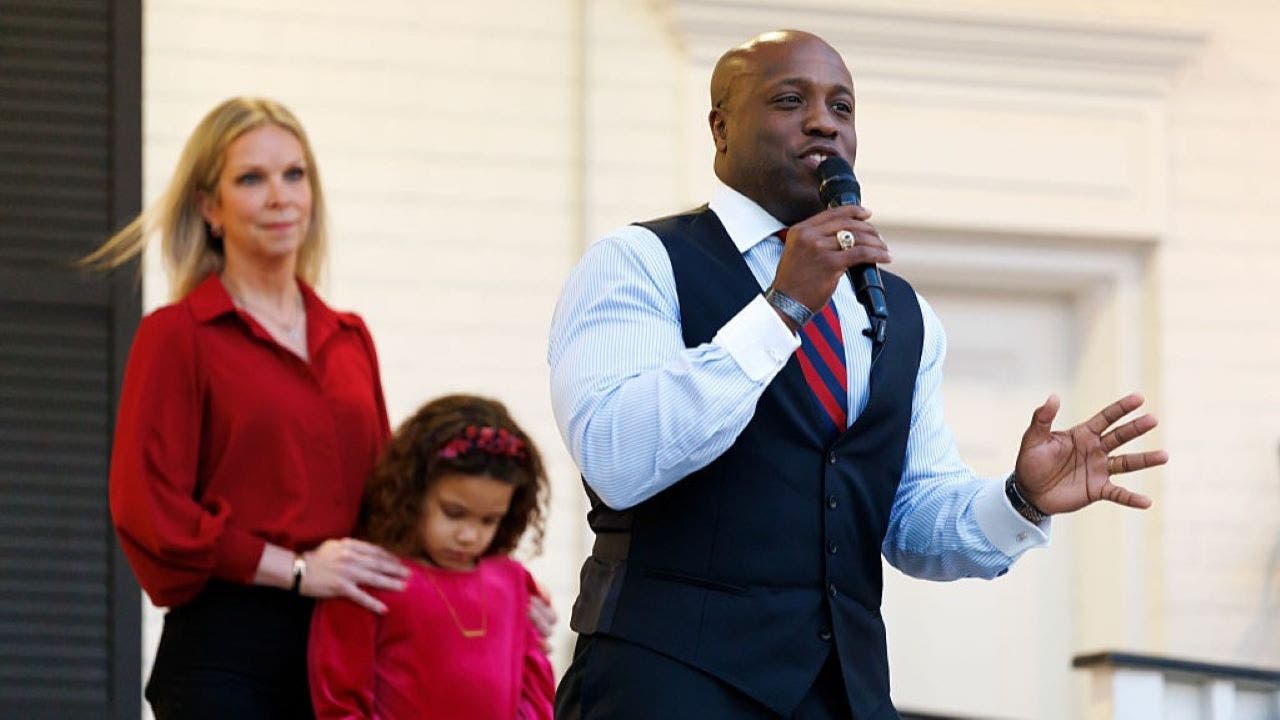
During an interview, Rep. Wesley Hunt (R-Texas) pushed back after being asked whether the Supreme Court's decision in Louisiana v. Callais would mean “there won’t be any Black Republicans left in the House.” Hunt rejected the premise, saying his candidacy is not about his race but his qualifications as the representative for Congressional District 38. He argued election outcomes should reflect voter choice rather than racial considerations, noted that he represents a White-majority district that leans strongly Republican, and invoked Martin Luther King Jr.'s line about judging by character rather than skin color. The Supreme Court ruled 6-3 that Louisiana’s map, which had created a second majority-Black district after litigation, was an unconstitutional racial gerrymander and limited the use of Section 2 of the Voting Rights Act in redistricting disputes. The article reports Hunt’s comments and summarizes the Court’s ruling and its national relevance for redistricting battles.
Biblical Reflection
This story sits at the intersection of law, race, and political identity. Objectively, Hunt’s response rebukes an interview premise that equates representation solely with racial identity; he emphasizes individual qualification and voter choice. At the same time, the Supreme Court decision affects how courts evaluate race-conscious maps intended to protect minority voters’ electoral power. A Christian reading should resist two unhelpful extremes: (1) reducing people to ethnic categories so that identity alone defines legitimacy, and (2) treating claims of racial disadvantage as always illegitimate or irrelevant. Scripture affirms the equal dignity of every person (made in God’s image) while repeatedly calling God’s people to pursue justice for the vulnerable. That means Christians should care about fair access to political voice and also be wary of politicized rhetoric that flattens complex legal and social realities into sound bites. Concerning the media framing, readers should note the article’s editorial tone and partisan context (it appears on a partisan news outlet and uses charged subheads); verify legal facts from court texts and look for reporting that explains both the Court’s legal reasoning and the likely practical effects on minority representation. Ultimately, faithful Christian response holds both truth and compassion: seek accurate facts about how the law was changed, listen to those affected by redistricting outcomes, and advocate policies and practices that protect equal dignity and just participation in civic life.
Scripture in context
This outlook does not yet include contextual Scripture citations. Do not treat a general biblical theme as an exegetical conclusion.
Faithful Response
No prescribed response is offered. Consider the reflection prompts below in your own church context.
Reflection and Discussion
- 1What assumptions about identity and representation underlie the interviewer's question, and how do those assumptions shape public conversation?
- 2Does the Supreme Court ruling change only legal standards, or will it also affect the practical ability of minority communities to elect representatives of their choice? Where can I find the impartial legal analysis?
- 3How can Christians hold together the biblical commitments to equal human dignity, to pursue justice for the vulnerable, and to reject reducing people solely to group identity when evaluating political and legal disputes?
Sources
Reporting links are evidence inputs; Sanctuary News' biblical reflection is commentary.
This outlook currently relies on fewer than two linked sources. Broaden verification before teaching from it.
- 1.Original reportprimary