News Summary
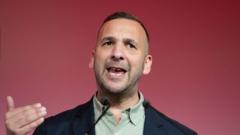
Reported facts: BBC reports that Reform UK has reported Green leader Zack Polanski to police over an Instagram post which included a photo of a man wearing a top bearing the name "Nigel" alongside an image of a guillotine. Attributed claims: the action is described as a report to police by Reform UK; the article attributes the description of the image to the reporting. Uncertainties: the article does not state the poster’s intent, whether "Nigel" refers to a specific public figure, whether a police investigation has been opened, or whether Polanski commented or responded.
Source and Framing Analysis
The story is based on a single BBC report and provides a brief factual description without contextual detail. Material uncertainties include the absence of the original post or caption, no recorded response from Polanski or Reform UK beyond the report being made, and no information about any police action. Those gaps affect how seriously the image should be judged (threat versus satire) and whether political motives influenced the report.
Biblical Reflection
Political life and online life increasingly overlap, and Christians should notice both the moral and communal dimensions of that overlap. Violent imagery—even symbolic or satirical—can inflame fear, dehumanize opponents, and provoke legitimate concern about safety and civic order. At the same time, partisan actors often weaponize complaints for reputation management or political gain; haste to condemn without full context can compound injustice.
A faithful Christian response holds two tensions together: truth and mercy. Truth requires careful attention to facts, restraint from spreading unverified material, and support for proportional legal accountability when credible threats exist. Mercy calls us to avoid gloating over another’s embarrassment, to seek restorative rather than purely punitive outcomes when appropriate, and to pray for those involved. Christians should advocate for nonviolent public discourse, protect vulnerable neighbors from threats, and insist that allegations be tested rather than assumed.
Practically, this means asking what is actually proven by reporting, resisting partisan reflexes that treat every online provocation as a mortal moral failing, and urging systems of accountability that aim at repair. We can model speech that names harm without replicating it, pursue reconciliation where possible, and support due process where harm may be criminal. Such an approach honors both the call to justice and the call to love our neighbors—even those with whom we fiercely disagree.
Scripture in context
- 1Matthew 5:21–24 — Jesus, in the Sermon on the Mount, contrasts external obedience with inner attitudes—teaching that anger and insults toward a neighbor are morally significant and urging reconciliation. — The passage calls Christians to avoid demeaning or threatening speech and to pursue reconciliation rather than escalation; it frames our online interactions as moral acts with communal consequences.
- 2James 3:1–12 — James warns about the difficulty of taming the tongue and how small words can cause great harm within a community. — This cautions believers to be careful with speech that can inflame, to resist sharing provocative images that dehumanize others, and to cultivate words that build up rather than tear down.
Faithful Response
Pause before sharing: verify context and avoid amplifying potentially violent imagery.
Pray for all parties involved—those offended, those accused, and civic authorities entrusted to investigate.
Encourage measured, lawful responses: support due process and offer pastoral care rather than online shaming.
Model nonviolent public witness: use public platforms to name harms without replicating them and to call for repair.
Reflection and Discussion
- 1Does this report make clear whether the image represented a credible threat, satire, or political symbolism—and how should that shape our judgment?
- 2How might partisan incentives shape who reports wrongdoing and how the public interprets it?
- 3When online speech offends or alarms, what steps should Christians take to seek clarity, protect the vulnerable, and pursue restoration rather than escalation?
Sources
Reporting links are evidence inputs; Sanctuary News' biblical reflection is commentary.
This outlook currently relies on fewer than two linked sources. Broaden verification before teaching from it.
- 1.Reform UK reporting Green leader Zack Polanski to police over Instagram postprimary_reporting