News Summary
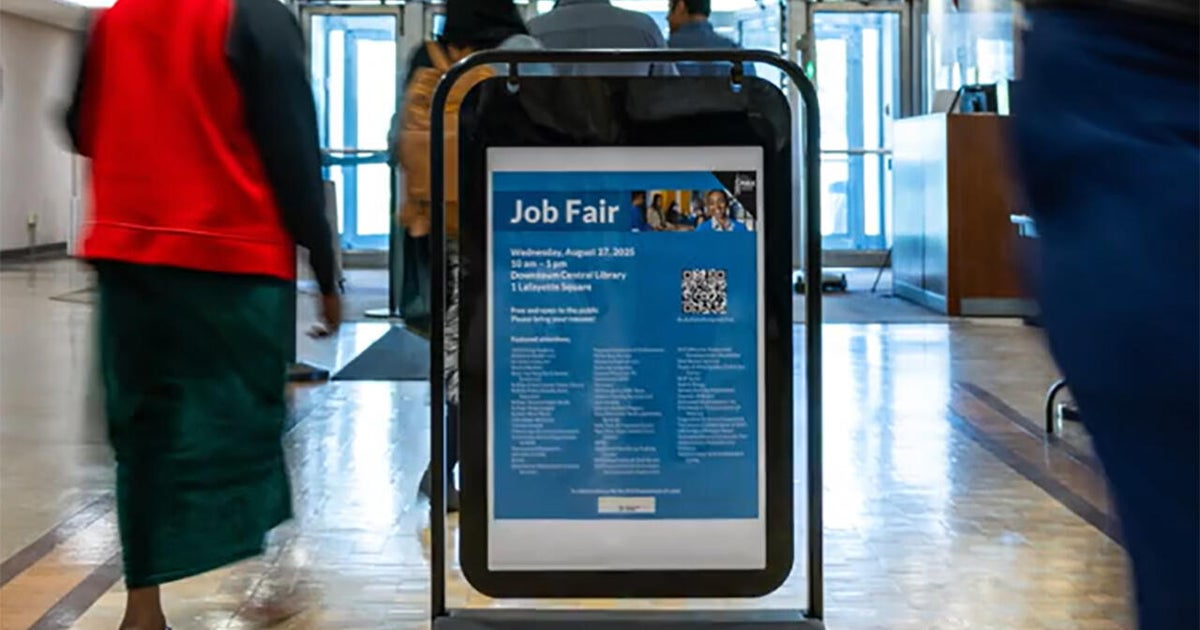
CBS News interviewed recent college graduates from Philadelphia, New York, Minneapolis and Anchorage who report months of slow, frustrating job searches despite submitting hundreds of applications. Graduates described low response rates, large applicant pools (one cited 300 applicants for a position), and reliance on networking to secure the few jobs obtained. The report cites data that the unemployment rate for young people is about twice the national average and that roughly 40% of college graduates working are in jobs that do not require a college degree. Columbia Business School economist Laura Veldkamp said AI may have raised overall unemployment by about 0.1 percentage point but is not the main cause; she attributes the weaker hiring to high economic uncertainty (including shifting tariffs and volatile fuel prices) leading employers to delay hiring, particularly for entry-level roles. Hilton HR leader Laura Fuentes identified growth areas (healthcare, energy, AI, hospitality) and advised targeted networking rather than mass "one-click apply" approaches; the story notes that one-click apply features have increased application volumes and led some employers to use AI to screen candidates. Some graduates in the story eventually found work through personal connections, while others remain unemployed. Fuentes said recent job reports suggest hiring may be picking up for entry-level roles.
Biblical Reflection
The article presents a measured, evidence-based account that balances personal testimony with expert context: it resists panicking about AI as the sole culprit while highlighting real economic and procedural pressures young job-seekers face. From a Christian perspective, the piece calls us to compassionate realism. Truth: the reporting is honest about limits of AI's impact and the larger role of uncertainty, application-platform effects, and labor-market dynamics. Mercy and neighbor-love: the voices of discouraged graduates invite practical care—mentoring, networking help, training, and hospitality—to restore dignity and opportunity. Humility and courage: Christians should avoid simplistic blame (either techno-utopian or technophobic) and instead advocate for fair, transparent hiring practices and policies that protect human dignity in automated systems. Peace: the church can provide encouragement and a longer horizon for young people while also urging institutions (businesses, schools, platforms) toward stewardship and ethical use of technology. Practically, this means offering tangible help (introductions, references, skills training) and public advocacy for accountability where AI-driven hiring removes meaningful human oversight.
Scripture in context
This outlook does not yet include contextual Scripture citations. Do not treat a general biblical theme as an exegetical conclusion.
Faithful Response
No prescribed response is offered. Consider the reflection prompts below in your own church context.
Reflection and Discussion
- 1How does widespread use of automated hiring tools challenge fairness, dignity, and transparency for first-time job seekers?
- 2Where can local churches and Christian networks realistically step in to provide connections, training, or mentorship to bridge this gap?
- 3Are we responding to economic uncertainty with compassion and patient action, or with quick blame that misses structural causes?
Sources
Reporting links are evidence inputs; Sanctuary News' biblical reflection is commentary.
This outlook currently relies on fewer than two linked sources. Broaden verification before teaching from it.
- 1.Original reportprimary