News Summary
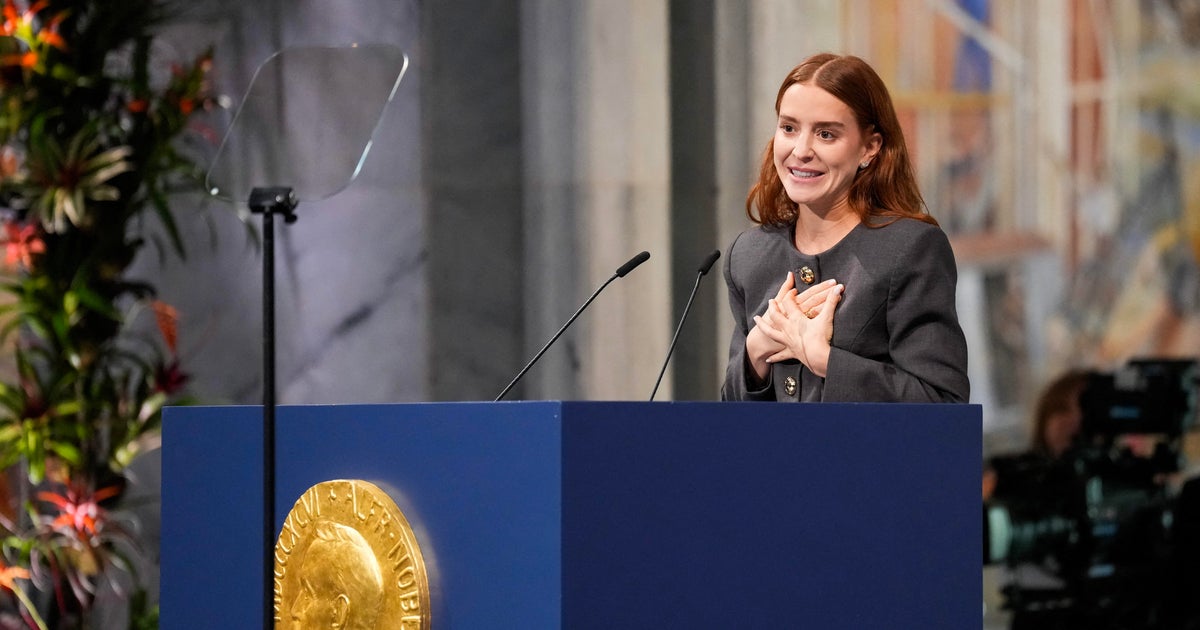
The article reports on the Nobel Peace Prize ceremony in Oslo, Norway, where Ana Corina Sosa Machado delivered a speech on behalf of her mother, María Corina Machado, the Venezuelan opposition leader. Machado was recognized for her relentless advocacy of democratic rights and her efforts to achieve a peaceful transition from dictatorship to democracy in Venezuela. Due to safety concerns and her ongoing resistance, Machado has been in hiding but was anticipated to reunite with her family in Oslo before returning to Venezuela. The speech detailed Venezuela’s historical journey toward freedom, the loss and corruption endured under dictatorship, the suffering of millions, and the resilience displayed through civic and peaceful efforts. Machado’s remarks emphasized the ethical, existential, and spiritual nature of the struggle for democracy, the high cost paid by citizens, and the hope that unity, love, and courage will ultimately restore peace and freedom to Venezuela. The article highlights the international recognition of Venezuela’s plight and the continuing struggle for truth, peace, and justice.
Biblical Reflection
From a biblical perspective, María Corina Machado’s story and speech resonate deeply with the scriptural themes of justice, courage, and perseverance in the face of oppression. Her advocacy for democracy and peace recalls the prophetic call to "seek justice, correct oppression" (Isaiah 1:17) and the call of Christ to be peacemakers (Matthew 5:9). The suffering described—persecution, torture, exile, and injustice—is the reality for many throughout history who have stood for truth against tyranny. The biblical narrative consistently sides with the oppressed and demands accountability from those in power who abuse their position for personal gain, as seen in the repeated denunciations of corrupt rulers (Isaiah 10, Amos 5, Micah 6). Machado’s insistence on love, unity, and non-violence, even under extreme duress, is a powerful testimony to the Christian virtues of hope and forgiveness. Still, her speech does not explicitly invoke God or Christ, instead focusing on human dignity, courage, and ethical responsibility. While her call to peace and reconciliation aligns with biblical values, Christians must remember that true and lasting peace is found in Christ, who breaks the chains of oppression and offers ultimate liberation—not just from political tyranny but from the bondage of sin. This story is a reminder both to pray for Venezuela and to examine our own commitment to justice, peace, and the defense of human dignity, especially when it is costly.
Scripture in context
This outlook does not yet include contextual Scripture citations. Do not treat a general biblical theme as an exegetical conclusion.
Faithful Response
No prescribed response is offered. Consider the reflection prompts below in your own church context.
Reflection and Discussion
- 1Where in my own life am I called to stand up for justice, even when it is costly or risky?
- 2How can I support those suffering under oppression and pray for peace in nations like Venezuela?
- 3Do I trust that God’s justice and mercy will ultimately prevail, even when evil seems to triumph?
Sources
Reporting links are evidence inputs; Sanctuary News' biblical reflection is commentary.
This outlook currently relies on fewer than two linked sources. Broaden verification before teaching from it.
- 1.Original reportprimary