A little more detail
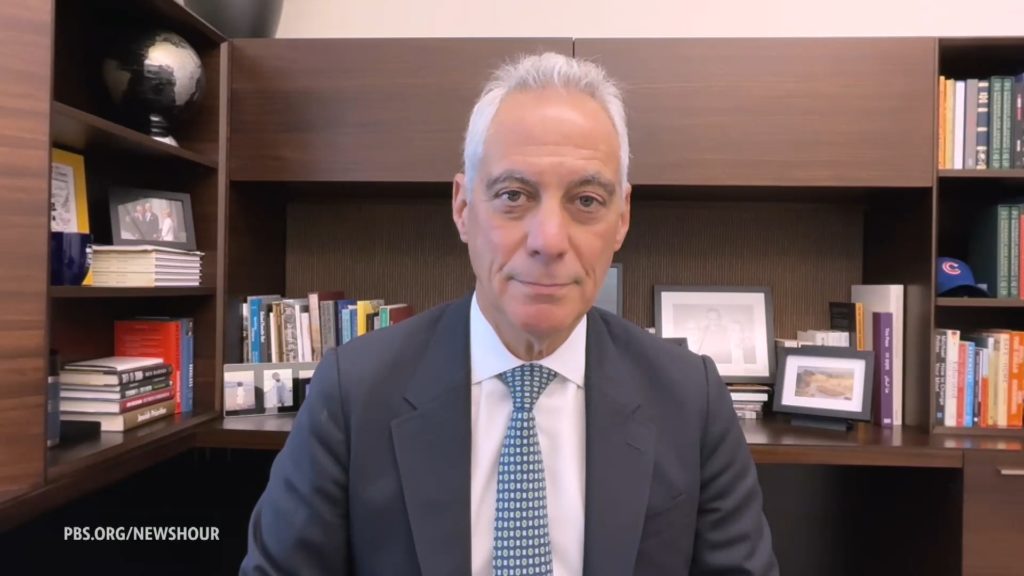
Rahm Emanuel, drawing on his role in the Democratic 2006 congressional victory, told PBS NewsHour that Democrats can convert public dissatisfaction with a Republican president into a broad congressional win and offered strategic lessons for the party after the midterms. The interview presents Emanuel’s interpretation and experience-based advice but does not supply detailed tactics, supporting data, or alternative perspectives.
Source and Framing Analysis
Source: PBS NewsHour interview (Geoff Bennett with Rahm Emanuel). The piece is an interview-format political analysis that foregrounds Emanuel’s personal authority as a strategist and his 2006 experience. It frames the midterms as an opportunity to replicate a past wave by harnessing public dissatisfaction with a Republican president. The reporting reliably attributes these views to Emanuel but does not provide independent evidence that the same approach will produce the same outcome today. Key uncertainties noted in the source include a lack of specific policy proposals or operational tactics, no presented empirical linkage between 2006 conditions and current dynamics, and absence of competing strategic viewpoints or expert critiques within the same piece. PBS frames the material appropriately as Emanuel’s perspective rather than established fact.
How sources covered this story
Sanctuary separately assesses reporting quality and alignment with Christian virtues. The virtues assessment considers truthfulness, dignity, compassion, justice, peacemaking, humility, and care for vulnerable people. It does not assess a publisher's faith or reward religious language.
Compare 1 reports
Rank 1
PBS NewsHour: 'A down payment on change': Rahm Emanuel on what Democrats should do after midtermsReporting 72/100Virtues 75/100
- Distinctive contribution
- Signals that Emanuel — who helped engineer the 2006 victory — is being asked to apply those lessons to contemporary midterm strategy; establishes the interview as a source of strategic perspective rather than original reporting of new facts.
- Framing
- Frames the midterms as an opportunity for Democrats to replicate a past wave fueled by dissatisfaction with a Republican president and positions Emanuel as an experienced strategist whose lessons may guide current efforts.
- Omissions or uncertainty
- No specific recommendations, quotes, evidence, dates, or identification of the Republican president are provided in the excerpt; the excerpt does not include counterarguments, data, or the interview's substantive content.
- Why these scores
- The excerpt is concise, clearly attributed (an interview by Geoff Bennett), and responsibly framed as a perspective piece. It lacks substantive detail but functions appropriately as a preview/teaser; nothing in the excerpt is misleading or irresponsibly stated. Neutral, non-inflammatory framing that respects the subject and offers context without dehumanizing language or sensationalism. The excerpt shows humility by presenting the content as Emanuel's view rather than asserting it as fact; it does not engage in partisan vilification.
Biblical Reflection
From a Christian standpoint, Emanuel’s practical, experience-based political counsel invites both careful listening and measured critique. Christians should value wisdom and experience but resist treating past victories or political power as ultimate goods. Engage Emanuel’s strategic claims with humility and scrutiny: assess their likely effects on neighbors, especially vulnerable people, and prioritize mercy, justice, and peacemaking over partisan triumph. Political memory and organizational skill have a place, but so do repentance for wrongs, willingness to change tactics that harm the common good, and an ethic that holds victory subordinate to human dignity.
Scripture in context
- 1 — Wisdom literature advising leaders and communities that good counsel and multiple advisers promote safety and success. — Encourages political leaders and parties to seek broad counsel and to temper confidence in a single strategist’s playbook; communal discernment reduces risk of error.
- 2 — A prophetic call that centers justice, mercy, and humility as the obligations of the people and their leaders. — Reminds Christians involved in electoral strategy to prioritize policies and campaign choices that protect the poor, pursue justice, and act with humility rather than treating elections solely as contests for power.
Faithful Response
Pray for discernment for voters, strategists, and elected officials, asking that political action serve the common good rather than partisan dominance.
Verify strategic claims by seeking independent data and multiple expert perspectives before adopting or promoting tactics proposed in a single interview.
Listen to and prioritize voices of those most affected by policy (low-income households, marginalized communities) when evaluating the moral implications of campaign strategy.
Participate civically with humility: volunteer, vote, and advocate in ways that protect and serve vulnerable neighbors rather than elevating victory above compassion.
Create or support nonpartisan opportunities in congregations for informed, respectful discussion of electoral choices and the ethical stakes involved.
Reflection and Discussion
- 1How does my faith shape whether I value winning an election versus serving the vulnerable after the election?
- 2What specific signs should make me skeptical of applying lessons from 2006 to the present political context?
- 3Whose voices are missing from strategic conversations Emanuel describes, and how can those perspectives be included?
- 4Am I prepared to hold political leaders accountable to justice and mercy even when their strategies are effective electorally?
Sources
Reporting links are evidence inputs; Sanctuary News' biblical reflection is commentary.
This is a developing, single-source report. Details may change as more reporting becomes available.
- 1.'A down payment on change': Rahm Emanuel on what Democrats should do after midtermsprimary_reporting