News Summary
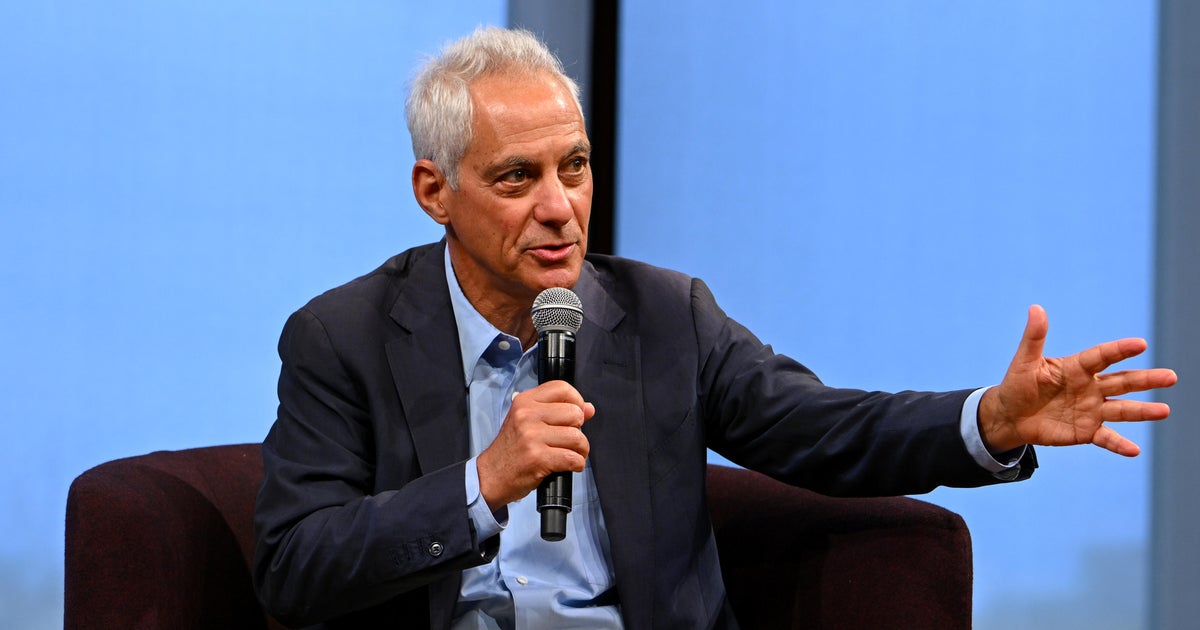
Rahm Emanuel traveled to Tel Aviv and will speak at Tel Aviv University, saying U.S.-Israel relations are “at a crossroads” and that the partnership needs “significant changes.” In an interview ahead of the speech, Emanuel criticized Israel’s military response to Hamas’ Oct. 7, 2023 attack as “reckless and careless” in its treatment of Palestinian life and accused Israeli forces of using food and medicine as instruments of military goals. He said questions about whether Israel committed genocide should be discussed carefully and not politicized. Emanuel plans policy proposals including sanctions on Israelis who attack Palestinian civilians and on companies and banks that support settlements deemed illegal by much of the international community; he also proposed ending U.S. subsidies to Israel’s defense budget and requiring Israel to purchase American arms under the same financial terms as other allies. Emanuel blamed Prime Minister Benjamin Netanyahu for driving Israel to a “dead end” and criticized a long U.S. policy of unconditional support. He said the two-state solution is “discredited” and proposed a “23-state solution” involving Israel, the Palestinians, and 21 Arab League members. Emanuel will avoid meeting Israeli elected officials while visiting, but will visit a hospital serving Israelis and Palestinians and meet a family of an Oct. 7 hostage. The article places the speech in the context of shifting Democratic views of Israel—citing an AP-NORC survey that 58% of Democrats now say the U.S. is “too supportive” of Israel (up from 45% in January 2024) and reports that roughly half of Democrats believe Israel committed genocide—and notes possible political ramifications for both Emanuel’s ambitions and Netanyahu’s reelection campaign.
Biblical Reflection
From a Christian pastoral perspective, the article describes a public figure pushing for accountability, protection of civilians, and a recalibration of policy toward a longtime ally. The call to limit unconditional support and to sanction actions that harm civilians resonates with biblical concerns for justice and care for the vulnerable. At the same time, Emanuel’s posture is politically situated: he is a prospective presidential candidate speaking in a charged foreign setting, and his rhetoric will be received through partisan and electoral lenses. Christians should note two risks: first, the moral language in public debate (terms like “genocide”) can be expanded or narrowed for political effect, so discernment is needed before accepting labels uncritically; second, critiques of a nation’s policies can too easily slip into demonizing whole peoples rather than addressing specific actions. Christian virtues invite us to hold both truths together—grieving civilian suffering, defending the right of Israel to security, calling leaders to repentance and wise stewardship, and advocating policies that protect innocents on both sides. Practically, the piece is primarily political messaging with real policy proposals that, if adopted, would have material diplomatic and humanitarian consequences; readers should separate Emanuel’s moral arguments from his political ambitions and evaluate evidence for specific claims rather than rhetoric alone.
Scripture in context
This outlook does not yet include contextual Scripture citations. Do not treat a general biblical theme as an exegetical conclusion.
Faithful Response
No prescribed response is offered. Consider the reflection prompts below in your own church context.
Reflection and Discussion
- 1Are criticisms of a government’s policies being framed as principled calls for justice or as strategic moves for political advantage?
- 2When public figures use strong moral labels, what evidence should we look for to judge whether those labels are accurate and proportionate?
- 3How can Christians hold compassion for civilians harmed on all sides while also advocating responsibly for the security and rights of allies?
Sources
Reporting links are evidence inputs; Sanctuary News' biblical reflection is commentary.
This outlook currently relies on fewer than two linked sources. Broaden verification before teaching from it.
- 1.Original reportprimary