News Summary
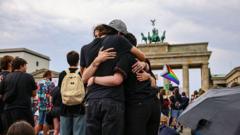
Reported facts: BBC reports a violent incident connected to a Berlin Pride event and describes public anger, shock and grief; the article states that details are emerging about the suspected attacker's past and that many are asking why he was not in prison. Attributed claims: the article attributes the emotions and questions to members of the community and commentators. Uncertainties: the supplied reporting does not include the suspect's identity, specific allegations or charges, victims' numbers or conditions, motive, timeline of events, official police statements, or documentation of the suspect's past convictions or interactions with the justice system.
Source and Framing Analysis
Material uncertainty: the only supplied reporting is a brief BBC article headline/summary that emphasizes public emotion and outstanding questions rather than presenting detailed, corroborated facts. The emotive headline ('Anger, shock and grief') frames the piece around community reaction; that is appropriate for human impact reporting but means the article is focused on response and inquiry rather than on verified forensic or legal details. Because the supplied article does not include official records or multiple corroborating sources, important factual gaps remain about the suspect, the charges, victims, and any prior convictions or legal decisions that might explain why he was not incarcerated.
Biblical Reflection
Christians must hold together two hard but necessary responses: compassion and pursuit of truth. Compassion requires immediate care for victims and the grieving community, especially those in a group (LGBTQ+) that is often vulnerable to targeted violence. Pursuit of truth requires avoiding rushes to judgment, pressing for transparent investigation, and asking accountable questions of authorities about whether past warnings or failures in the justice system contributed to harm.
The article’s framing foregrounds community pain and public demand for answers. That grief and anger are morally understandable; anger can point toward injustice that needs correction. At the same time, Christian witness calls us to resist dehumanizing language toward any person before facts are established. We should advocate both for rigorous accountability (truth and justice) and for mercy that does not excuse wrongdoing but refuses vengeance.
Practically, believers should pray for victims and investigators, support safe community responses, listen to those harmed, and press civic leaders for transparent, evidence-based changes where the system failed. Christians should also name the particular vulnerability of marginalized neighbors and resist any framing that reduces them to political symbols rather than real people in need of protection and care.
Scripture in context
- 1Luke 10:25-37 (Parable of the Good Samaritan) — A teacher of the law asks Jesus who is his neighbor; Jesus tells a story in which a Samaritan, despite social enmity, shows compassion to an injured stranger when others pass by. — The passage calls Christians to active, cross-boundary compassion for those harmed and to practical care for vulnerable neighbors; it also warns against letting social or political divisions prevent us from aiding those in need.
Faithful Response
Pray specifically for victims, their families, and first responders, asking for healing and justice.
Support tangible care for those harmed (donations to verified local relief efforts, attending vigils, offering counseling resources).
Resist rumor and avoid sharing unverified details; instead, seek reliable updates from authorities and reputable reporting.
Advocate for transparent review if questions about past oversight or legal decisions emerge, while respecting due process.
Reflection and Discussion
- 1How do we balance righteous anger at violence with the biblical call to avoid vengeance and to pursue justice with humility?
- 2In what ways might Christian communities be called to stand with vulnerable neighbors after targeted violence, beyond symbolic statements?
- 3What questions should we press of civic leaders to ensure transparency and protection for those at risk, and how can we do so without contributing to fear or vigilantism?
Sources
Reporting links are evidence inputs; Sanctuary News' biblical reflection is commentary.
This outlook currently relies on fewer than two linked sources. Broaden verification before teaching from it.
Download source notes