News Summary
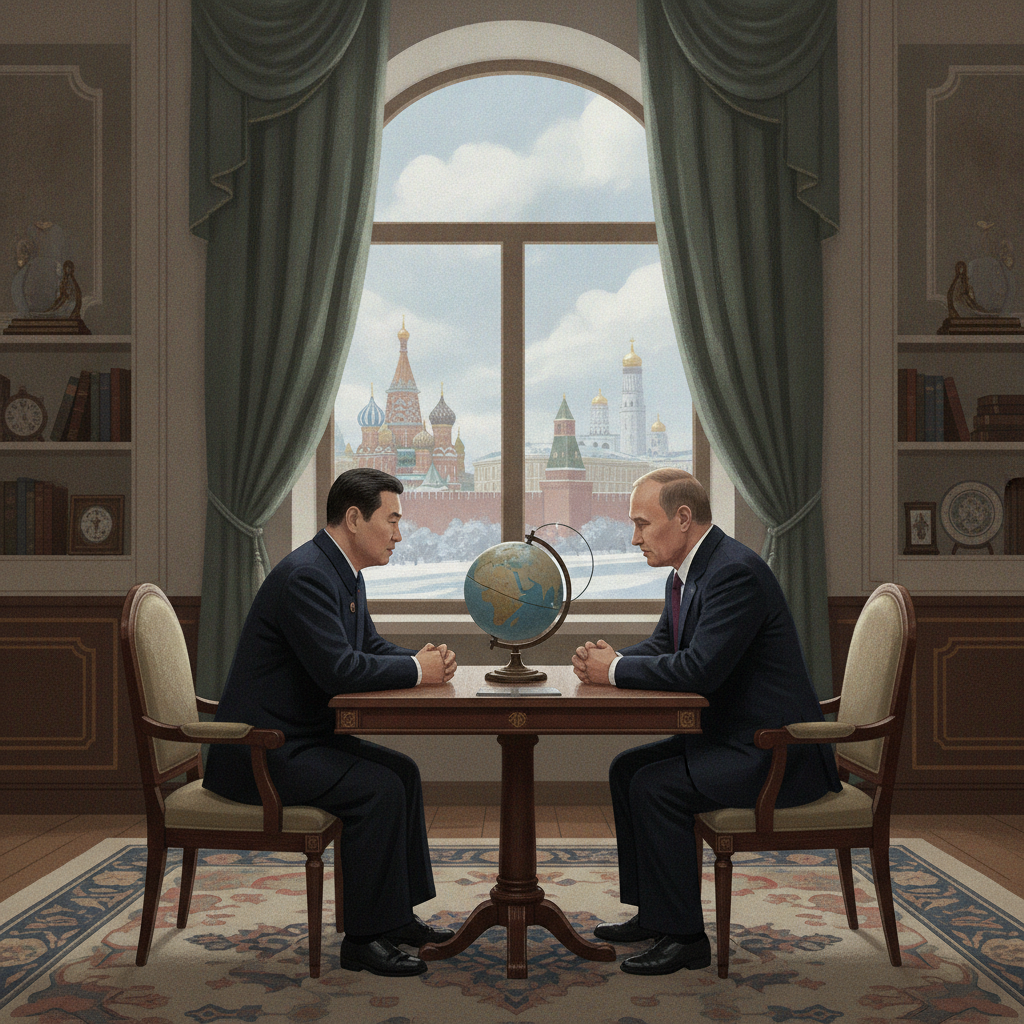
Reported facts: North Korean Foreign Minister Choe Son Hui visited Moscow and met with Russian President Vladimir Putin; the visit occurred without an obvious public occasion. Attributed claims: reporters and analysts have raised speculation that Choe may be coordinating a possible visit to Russia by Kim Jong Un. Uncertainty: the article does not provide official statements detailing agenda items, agreements, or confirmation of plans for a Kim Jong Un visit; those remain speculative.
Source and Framing Analysis
The story is based on a single news report that mixes confirmed reporting (the visit and meeting) with analyst speculation (possible coordination of a Kim Jong Un visit). The framing emphasizes diplomatic significance but lacks documentary evidence such as joint statements, schedules, or multiple independent confirmations; this gap creates material uncertainty about intentions and concrete outcomes.
Biblical Reflection
This meeting fits a pattern of discreet diplomacy among states with overlapping strategic interests. The article is factual about the visit but also highlights speculation where evidence is limited. The underlying worldview appears realist and cautious: states pursue security and leverage through bilateral ties, often away from public scrutiny. Christians should test the narrative by distinguishing confirmed facts from conjecture, resist unhelpful fear or rush to judgment, and hold a posture of prayerful concern for peace, truth, and the protection of civilians who bear the consequences of geopolitical alignments. We should lament systems that prioritize power over human flourishing and pray for wisdom for leaders and for ministries that serve those most vulnerable to the fallout of such diplomacy.
Scripture in context
- 1Matthew 5:9 — Part of the Sermon on the Mount where Jesus outlines characteristics of life in God's kingdom, calling his followers to be agents of reconciliation in a conflicted world. — This passage calls Christians to be active peacemakers; in the context of international tensions, it urges prayer and constructive action that seeks to prevent harm and promote reconciliation rather than feeding fear or celebrating domination.
- 2Romans 12:17-21 — Paul instructs Christians on ethical behavior toward others, urging them not to repay evil for evil and to live peaceably as far as it depends on them. — Applied to geopolitics, this counsel encourages believers to pursue peace and oppose injustice without mirroring violent or retributive tactics; it supports principled nonviolence, care for victims of conflict, and prudent advocacy for de-escalation.
Faithful Response
Pray regularly for wisdom for world leaders, diplomats, and for civilians in affected regions.
Stay informed from multiple, reliable sources and distinguish confirmed facts from speculation before forming public judgments.
Support and volunteer with humanitarian organizations that assist civilians in conflict-affected areas, emphasizing care for the vulnerable regardless of nationality.
Reflection and Discussion
- 1How does the call to be peacemakers shape my response to news of geopolitical alignments between powerful states?
- 2Where might I be tempted to replace careful discernment with fear or partisanship, and how can I correct that impulse?
- 3What concrete steps can my church take to serve those harmed by international conflict regardless of political narratives?
Sources
Reporting links are evidence inputs; Sanctuary News' biblical reflection is commentary.
This outlook currently relies on fewer than two linked sources. Broaden verification before teaching from it.
- 1.Putin meets North Korean foreign minister in diplomatic pushprimary_reporting