News Summary
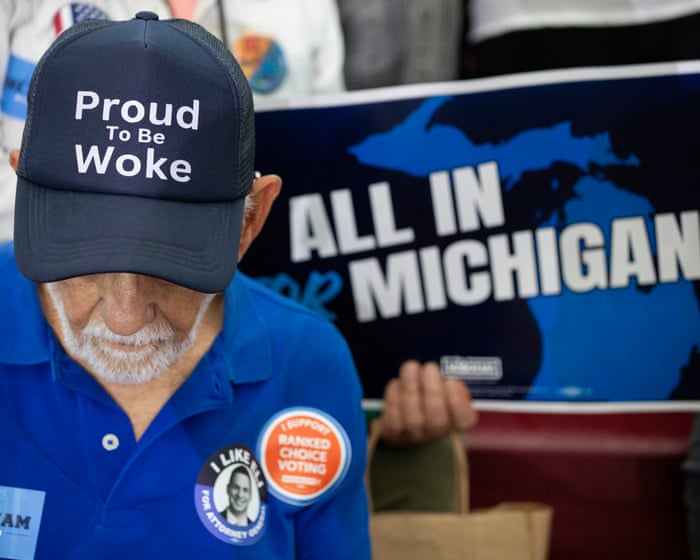
The Guardian live blog reports that upcoming Democratic primaries — for governor in Wisconsin and for U.S. Senate in Minnesota — feature contests pitched as progressive (left‑wing) candidates versus more traditional/establishment Democrats. The live item characterizes these races as part of an ongoing pattern of intra‑party contests and cites a prior contest (noting Abdul El‑Sayed in Michigan) as a recent example. The live format offers a brief aggregation rather than detailed profiles: the excerpt does not name specific Wisconsin or Minnesota candidates, supply primary dates or poll numbers, or link to primary documents in the passage provided.
Source and Framing Analysis
Source: The Guardian (US politics live blog). Framing: rapid, aggregated live‑blog style that connects state primary contests to a broader national pattern (progressive vs. establishment). Strengths: timely situating of state races within a recurring intra‑party dynamic. Limitations and cautions: the live entry is brief and does not provide candidate names, detailed local context, dates, polling, or primary results in the excerpt provided; it mixes brief items and therefore can encourage readers to conflate claims or assume fuller sourcing than is present. For fuller verification and context, consult primary local reporting (state party filings, local newspapers), official county/state election pages, campaign statements, and reputable polling firms. Source attribution within the live blog is explicit for some items but sparse for the primary summaries; that reduces the item’s standalone reliability for specifics.
How sources covered this story
Sanctuary separately assesses reporting quality and alignment with Christian virtues. The virtues assessment considers truthfulness, dignity, compassion, justice, peacemaking, humility, and care for vulnerable people. It does not assess a publisher's faith or reward religious language.
Compare 1 reports
Reporting 55/100Virtues 45/100
- Distinctive contribution
- Concise live-blog style summary linking the Wisconsin and Minnesota primaries to an ongoing pattern of progressive vs. establishment contests, plus reporting an attributed claim about a ‘secret military flight’ and an un-attributed, extraordinary claim about an executive order splitting the MMR vaccine into three shots.
- Framing
- Short, live-blog update style that mixes multiple brief news items. Some items are explicitly attributed (to the Washington Post), while at least one consequential claim (about splitting the MMR vaccine) is stated without attribution or sourcing and presented as fact.
- Omissions or uncertainty
- No details on the specific candidates in the Wisconsin and Minnesota contests, no dates or vote totals. The Michigan reference to Abdul El‑Sayed’s triumph lacks context or sourcing. The Trump flight item is attributed to the Washington Post but the excerpt omits specifics or links. The vaccine statement is un‑sourced, medically consequential, and contains no evidence, authority, or clarification—major uncertainty about accuracy.
- Why these scores
- The excerpt performs adequately as a rapid live-blog summary: it gives context and attributes at least one significant claim to another outlet (Washington Post). However, it also contains a high‑impact medical claim presented without sourcing or caveats, and other items lack necessary detail and context. The mix of attributed and un-attributed statements and the presence of a potentially false or misleading vaccine claim meaningfully reduce reliability. The excerpt is not dehumanizing and supplies political context, but the un-attributed, consequential claim about splitting the MMR vaccine risks spreading misinformation that could harm public health and vulnerable people. The reporting shows insufficient humility and care around a sensitive medical topic and lacks the caution and truthfulness expected to protect human well‑being.
Biblical Reflection
Christians should respond to this political reporting with a commitment to truth, mercy, and the common good. Seek verified information before forming or sharing judgments about candidates or outcomes; support practices that protect the dignity of political opponents and vulnerable neighbors; and model civil, humble engagement that prioritizes neighbor‑care over partisan triumph. Pray for leaders and voters to exercise wisdom and love. Where congregations engage politically, combine careful fact‑checking with pastoral sensitivity so that public debate does not become an occasion for harm to vulnerable people.
Scripture in context
- 1James 1:5 — An epistle instructing early Christians on living faithfully amid trials; the verse sits within exhortations to seek wisdom from God rather than wrangling or partiality. — Use this passage to encourage Christians to pray for discernment when navigating complex or technical public issues and to ask God for wisdom before forming or sharing judgments about political contests.
- 2Philippians 2:3-4 — Paul urges the Philippian church to humility and to value others above themselves, aiming for unity and practical care within the community. — Apply this as a guide for public conversation: prioritize the welfare of neighbors over partisan wins, let humility shape political engagement, and treat opponents as persons bearing God’s image.
Faithful Response
Verify: Before sharing or acting on summaries, consult primary local sources — state/county election offices, primary filings, local news outlets, and campaign statements — to identify candidates, dates, and procedural details.
Educate: Provide congregationally accessible, nonpartisan summaries of confirmed facts (who’s on the ballot, when the primary occurs, how to vote).
Care: Offer pastoral support for members anxious about political polarization; prioritize care for vulnerable neighbors regardless of partisan affiliation.
Engage: Encourage informed civic participation (registering, voting, attending town halls) and model civil conversation that seeks the common good.
Pray: Lift up voters, candidates, election workers, and journalists for wisdom, humility, and integrity.
Reflection and Discussion
- 1How does our calling to love neighbors influence the way we discuss intraparty contests and political disagreements in our community?
- 2What practical steps will you take to verify the facts of a local primary before sharing them with others?
- 3How can the church be a place where political convictions are expressed honestly but with humility and care for those who disagree?
Sources
Reporting links are evidence inputs; Sanctuary News' biblical reflection is commentary.
This outlook currently relies on fewer than two linked sources. Broaden verification before teaching from it.
- 1.Democratic progressives and establishment set to clash in more primaries – US politics liveprimary_reporting