News Summary
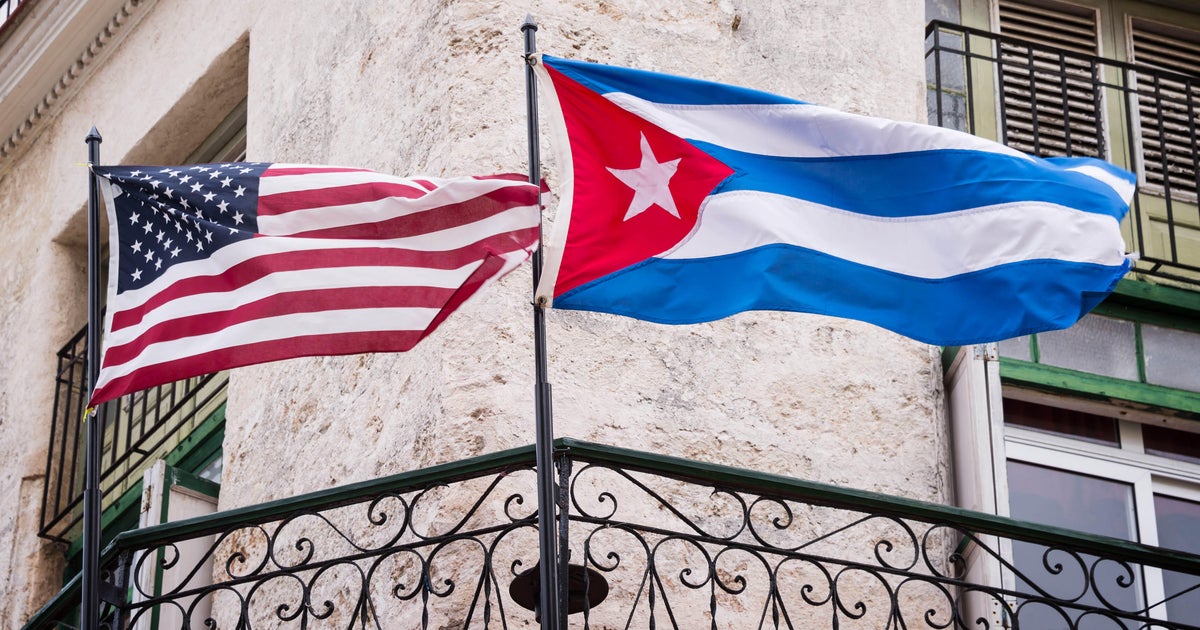
President Trump signed an executive order tightening U.S. sanctions on Cuba. The order expands penalties aimed at Cuban government officials, people accused of corruption, and operators in the energy, defense, or financial services sectors; it does not list specific individuals. The measures increase pressure on foreign financial institutions by threatening their access to U.S. markets if they continue business with Cuban government entities. The administration says the sanctions are intended to discourage deeper involvement from foreign adversaries. Experts interviewed said the move signals a warning to countries such as Russia and China and reaffirms that Cuba remains a U.S. priority despite other international conflicts. The order follows earlier actions this year, including threats of tariffs that have largely blocked foreign shipments of oil to Cuba and contributed to energy shortages. President Trump has made public remarks not ruling out military action; Cuban President Miguel Díaz-Canel condemned the measures as coercive. Former President Raúl Castro made a public appearance during Cuba's May Day parade. U.S. Rep. Carlos Giménez praised the sanctions as targeting Cuba's security apparatus and those who support the regime. Cuban-American community leaders expressed that the announcement shows Cuba has not been forgotten.
Biblical Reflection
From a Christian perspective, this story raises tensions between the biblical calls for justice and the call to love and care for the vulnerable. Sanctions are a tool states use to pressure unjust regimes and to protect national security; the desire to oppose oppression and to hold accountable those who jail political prisoners aligns with the Bible's concern for justice (Psalm 82:3–4; Isaiah 1:17). At the same time, broad economic measures often have spillover effects that deepen suffering for ordinary people—families, the elderly, and the poor—who are not the primary targets. Scripture repeatedly instructs God’s people to care for the hungry, the stranger, and the oppressed (Matthew 25:35–40; James 1:27). Christians should therefore judge policy both by its stated aim (protecting rights and security) and by foreseeable human consequences.
Be cautious of simplistic framings in media and political rhetoric. Headlines or leader remarks that emphasize military imagery or ‘‘warnings’’ can dehumanize the people affected and obscure the complexity of consequences. Experts’ geopolitical readings (e.g., signaling to Russia or China) reflect strategic concerns that may be primary for policymakers even when humanitarian language is used publicly. Christians should weigh the pursuit of justice and security against the call to mercy, advocate for targeted measures that minimize civilian harm, and prioritize discernment and prayer rather than partisan cheer or alarm. Finally, seek out reliable sources that include voices of ordinary Cubans and humanitarian actors to better understand on-the-ground impacts.
Scripture in context
This outlook does not yet include contextual Scripture citations. Do not treat a general biblical theme as an exegetical conclusion.
Faithful Response
No prescribed response is offered. Consider the reflection prompts below in your own church context.
Reflection and Discussion
- 1Does the policy as reported prioritize accountability for leaders or protection of ordinary people first, and how might that shape its moral evaluation?
- 2Whose voices are centered in this coverage—policy makers, experts, or ordinary Cubans—and what does that selection reveal about the article's underlying worldview?
- 3How can Christians hold both a commitment to justice for the oppressed and compassion for civilians harmed by broad economic measures when evaluating foreign policy?
Sources
Reporting links are evidence inputs; Sanctuary News' biblical reflection is commentary.
This outlook currently relies on fewer than two linked sources. Broaden verification before teaching from it.
- 1.Original reportprimary