News Summary
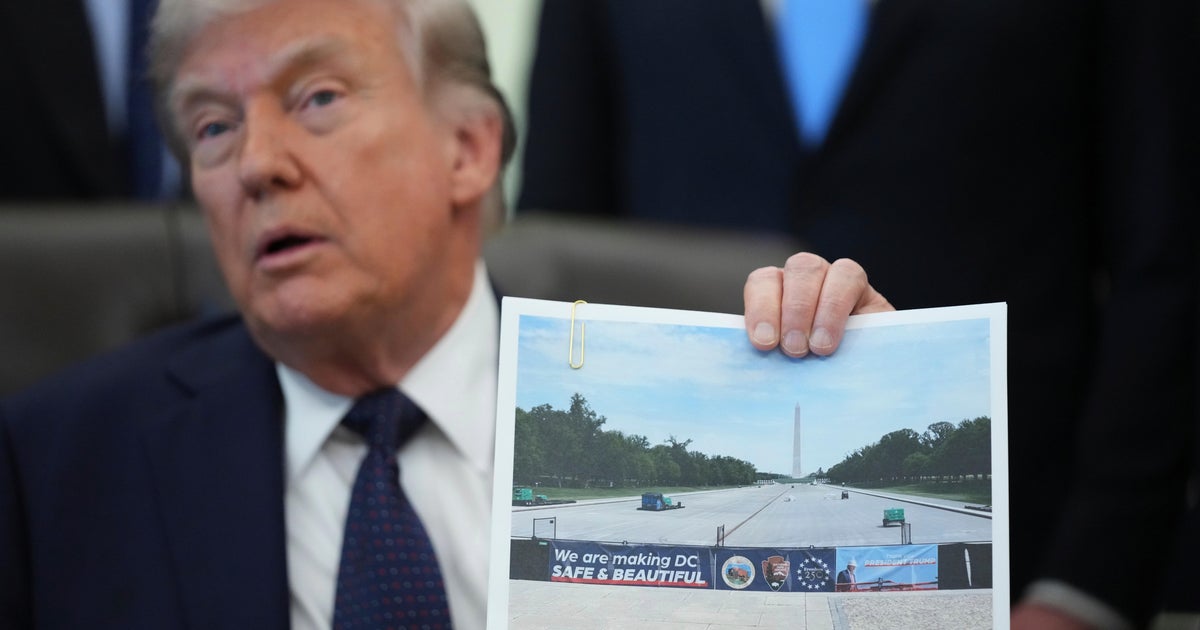
President Trump told reporters that his administration will apply a new industrial-grade surface to the bottom of the Lincoln Memorial Reflecting Pool, coloring it what he called "American flag blue." He said contractors had begun work on the pool's stone surfaces and started laying the new coating the same day, and estimated the work would take about a week and cost roughly $1.5 million. The basin is more than 300,000 square feet (roughly the length of 12 Olympic-sized swimming pools). Trump described the surface as similar to a swimming-pool coating and said his experience as a real estate developer informed the approach. The article notes the Reflecting Pool was comprehensively renovated in 2012 with $34 million in stimulus funds, that the National Park Service performs periodic maintenance (including draining and cleaning), and that the pool has been the subject of earlier public comments from Trump about its condition. The piece also places this effort in the context of other administration proposals to alter or renovate Washington, D.C., landmarks (e.g., changes to the White House East Wing, a proposed triumphal arch, Kennedy Center overhaul, and a Presidential Walk of Fame). Preservation groups and congressional Democrats have criticized some of those changes as unilateral or insufficiently consultative, and the Trump administration has faced scrutiny in other projects over funding mechanisms and name changes.
Biblical Reflection
From a Christian perspective, this story raises questions about stewardship, respect for public memory, and how leaders balance personal vision with communal responsibility. The stated aim—beautifying and repairing a public landmark—can be a legitimate expression of care for shared spaces. Scripture and Christian ethics call leaders to steward resources wisely, to respect the dignity and heritage of places that hold communal meaning, and to pursue the common good rather than personal aggrandizement (e.g., public monuments tied to important civic memory). The article suggests a mix of motives: practical maintenance, aesthetic choices, and symbolic branding. Christians should be attentive to three things: (1) process and accountability — public landmarks belong to the entire community and decisions affecting them should be transparent and consultative; (2) truthfulness and priorities — promises about cost, speed, and necessity deserve scrutiny to ensure public funds and access are handled responsibly; and (3) the pastoral dimension — sites like the Lincoln Memorial and its Reflecting Pool carry memory for movements such as the March on Washington, so changes should honor that history rather than simply use it as backdrop for political spectacle. Finally, recognize media framing and political messaging: the official statements emphasize improvement and speed, while critics emphasize preservation and process. A Christian response is not simply partisan support or rejection but calls for prudent oversight, respect for historical memory, and a desire that public works serve the common good with humility and integrity.
Scripture in context
This outlook does not yet include contextual Scripture citations. Do not treat a general biblical theme as an exegetical conclusion.
Faithful Response
No prescribed response is offered. Consider the reflection prompts below in your own church context.
Reflection and Discussion
- 1Is the primary aim of the proposed change civic stewardship and maintenance, or symbolic branding — and how would you tell the difference from the available facts?
- 2Whose voices and expertise are being included or excluded in decisions about nationally significant memorials, and what does that say about priorities of leadership?
- 3How should Christians weigh the desire for aesthetic improvement against the need to preserve historical memory and public trust?
Sources
Reporting links are evidence inputs; Sanctuary News' biblical reflection is commentary.
This outlook currently relies on fewer than two linked sources. Broaden verification before teaching from it.
- 1.Original reportprimary