A little more detail
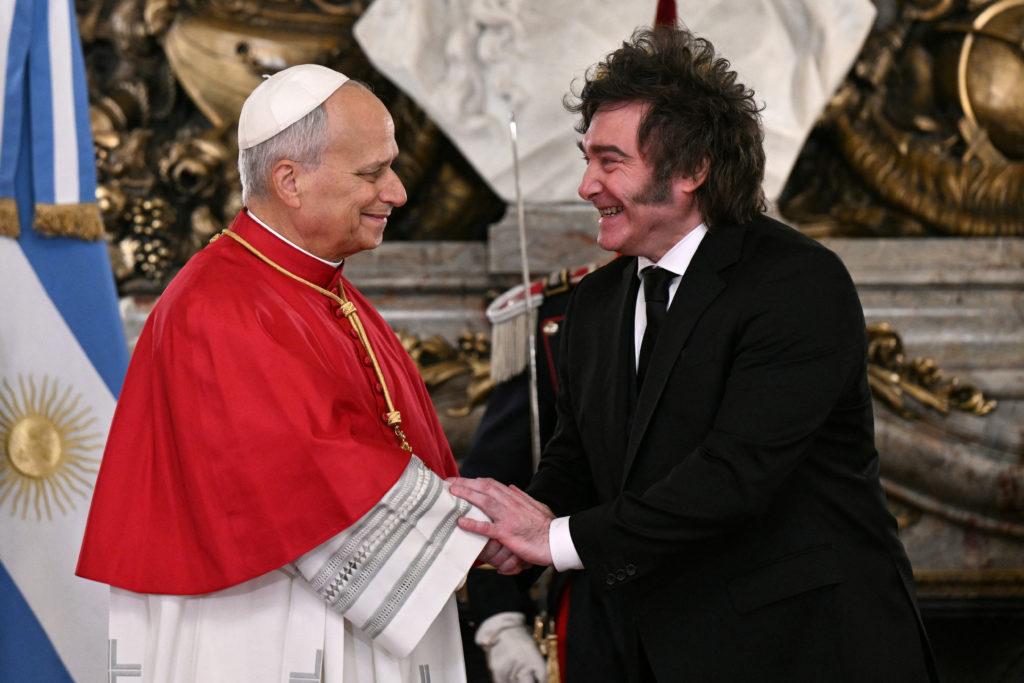
Pope Leo arrived in Argentina as part of a three-nation South American tour. PBS NewsHour reports that, during the visit, the pope told President Javier Milei that 'people, not the economy, should come first.'
PBS frames the Argentina stop as politically delicate and says it will confront the legacy of Argentine Pope Francis. The supplied coverage does not include reactions from President Milei, full transcripts, or formal Vatican statements, and no independent corroboration or diplomatic effects are reported in the supplied source.
Source and Framing Analysis
The update is based on a single supplied report from PBS NewsHour, which attributes the quoted admonition directly to Pope Leo and frames the Argentina stop as 'politically delicate' tied to Pope Francis's legacy. Because PBS is the sole reporting source here, key contextual elements are missing: no full transcript of the pope's remarks, no recorded reaction from President Javier Milei, and no separate Vatican communiqués or independent corroboration. PBS's claim that Pope Francis 'never returned home during his 12-year pontificate' appears in the same piece; that specific historical detail and the framing about political delicacy would benefit from additional sourcing.
How sources covered this story
This section compares the evidence and framing in linked reports. The Christian assessment above addresses the conduct described in the story; it does not grade a journalist’s faith or the morality of covering an event.
Compare 1 reports
Reporting 75/100
- Distinctive contribution
- States that the visit is 'the most politically delicate' leg of the tour and that the visitor will confront the 'complicated legacy' of Argentine Pope Francis, plus the specific claim that Francis 'never returned home during his 12-year pontificate.'
- Framing
- Frames the trip as politically sensitive and partly oriented toward reckoning with an earlier Argentine pope's contested legacy rather than as a routine pastoral visit.
- Omissions or uncertainty
- Very short excerpt with no sourcing or evidence for the 'never returned home' claim; it does not explain why the visit is politically delicate, what constitutes the 'complicated legacy,' who 'Leo' precisely is (the text uses the name without introduction), or provide dates or quotations.
- Why these scores
- The sentence is concise and makes specific, relevant claims that add context, appropriate for a brief news summary. However, it offers no attribution or supporting detail for the factual assertion about Francis' absence or for the characterization of political delicacy, limiting verifiability and depth.
Christian commentary · About the conduct described in this story
Biblical Reflection
and similar biblical passages call religious leaders and civic leaders to act justly, love mercy, and protect the vulnerable. If the pope's admonition is reported accurately, it echoes a long Christian concern that policy should serve people, not just markets.
For readers, a realistic response is reflection and local action: receive the moral appeal, pray for leaders and those harmed by economic policy, then look for one concrete neighborhood or parish practice that defends human dignity in everyday life.
Scripture in context
- 1 — Micah speaks to Israel's covenant life, arguing that true religion shows itself in justice, mercy, and humility before God rather than mere ritual. — Used here to underline that public leadership should center justice and mercy—prioritizing human dignity—so a pope's admonition to place people before economic measures resonates with this biblical ethic.
A suggested response for readers, separate from the assessment above.
Faithful Response
Organize a brief community listening session to identify one concrete way the congregation can support neighbors affected by local economic policies.
Reflection and Discussion
- 1Does the pope's admonition challenge how you evaluate economic success in your community?
- 2Where can our church tangibly prioritize people over profit this month?
Sources
Reporting links are evidence inputs; Sanctuary News' biblical reflection is commentary.
This is a developing, single-source report. Details may change as more reporting becomes available.
- 1.Pope Leo arrives in Argentina and tells Milei that people, not the economy, should come firstprimary_reporting