News Summary
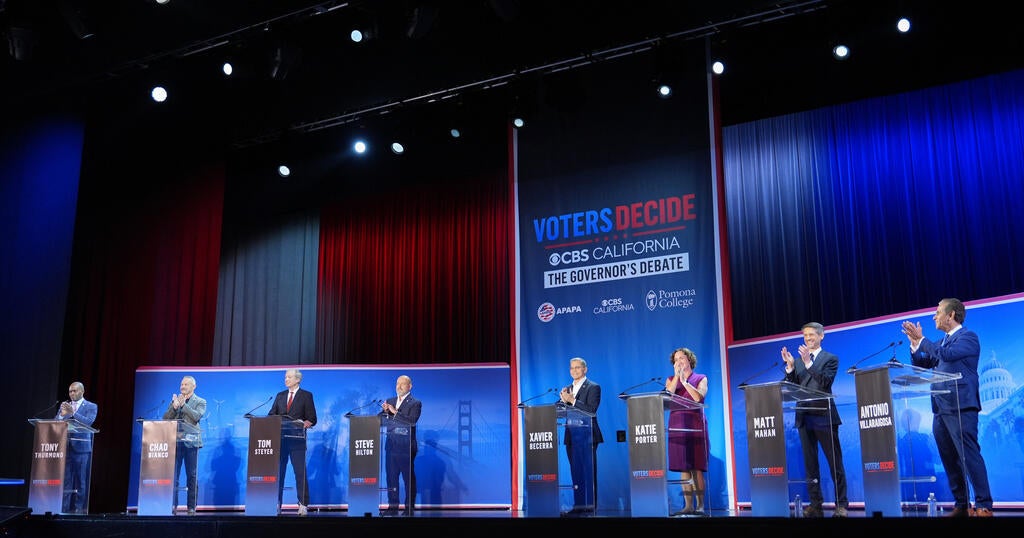
CBS News hosted a California gubernatorial debate at Pomona College on April 29, 2026, with a large field of candidates participating. On the Democratic side attendees included Tom Steyer, Katie Porter, Xavier Becerra, Matt Mahan, Antonio Villaraigosa and Tony Thurmond. Two Republicans on stage were Steve Hilton and Chad Bianco. Recent polls show a competitive and unsettled race ahead of the June 2 jungle primary: a CBS News poll has Republican Steve Hilton narrowly leading, with Steyer and other Democrats close behind and roughly one-quarter of voters undecided. Debate questions were drawn from CBS polling on voters’ top concerns — healthcare, insurance, education, homelessness, immigration and cost of living — and affordability featured prominently in candidates’ remarks. Democrats on stage presented differing policy proposals (including support and opposition to a proposed one-time 5% tax on billionaires), while Republicans attributed the state's affordability challenges to prolonged Democratic governance and proposed tax cuts. Specific moments highlighted in coverage included attacks on policy specifics and background (for example, questions about Steyer’s past investments), Becerra defending his federal experience and criticizing the Trump endorsement of Hilton, and Porter emphasizing her perspective as a single mother. The article notes polls show the field tightly clustered, leaving the outcome of which two candidates will advance to November uncertain.
Biblical Reflection
From a Christian perspective this coverage highlights several spiritual and moral themes relevant to how Christians should weigh political news. First, the story underscores the perennial tension between rhetoric and concrete policy. Debate formats and media summaries often reward memorable lines and personal attacks over careful explanation of trade-offs and implementation — Christians should value truth, clarity, and honest accountability in political discourse (Ephesians 4:25). Second, the presence of billionaire candidates, special-interest critiques, and a ballot initiative taxing wealth calls Christians to reflect on stewardship, justice, and the common good. Scripture repeatedly calls leaders to care for the poor and vulnerable (e.g., Isaiah, Amos, Jesus’ teaching), and public discussion about housing, healthcare, and homelessness should be measured against whether policies protect the least advantaged and promote flourishing. Third, both partisan accusations and bipartisan fracturing in the debate point to the human tendencies toward pride, factionalism, and scapegoating. The Christian response is to resist reductionist narratives that make political actors into idols or villains and instead seek humility, discernment, and the long-term welfare of neighbors. Finally, media framing — emphasizing poll leads, clashes, and one-liners — can skew public perception; Christians should probe beyond headlines for substantive proposals, motives, and likely impacts, asking whether proposals promote justice, mercy, and wise stewardship. Overall, the article appears fact-focused but naturally emphasizes conflict and polls; readers should look past the spectacle to evaluate character, policy detail, and how each proposal aligns with biblical principles of justice, love, and responsible stewardship.
Scripture in context
This outlook does not yet include contextual Scripture citations. Do not treat a general biblical theme as an exegetical conclusion.
Faithful Response
No prescribed response is offered. Consider the reflection prompts below in your own church context.
Reflection and Discussion
- 1Which candidates’ proposals show concrete plans for protecting the vulnerable (homeless, low-income families, those losing healthcare subsidies) rather than just campaign rhetoric?
- 2How might money, media attention, or endorsements be shaping the debate’s focus, and what criteria should Christians use to weigh influence versus integrity?
- 3Are you evaluating candidates primarily by party loyalty and sound bites, or by evidence, practical outcomes, and whether their policies promote justice and stewardship?
Sources
Reporting links are evidence inputs; Sanctuary News' biblical reflection is commentary.
This outlook currently relies on fewer than two linked sources. Broaden verification before teaching from it.
- 1.Original reportprimary