News Summary
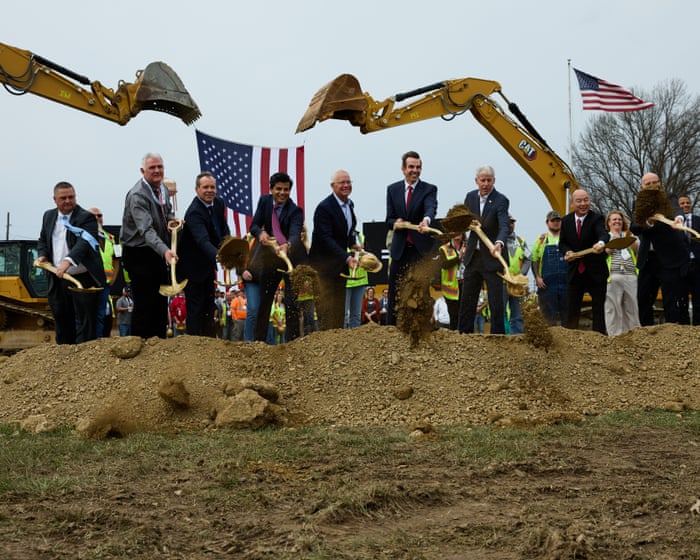
The Guardian reports that OpenAI, Nvidia and Japanese investors are set to develop a very large AI datacenter in Piketon, southern Ohio. The article describes a March groundbreaking attended by named officials, cites a $500 billion investment figure and plans for 8GW of computing capacity, and says proponents promise thousands of jobs. Environmental groups are reported to have voiced concern about potential local impacts. The Guardian frames the project as among the largest proposed globally but does not supply primary documents (contracts, permits, environmental impact statements) in the supplied excerpt; key numerical figures and job projections are not independently documented in the text.
Source and Framing Analysis
Source: The Guardian (single supplied report). The piece uses vivid, scale-emphasizing language (e.g., characterizing the site as one of the world's largest datacenters) and juxtaposes local economic hope with environmental alarm. Strengths: identifies major corporate actors (OpenAI, Nvidia, Japanese investors), location (Piketon, Appalachian foothills), and a high-profile ceremonial groundbreaking. Limitations and uncertainties: the article excerpt does not attribute the $500 billion or 8GW figures to primary contracts or regulatory filings, nor does it provide details underlying the "thousands of jobs" claim, timelines, approval status, or technical/environmental assessments. Readers should treat the reported numerical claims as important leads that require documentary verification and seek permits, financing agreements, environmental impact statements, grid interconnection studies, and workforce analyses to confirm them.
How sources covered this story
Sanctuary separately assesses reporting quality and alignment with Christian virtues. The virtues assessment considers truthfulness, dignity, compassion, justice, peacemaking, humility, and care for vulnerable people. It does not assess a publisher's faith or reward religious language.
Compare 1 reports
Reporting 72/100Virtues 75/100
- Distinctive contribution
- Reports a headline investment figure ($500bn) and specific planned compute capacity (8GW); identifies major corporate actors (OpenAI, Nvidia) and investors; locates the project (Piketon, Appalachian foothills, southern Ohio); highlights simultaneous local optimism about jobs and environmental-group concerns; notes high-profile ceremonial attendance at groundbreaking.
- Framing
- Frames the story as a local tension between economic hope (thousands of jobs, high-profile investment and ceremonial enthusiasm) and environmental concern, using evocative language ('Hope and concern swirls', 'enthusiastically break ground') that underscores both excitement and unease.
- Omissions or uncertainty
- The excerpt does not attribute the $500bn or 8GW figures to a source, nor provide a timeline, financing structure, or breakdown of the 'thousands of jobs' claim. It gives no specific environmental concerns, no local community voices beyond a general mention of environmental groups, and no regulatory or permitting status. The identities and roles of the named officials are given but without sourcing. Important technical and impact details (energy and water use, mitigation plans, tax incentives, environmental review outcomes) are missing.
- Why these scores
- The passage concisely communicates several high-value facts and frames a clear local conflict, which is appropriate for a news brief. However, it lacks attribution for major quantitative claims (investment size, compute capacity, job numbers) and provides limited evidence or detail on the environmental concerns it cites. Balanced tone and named participants support reliability, but missing sourcing and detail limit the score. The excerpt treats stakeholders respectfully and neutrally, presenting both economic promise and environmental concern rather than sensationalizing one side. It acknowledges the dignity of local interests (jobs) and care for the environment, demonstrating fairness and humility. The lack of deeper context or explicit attention to vulnerable groups prevents a higher score, but there is no dehumanizing or exploitative language.
Biblical Reflection
A Christian response holds together care for neighbors’ livelihoods and careful stewardship of creation. Economic investment that may bring jobs and infrastructure can be a blessing to a community that needs opportunity, yet environmental and public-health concerns raised by local advocates are morally significant and deserve evidence-based attention. Christians should insist on truthfulness and transparency in public claims (about investment size, compute capacity, jobs, and timelines), humility in listening to residents and environmental advocates, and justice so benefits do not disproportionately burden vulnerable people or the land they depend on. Practically this means pressing for independent environmental review, binding community-benefit commitments, clear workforce-development plans, and mechanisms to protect air, water, and long-term community health while supporting legitimate economic opportunity.
Scripture in context
- 1The Guardian reports OpenAI, Nvidia and Japanese investors are set to spend $500bn on one of the largest artificial intelligence datacenters on the planet and cites a planned capacity of 8GW of AI computing power. — This passage identifies scale and principal corporate actors; it is a starting point for seeking the primary documents that would substantiate investment size and technical capacity (e.g., financing contracts, engineering plans, power purchase agreements).
- 2The article says a March ground-breaking was attended by named officials (reported as the energy secretary Chris Wright, the commerce secretary Howard Lutnick) and that the project is said to promise thousands of jobs. — Attendance by public figures signals formal promotion and political interest; the job promises are a key local claim requiring breakdowns (construction vs. permanent operations, skill levels, hiring commitments).
- 3Environmental groups are reported to have voiced concern about the project’s local impacts. — This raises questions about specific environmental risks (water use, ecosystem disruption, emissions, waste heat, grid stress) and whether independent environmental assessments and mitigation plans exist.
- 4Genesis assigns humanity a caretaking role over creation rather than absolute exploitation (Genesis 2:15 referenced for theological framing). — The theological principle supports pursuing economic opportunities in ways that protect land, water, and community health; development decisions should weigh long-term stewardship alongside human flourishing.
Faithful Response
Pray for wisdom and discernment for civic leaders, company officials, community advocates, and families whose livelihoods may be affected.
Request and review primary documents: environmental impact statements, permit filings, power purchase and financing agreements, staffing and workforce-development plans, and any community-benefit agreements. Encourage public officials to make these documents available for independent review.
Advocate for binding community protections: clear commitments on who will be hired, pathways for local workforce training, enforceable environmental mitigation measures, monitoring, and fair compensation for harms if they occur.
Support neutral public information events where independent technical experts (energy, water, ecology, labor) explain likely impacts and trade-offs to residents.
Provide pastoral care and a listening space for congregants with differing concerns—those hoping for jobs and those fearing environmental or health harms—and foster peacemaking rather than polarization.
Encourage congregations to partner with local civic and environmental groups where shared concerns about vulnerable neighbors and the land align.
Reflection and Discussion
- 1What kinds of primary documents and independent studies would you require to evaluate claims about the project’s size, timeline, and community benefits?
- 2How should Christian concern for good jobs be balanced with responsibilities to protect water, air, soil, and the health of neighbors who may be disproportionately affected?
- 3Who in the local community is most likely to gain, and who is most likely to bear costs? What mechanisms would justice require to protect the vulnerable?
- 4How can congregations offer both practical support for workforce development and prophetic witness for environmental stewardship without adopting partisan postures?
Sources
Reporting links are evidence inputs; Sanctuary News' biblical reflection is commentary.
This outlook currently relies on fewer than two linked sources. Broaden verification before teaching from it.
- 1.Hope and concern swirls for Ohioans around ‘world’s largest datacenter’primary_reporting