News Summary
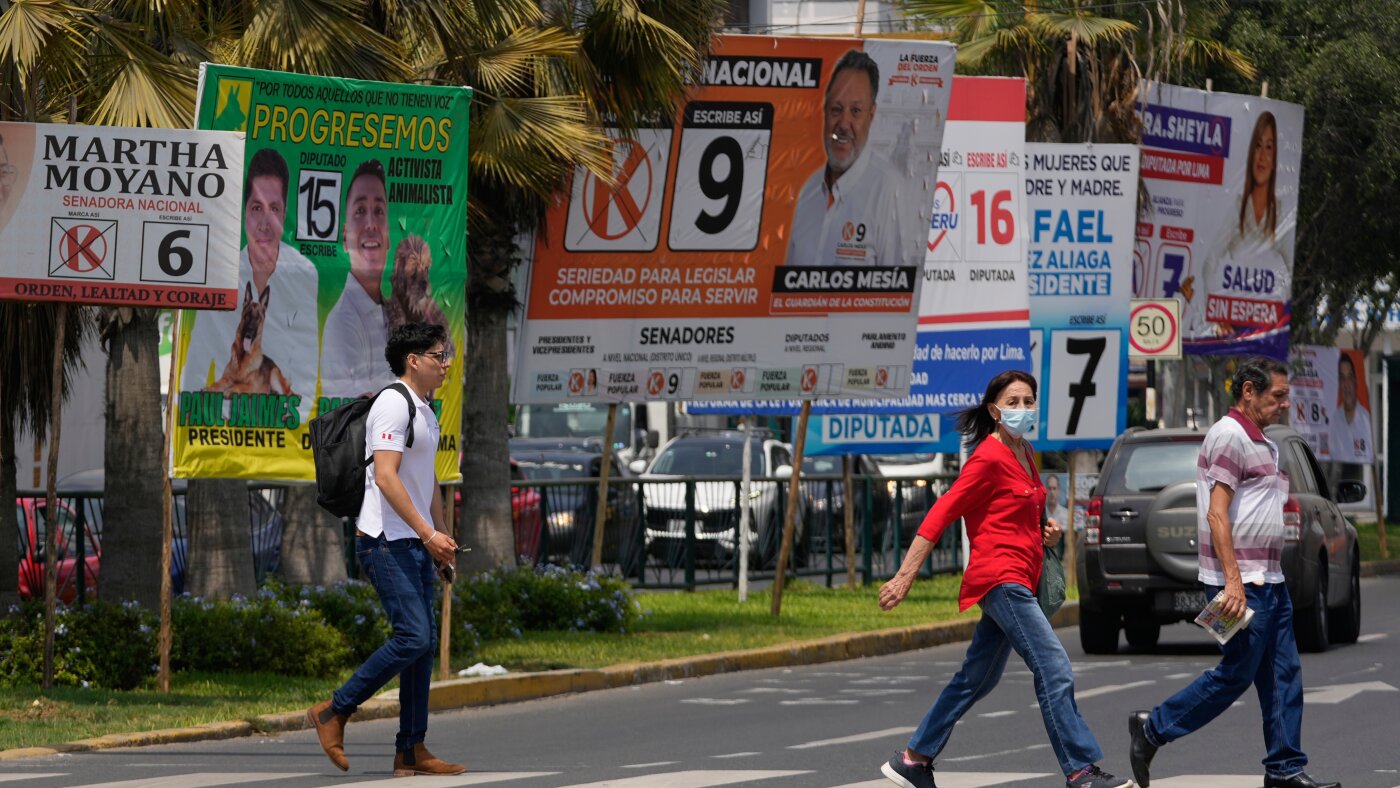
Peru’s presidential election features a record 35 candidates and is being held against a backdrop of prolonged political instability. Voters face a large ballot with many low-profile contenders; polls show no candidate currently commanding broad support, making a June run-off between the top two vote-getters likely. Keiko Fujimori is leading in many polls at roughly 10% support; she is known for invoking parts of her father Alberto Fujimori’s legacy while attempting to distance herself from his human rights abuses and corruption. Other notable candidates polling in single digits include Rafael López Aliaga, who has made unsubstantiated claims of potential electoral fraud and threatened the head of Peru’s electoral agency, and candidates such as Carlos Álvarez and Ricardo Belmont, who have drawn attention for their styles and controversial remarks. Public dissatisfaction with Peru’s political class is high: surveys indicate strong unwillingness to vote for certain established figures, and the current Congress has low approval ratings amid accusations it has passed laws favoring organized crime. The country faces significant social problems, including an extortion epidemic, a record homicide rate, and rising food insecurity (with the World Food Programme reporting food insecurity rising from about 25% before the pandemic to around 51% now). Observers and anti-corruption groups describe a link between corruption, impunity, and the expansion of organized crime; voters express desire for “fresh blood” unconnected to the sitting Congress. Given the crowded field and fragmentation of support, analysts expect the election to go to a run-off.
Biblical Reflection
This report highlights deep civic brokenness: chronic corruption, fear, and social need have left many Peruvians hungry for security and honest governance. From a Christian perspective, such conditions reveal both structural sin (corruption, impunity, exploitation) and personal sin (threats, demagoguery, misogyny, xenophobia). The article’s factual account of candidates, polling, and public sentiment rightly points to legitimate civic concerns — accountability, rule of law, and protection of the vulnerable — which Scripture repeatedly upholds. At the same time, readers should note likely framing choices and shorthand in coverage: dramatic labels (e.g., likening a candidate to another country’s politician) and personality-focused narratives can distract from deeper causes and solutions, such as institutional reform, civic virtue, and social care. Christians should resist two temptations: idolizing a political savior who promises order at any cost, and succumbing to cynical resignation that no change is possible. Biblical truth calls for justice, mercy, and humility in leadership (not merely strongmen), protection of the poor and vulnerable, and repentance and restoration where wrongdoing has occurred. Practically, the church’s role in such contexts includes praying for honest elections and peaceful process, advocating for justice and anti-corruption measures, supporting community efforts to relieve hunger and insecurity, and modeling servant leadership that resists vengeance and fear-driven politics.
Scripture in context
This outlook does not yet include contextual Scripture citations. Do not treat a general biblical theme as an exegetical conclusion.
Faithful Response
No prescribed response is offered. Consider the reflection prompts below in your own church context.
Reflection and Discussion
- 1Does the coverage prioritize personalities and controversy over the systemic reforms Peru needs (rule of law, anti-corruption institutions, social safety nets)?
- 2Are we tempted to prefer a ‘strong’ leader who promises security even if that leader compromises justice or abuses power?
- 3How does the church in Peru (and Christians elsewhere) balance calls for political accountability with the call to serve and protect the vulnerable regardless of who holds power?
Sources
Reporting links are evidence inputs; Sanctuary News' biblical reflection is commentary.
This outlook currently relies on fewer than two linked sources. Broaden verification before teaching from it.
- 1.Original reportprimary