A little more detail
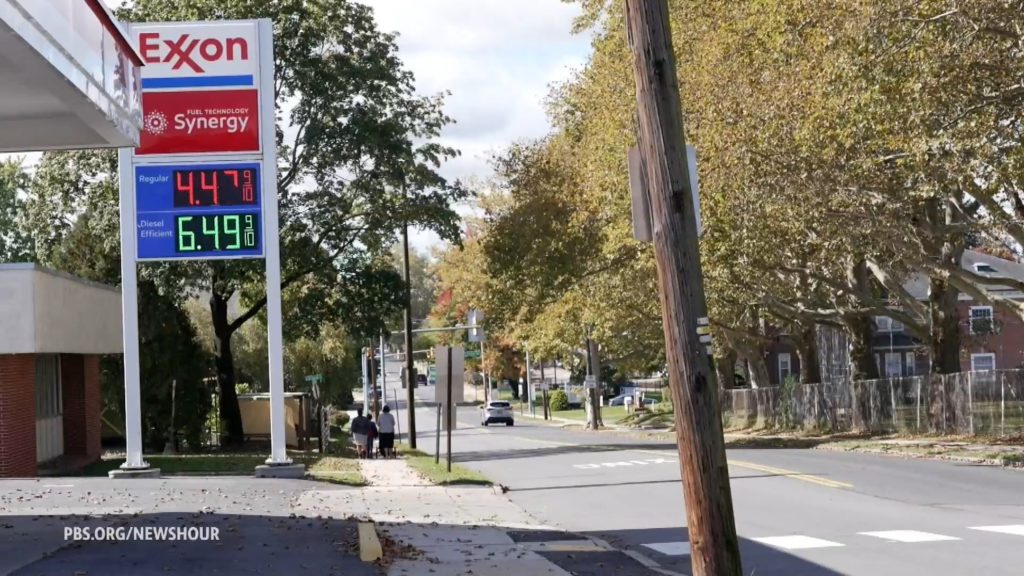
As reported by PBS NewsHour: Democrats are favored to win control of the U.S. House in November, but the size of their majority could turn on a small number of competitive contests. Four of those competitive congressional races are in Pennsylvania. The piece attributes a key part of Democratic strategy to voters’ frustration with high prices and to low presidential approval for former President Trump, arguing Democrats are betting those factors could shift outcomes in these districts. The short report is interpretive and attributes the causal story to Democratic strategists; it does not provide polling figures, district names, or vote margins to independently substantiate the claim.
Source and Framing Analysis
Source: PBS NewsHour (single supplied piece). Framing: The article frames the story as strategic political analysis—Democrats view economic frustration and low presidential approval as potential drivers that could flip several Pennsylvania seats and thereby affect the size of the House majority. Attribution: The causal claims are attributed to Democratic strategists and the reporting of Lisa Desjardins rather than presented as independently demonstrated facts. Strengths: concise, cautious language; reputable outlet; clear attribution of motives and expectations. Limitations and uncertainties: no polling data, no district-level detail (which four districts), no vote margins or timeline for how 'gains in 2024' are measured; causal linkage (inflation + low approval → changed outcomes) is asserted as strategy rather than empirically established. Because the piece is short and interpretive, readers should treat the strategic expectation as an explanation for why Democrats are expending resources, not as proof that those factors will determine results.
How sources covered this story
Sanctuary separately assesses reporting quality and alignment with Christian virtues. The virtues assessment considers truthfulness, dignity, compassion, justice, peacemaking, humility, and care for vulnerable people. It does not assess a publisher's faith or reward religious language.
Compare 1 reports
Rank 1
PBS NewsHour: Pennsylvania congressional races could hinge on who voters blame for high pricesReporting 78/100Virtues 75/100
- Distinctive contribution
- States that the size of a potential Democratic House majority could hinge on four Pennsylvania races and that Democrats are banking on low presidential approval and voter frustration over high prices to change the political landscape.
- Framing
- Neutral, explanatory framing that attributes expectations to Democrats and highlights two causal factors (Trump's low approval and high prices) as potential drivers of voter shifts. The language is cautious and presents the scenario as contingent.
- Omissions or uncertainty
- The excerpt omits specifics: which four districts, current incumbents, polling data or numerical evidence for the claims, timing/context of the 'gains in 2024,' and direct quotes or sourcing for the assertion that Democrats are 'betting' on these factors. It does not quantify how much these factors have shifted or might shift votes.
- Why these scores
- The brief excerpt is careful and appropriately uncertain, crediting Democrats with a strategy rather than asserting a deterministic outcome. It succinctly identifies the stakes and key issues without sensational language. The main limitation is lack of detail and sourcing in the supplied text, but for a short summary it responsibly conveys the core context. The passage is truthful, restrained, and non-dehumanizing; it treats political actors descriptively rather than morally vilifying them and acknowledges uncertainty. It neither exploits suffering nor omits relevant context in a way that would harm dignity. Score reflects solid alignment while noting the excerpt is a short political summary rather than an explicitly justice- or compassion-focused piece.
Biblical Reflection
A Christian public response values truth-telling, mercy, and care for vulnerable neighbors. Politically consequential races should be covered and discussed honestly, but Christians should resist reducing fellow citizens to partisan targets or scapegoats. Economic suffering (rising prices) is a real pastoral concern: sermons and congregational action should focus on concrete neighbor-care—food assistance, financial counseling, community support—while encouraging responsible civic engagement. Public persuasion should prioritize evidence-based claims, humility about uncertainty, and peacemaking in conversations across partisan lines. The church’s aim is not merely to win elections but to seek justice for those harmed by economic trends and to preserve the dignity of all participants in civic life.
Scripture in context
- 1 — Paul urges humility and self-emptying modeled on Christ in a letter addressing unity and moral behavior within an early Christian community. — This passage calls Christians away from triumphalism and partisan contempt. In a polarized electoral season, it invites humility, attentiveness to others’ interests, and modeling Christlike conduct when debating public policy and engaging politically.
- 2 (parable of the Good Samaritan) — Jesus tells a story that broadens the definition of 'neighbor' to include anyone in need, across social and ethnic boundaries. — When economic conditions like high prices harm neighbors, the Christian response is practical compassion and advocacy for policies and local efforts that relieve suffering, rather than only partisan point-scoring.
Faithful Response
Pray for those affected by rising costs, for voters and leaders to seek the common good, and for truthful public discourse.
Seek reliable, local data about which Pennsylvania districts are competitive and why before accepting strategic causal claims; encourage the congregation to value evidence over partisan rhetoric.
Offer practical neighbor-care (benevolence funds, food assistance, financial counseling) for families stressed by inflation regardless of their political identity.
Host informed, civil forums where local economic conditions and policy options are explained clearly, and where people can voice concerns without dehumanizing opponents.
Model humility in public speech: speak truth, but avoid demonizing political opponents; prioritize peacemaking and the protection of vulnerable neighbors.
Reflection and Discussion
- 1Am I discussing these races to inform and serve neighbors, or chiefly to score political points?
- 2What specific evidence would convince me that price inflation and presidential approval are shifting these Pennsylvania races, and where can I find that evidence?
- 3How is my congregation prepared to help neighbors suffering from high prices regardless of electoral outcomes?
- 4In public conversations, how can I practice humility and preserve the dignity of those who disagree with me?
Sources
Reporting links are evidence inputs; Sanctuary News' biblical reflection is commentary.
This is a developing, single-source report. Details may change as more reporting becomes available.
Download source notes