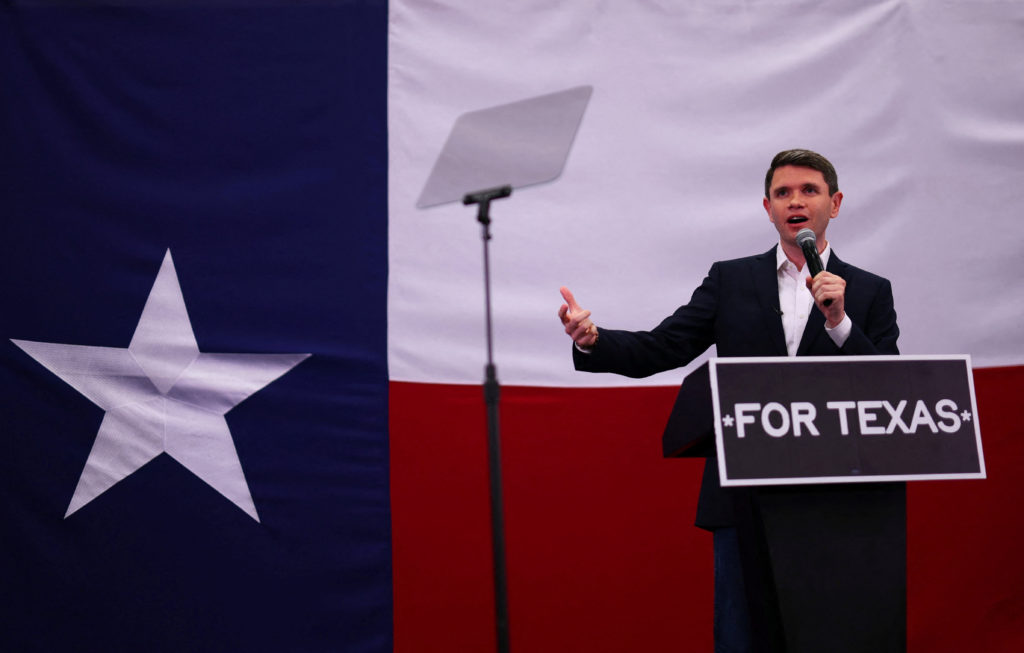
A little more detail
Reporting assembled for this cluster indicates incumbent Ken Paxton and challenger James Talarico are contesting a U.S. Senate seat in Texas as campaigns enter a closing phase. PBS NewsHour situates the race in the national timeline as early voting nears conclusion and reports former President Trump was 'campaigning virtually' in the broader election moment; PBS also cites a national early-ballot figure of nearly 50 million and notes roughly 112 million voted in the 2022 midterms. CBS News frames the contest as potentially decisive for control of the U.S. Senate and says the story includes interviews with supporters and local observers on the ground.
How sources covered this story
Sanctuary separately assesses reporting quality and alignment with Christian virtues. The virtues assessment considers truthfulness, dignity, compassion, justice, peacemaking, humility, and care for vulnerable people. It does not assess a publisher's faith or reward religious language.
Compare 2 reports
Reporting 73/100Virtues 72/100
- Distinctive contribution
- States the race's potential to determine control of the U.S. Senate and indicates the piece includes on-the-ground interviews with supporters and local observers, adding a local-perspective angle.
- Framing
- High-stakes, winner-takes-significance framing: presents the contest as potentially decisive for Senate control and focuses on human/local viewpoints through interviews.
- Omissions or uncertainty
- No polling numbers, no dates or vote margins, no explanation why or how the race could flip control, no policy or demographic details, and no identification of which supporters or observers were interviewed. The excerpt does not quantify the stakes or attribute the assertion about Senate control to any source.
- Why these scores
- The excerpt is concise and not misleading: it correctly signals national importance and primary reporting method (interviews). As an excerpt it lacks specifics (data, sourcing, dates), but that is consistent with a short summary/teaser rather than a substantive defect. The wording is responsibly cautious ('may determine'). Neutral, non-dehumanizing presentation that highlights ordinary people (supporters/local observers), which aligns with respect for human dignity and humility. The excerpt does not display bias, sensationalism, or exploitation, but it also does not explicitly emphasize compassion, justice, or care for vulnerable groups.
Reporting 74/100Virtues 71/100
- Distinctive contribution
- Identifies the campaign phase ('closing sprint' as early voting nears conclusion) and flags former President Trump's virtual campaigning in relation to the race, giving temporal and national-political context.
- Framing
- Time-sensitive, campaign-dynamics framing: emphasizes the endgame of the campaign and the role of national figures (Trump) rather than detailed policy debate or local voter perspectives.
- Omissions or uncertainty
- No specifics on timing (exact dates), how close the race is in polls, what effect Trump's virtual campaigning may have, or any local reactions. The excerpt doesn't provide sourcing or data to support the 'closing sprint' characterization.
- Why these scores
- The excerpt clearly and responsibly signals the story's focus (closing phase, national attention). It's concise and not misleading. Like many short summaries, it lacks supporting detail and attribution in the excerpt, but that limitation appears intrinsic to the summary format rather than poor reporting. Neutral, factual wording that avoids dehumanization or sensationalism and thereby respects truthfulness and dignity. The excerpt does not display explicit compassion or justice framing but also contains no elements that conflict with those virtues.
Biblical Reflection
A Christian outlook on the reporting of 'Paxton and Talarico Compete in Texas Senate Race' keeps factual reporting and moral evaluation distinct. Seek truth by verifying facts before fixed judgments; practice mercy and dignity toward candidates, campaign staff, and voters; evaluate policies by how they protect the vulnerable and serve the common good; pursue peacemaking and humility in public conversation; and prioritize prayerful care for neighbors affected by election outcomes. In practice, this means listening to local Texans' needs, resisting dehumanizing rhetoric, and judging policy proposals by their likely effects on people in need rather than partisan identity alone.
Scripture in context
- 1 (summary reference, not quotation) — A scriptural call to humility and preferring the interests of others over selfish ambition, applied to political life. — Use this passage as a prompt to listen patiently to those with whom you disagree in the context of the Texas Senate contest; avoid reducing opponents or voters to caricatures; prioritize policies and arguments that seek the welfare of neighbors—especially the most vulnerable in Texas communities.
Faithful Response
Seek fuller reporting before firm judgments: read the full PBS and CBS pieces, official election-administrator statements, and polling data to clarify turnout and competitiveness.
Pray for candidates, voters, and election workers in Texas, asking for wisdom, humility, and peaceful conduct.
Support nonpartisan civic participation: host or attend candidate forums, voter-registration drives, and informational sessions that treat participants with dignity.
Evaluate the race by concrete effects: ask how each candidate’s record and proposals would impact health care access, economic security, immigration-affected communities, public safety, and other needs of vulnerable Texans.
Model respectful discourse in congregations and online: prioritize listening questions, avoid demonizing language, and care pastorally for those distressed by the campaign climate or its outcomes.
Reflection and Discussion
- 1How can our faith shape the way we discuss the Paxton–Talarico race without demonizing people who disagree?
- 2Which local needs in Texas (urban and rural) should guide our judgment about what matters most in choosing a senator?
- 3What specific information is missing from the short excerpts that we need before forming a definite view of this race's likely outcome?
- 4How can a congregation create space for civil conversation about this contested election while caring for members anxious about political outcomes?
Sources
Reporting links are evidence inputs; Sanctuary News' biblical reflection is commentary.
This is a developing, single-source report. Details may change as more reporting becomes available.
Download source notes