News Summary
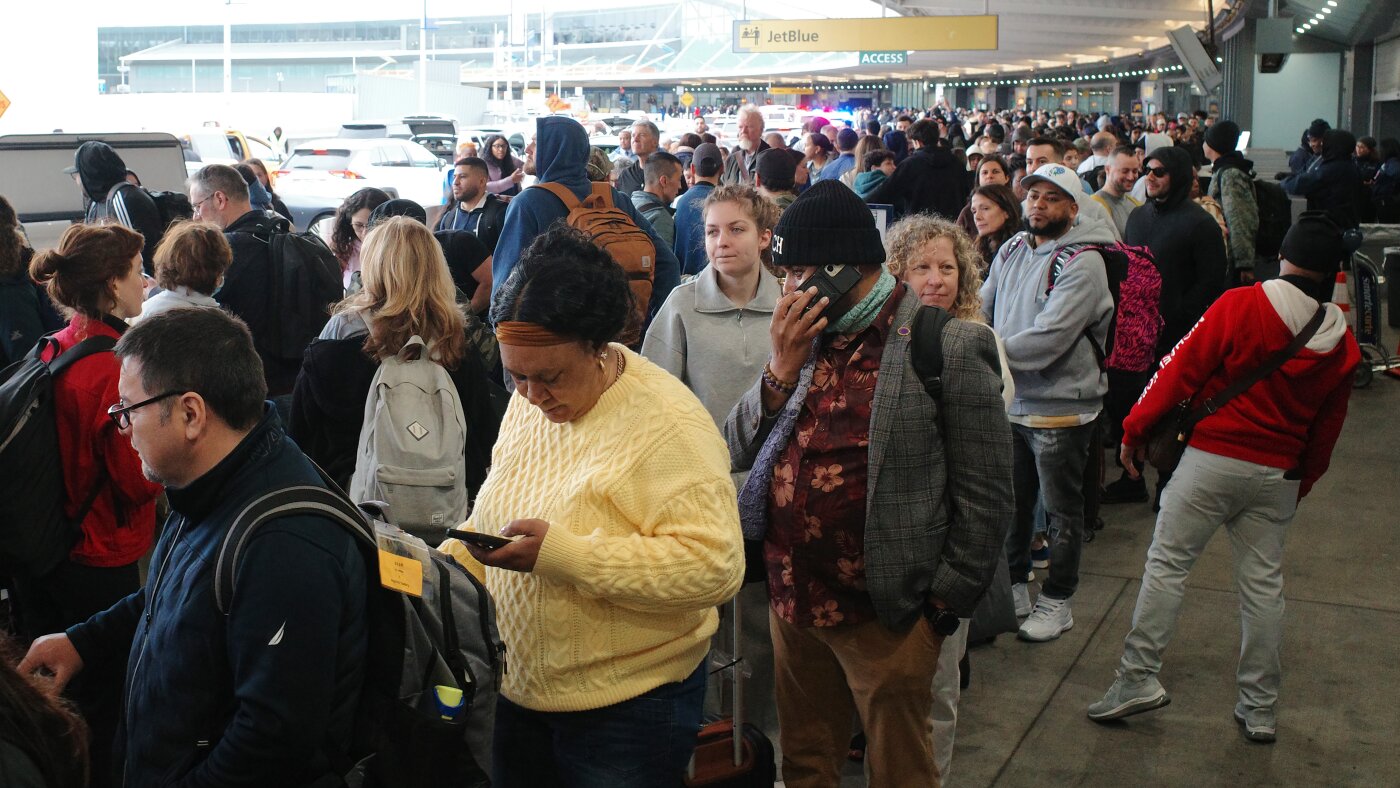
The article reports that a partial U.S. government shutdown has led to unusually long TSA security lines at many airports, with some waits exceeding four hours. The TSA says staffing shortfalls and unpaid workers are contributing to delays; the MyTSA app is suspended during the shutdown. Wait times vary widely by airport (examples given: 90 minutes–2.5 hours in Houston, four hours in Atlanta, five minutes at LAX). The piece offers practical advice for travelers who risk missing flights: check TSA wait times before leaving, ask airport staff about alternate lines, use airline apps to rebook, call or visit airline service desks, use lounge or frequent-flyer status if available, and consider alternative transport. Several airlines (Delta, United, Southwest, Allegiant) are offering temporary rebooking waivers at specific airports, waiving change fees and fare differences within cabin classes; policies differ by carrier. The article notes that airlines are not obligated to accommodate missed flights caused by security delays, that travel insurance often does not cover delays from long TSA lines, and that travelers should consider refunds, vouchers, or alternative travel such as driving if rebooking options are limited. Reporting credited to Bill Chappell and NPR.
Biblical Reflection
From a Christian perspective, this story raises both practical and moral concerns. Practically, the article is a consumer-focused piece: it equips travelers with coping strategies and highlights where airlines are helping. Spiritually and ethically, it points to the real human cost of policy breakdowns — unpaid federal workers, strained frontline employees, and travelers inconvenienced through no fault of their own. The article largely frames the issue as an operational problem and centers individual strategies rather than pressing systemic accountability. That emphasis can obscure the moral responsibility of governing authorities to provide for workers and to steward public institutions responsibly. Christians should note two truths: first, the call to treat workers justly (and to care about those who are unpaid or overburdened), and second, the call to patience and neighborly kindness in moments of public frustration (which includes not venting on frontline staff). The news piece is fact-driven and practical, but readers should be alert to its implicit bias toward individual consumer solutions rather than structural critique. Christians can respond by praying for those affected, showing compassion to airport and airline workers, and holding public leaders accountable for policies that harm vulnerable workers and public safety.
Scripture in context
This outlook does not yet include contextual Scripture citations. Do not treat a general biblical theme as an exegetical conclusion.
Faithful Response
No prescribed response is offered. Consider the reflection prompts below in your own church context.
Reflection and Discussion
- 1Does the article's focus on traveler strategies distract from asking who bears moral and legal responsibility for unpaid workers and the operational failures?
- 2How does the piece frame frontline employees — as part of the problem, or as people affected by systemic decisions — and what does that signal about our priorities?
- 3What forms of civic or communal action (prayer, advocacy, voting, contacting representatives) should Christians consider when public policy causes harm to workers and the common good?
Sources
Reporting links are evidence inputs; Sanctuary News' biblical reflection is commentary.
This outlook currently relies on fewer than two linked sources. Broaden verification before teaching from it.
- 1.Original reportprimary