A little more detail
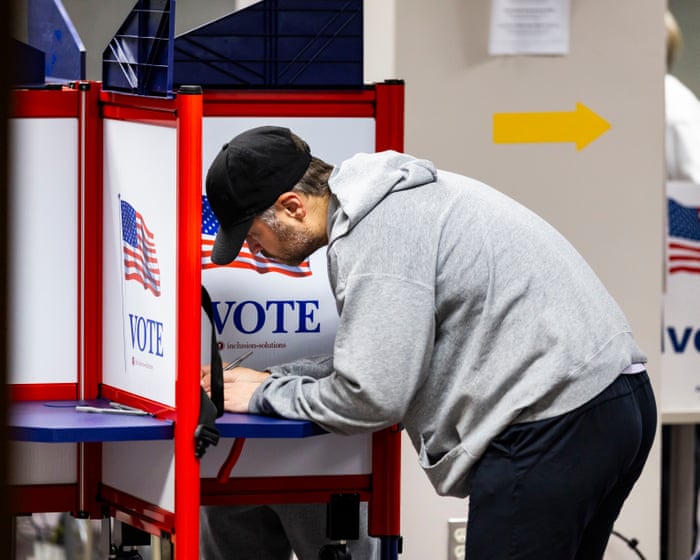
A University of Florida analysis, reported by The Guardian, found that more than 50.5 million Americans had cast early ballots in the 2026 US midterm elections as of Saturday morning. That total is roughly 5 million higher than early voting in the 2022 midterms. The Guardian story also notes that in states which collect and publish party of early voters, Democrats outnumber Republicans. The article attributes the totals to the UF analysis but provides limited methodological detail and no full state-by-state breakdown.
Source and Framing Analysis
Primary reporting for this cluster relies on a Guardian article that in turn attributes its headline figures to a University of Florida analysis. The framing emphasizes a surge in early voting compared with 2022 and highlights a Democratic advantage in states that report party data. Key limitations in the available coverage: the Guardian excerpt does not specify the exact UF dataset or timestamp, lacks methodological detail (how mail vs in-person and provisional ballots are counted), does not provide a complete state-by-state breakdown, and does not show which specific states supply party-of-voter data. Because the claim depends on a third-party tally, independent confirmation (state election offices, secretaries of state, or the UF tracker itself) is needed to validate the totals and to interpret their likely electoral impact. The coverage responsibly notes the increase and the partisan pattern where reported but leaves open how early totals will translate into final turnout or electoral outcomes.
How sources covered this story
Sanctuary separately assesses reporting quality and alignment with Christian virtues. The virtues assessment considers truthfulness, dignity, compassion, justice, peacemaking, humility, and care for vulnerable people. It does not assess a publisher's faith or reward religious language.
Compare 1 reports
Reporting 78/100Virtues 75/100
- Distinctive contribution
- Reports a specific early-vote total (more than 50.5 million as of Saturday morning) from a University of Florida analysis, quantifies the increase relative to 2022 (~5 million more), and notes partisan turnout patterns in states that publish that breakdown.
- Framing
- Straightforward news reporting that emphasizes a surge in early voting and frames the turnout data as consequential for closely contested midterm races.
- Omissions or uncertainty
- The excerpt does not specify the exact timestamp or time zone for "Saturday morning," which UF analysis is cited or its methodology, state-by-state breakdowns, distinctions between mail and in-person early votes, or precise partisan numbers and which states show Democrats outnumbering Republicans. It also does not indicate how provisional/invalid ballots are treated.
- Why these scores
- Clear, concise, and responsibly attributed to a named analysis (University of Florida) with specific comparative figures, which is appropriate for a short news update. Deductions for lack of methodological detail, no direct link to the UF analysis in the supplied excerpt, and limited granularity (no state-level or vote-type breakdowns). The excerpt is factual, non-sensational, and informative—supporting truthfulness and public accountability. It does not dehumanize or exploit subjects and helps citizens understand civic participation. Points are reduced slightly because the excerpt lacks deeper context that could better serve justice-focused readers (e.g., demographic or access-related detail).
Biblical Reflection
Factual outlook: The reported total (more than 50.5 million early ballots) signals unusually high early engagement relative to 2022, but the ultimate effect on control of Congress remains uncertain because (a) party breakdowns are available only in some states, (b) the UF figure’s methodological details are not provided in the article excerpt, and (c) early ballots are one component of total turnout. Christian outlook: High civic participation is an opportunity to live responsibly in the public square. Christians should seek truth by verifying public claims, practice mercy and humility in partisan conversations, care for vulnerable voters by removing barriers to participation, and pray for leaders and neighbors. Public celebration or alarm should be tempered by concern for justice, peace, and the dignity of every voter rather than partisan triumphalism.
Scripture in context
- 1 — A call to people living under foreign rule to seek the welfare of the city where they live and to act for the common good even while hoping for future restoration. — This passage supports a posture that combines present civic responsibility with hope—for Christians, participating in and supporting fair, accessible voting processes can be an expression of seeking the common good of the communities where we live.
Faithful Response
Verify turnout numbers using primary sources (state election officials, the University of Florida public tracker) before sharing or acting on them.
Offer nonpartisan practical help (information about how and where to vote, rides to the polls, language access) especially to neighbors who face barriers.
Pray for clarity, just administration of elections, protection for vulnerable voters, and charity within communities during a high-stakes season.
Model humility and truthfulness in public speech; avoid amplifying unconfirmed or selectively framed partisan claims.
Create safe, respectful spaces in congregations for members with differing views and encourage service that protects access to the ballot.
Reflection and Discussion
- 1How does the report of more than 50.5 million early votes shape our sense of urgency—or calm—about the upcoming election?
- 2In what practical ways can congregations support full and fair participation for neighbors who face barriers to voting?
- 3How should Christians balance legitimate political convictions with the call to love and dignify those who disagree?
- 4What steps will we take to verify election-related claims before repeating them in sermons, social media, or pastoral conversations?
Sources
Reporting links are evidence inputs; Sanctuary News' biblical reflection is commentary.
This is a developing, single-source report. Details may change as more reporting becomes available.
- 1.More than 50m Americans cast ballots in early voting with three days to go before midtermsprimary_reporting