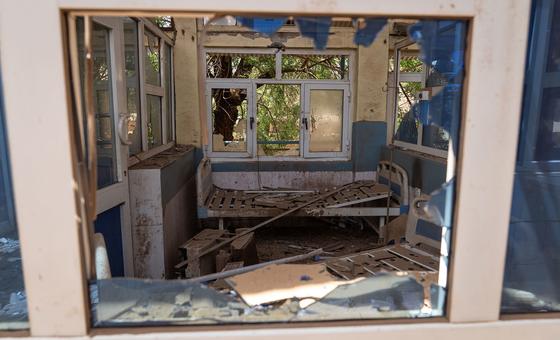
News Summary
UN News reports that more than 10,000 attacks on healthcare occurred worldwide over the past eight years, describing the rate as roughly one attack every six hours. The report names contexts including the war in Ukraine and the ongoing Ebola response in eastern Democratic Republic of the Congo (DRC), and it asserts that those responsible have largely not been held to account. The supplied article presents a high-level, aggregate claim but does not include underlying datasets, definitions, or detailed attribution in the supplied text.
Source and Framing Analysis
Source: the core factual claims in this cluster come from a single UN News article (titled in supplied material as "An attack on healthcare every six hours, and no one held to account"). Framing: the piece uses a striking aggregate figure and specific crisis examples (Ukraine, eastern DRC) to communicate scale and urgency; emotive language (e.g., "brutal conflict", "spreading rapidly") underscores humanitarian concern. Sourcing gaps and methodological omissions in the supplied text limit independent verification: the article excerpt does not specify who compiled the >10,000 figure, how an "attack" is defined (physical assault, threats, obstruction, or other interference), the precise eight-year window dates, geographic breakdowns, casualty totals, or the process for incident verification and attribution. Those absences matter for interpretation (trend analysis, responsibility, and policy responses). The framing responsibly highlights harm to health services and vulnerable people, aligning with humanitarian concern, but readers should treat the aggregate as a reported figure requiring further sourcing before use as a basis for policy or scholarly claims.
How sources covered this story
Sanctuary separately assesses reporting quality and alignment with Christian virtues. The virtues assessment considers truthfulness, dignity, compassion, justice, peacemaking, humility, and care for vulnerable people. It does not assess a publisher's faith or reward religious language.
Compare 1 reports
Reporting 72/100Virtues 80/100
- Distinctive contribution
- Gives a global aggregate figure (>10,000) for attacks on healthcare over an eight-year period and links those attacks to specific contemporary crises (Ukraine and the eastern DRC Ebola outbreak).
- Framing
- Frames the issue as a large-scale, urgent global problem by presenting a high aggregate total and invoking recent crises; uses emphatic language (e.g., "brutal conflict", "spreading rapidly") to underscore severity.
- Omissions or uncertainty
- The excerpt does not attribute the >10,000 figure to any source or explain methodology (who counted, what counts as an "attack"). It lacks temporal specifics beyond "past eight years" (start/end dates), geographic breakdowns, details on types of attacks or victims, and evidence for linking those examples to the aggregate total. No information on consequences, accountability pathways, or who reports the Ukraine/DRC examples is provided.
- Why these scores
- The sentence is concise and communicates a striking, newsworthy statistic and relevant examples, which serves a clear informational purpose. However, in the supplied text the claim is unsourced and lacks methodological detail or attribution; that reduces verifiability. For a brief lede or summary this is acceptable, but the absence of sourcing or definition of terms warrants a moderate deduction. The excerpt highlights harm to healthcare and vulnerable populations, conveying concern and urgency without dehumanizing language. It aligns with virtues of compassion and care for the vulnerable by drawing attention to attacks on health services. It does not, however, include victim voices, calls for justice, or detailed corrective action, so it does not score at the very highest level.
Biblical Reflection
From a Christian moral perspective, intentional violence against health facilities, workers, patients, or ambulances is a profound affront to commitments to protect life and serve the vulnerable. Health workers and patients embody neighbor-love in practice; attacks on them obstruct mercy and undermine human dignity. Christians are called both to lament the harm and to press for justice, protection, and impartial medical care—advocating for medical neutrality, accountability for perpetrators, and practical support for affected caregivers and communities. This outlook centers truth-speaking about harms, mercy for victims, pursuit of justice for the injured and bereaved, peacemaking where possible, and practical care for vulnerable neighbors without partisan dehumanization.
Scripture in context
- 1Matthew 25:31-46 (teaching on the final judgment) — The Gospel of Matthew teaches about final judgment in terms of concrete acts of mercy—feeding the hungry, caring for the sick, welcoming the stranger—and identifies such acts with service to Christ. — This teaching calls Christians to defend and support those who care for the needy. Attacks on healthcare impede the service Jesus praises; protecting medical workers and patients is therefore an expression of the mandate to care for the least.
- 2Luke 10:25-37 (the Parable of the Good Samaritan) — Jesus' parable that reframes neighbor-love as active compassion across social boundaries commends those who stop to aid an injured stranger despite cost or risk. — The parable challenges believers to cross lines to aid the hurt. Supporting safe access to medical care and opposing violence toward health workers is an extension of that neighbor-love in communal and political practice.
Faithful Response
Pray regularly for health workers, patients, and communities affected by attacks, and for policymakers to pursue accountability and protections for medical neutrality.
Support reputable humanitarian and medical organizations that protect and serve in conflict and outbreak zones through donations, advocacy, or vetted partnerships.
Educate congregations about the principle of medical neutrality and practical advocacy steps (letters to policymakers, endorsing protective laws and norms, partnering with local health-focused NGOs).
Provide hospitality and pastoral care to displaced or traumatized patients and health workers in your community; create channels for material, psychological, and spiritual support.
Engage public officials with informed, evidence-seeking questions about protections for health services and insist on transparent reporting, investigation, and accountability mechanisms.
Reflection and Discussion
- 1How does Scripture's call to care for the sick shape our communal responsibility to protect health workers and facilities in places of conflict or outbreak?
- 2What practical steps can our congregation take now to support medical neutrality and protect caregivers—locally and through advocacy—without exacerbating partisan divisions?
- 3Whose voices are missing from the reporting, and how should that shape our response (e.g., victims, frontline health workers, local humanitarian actors)?
- 4How do we hold together grief for victims, a commitment to truth and accountability, and the pursuit of restorative peace?
Sources
Reporting links are evidence inputs; Sanctuary News' biblical reflection is commentary.
This outlook currently relies on fewer than two linked sources. Broaden verification before teaching from it.
- 1.An attack on healthcare every six hours, and no one held to accountofficial_document