News Summary
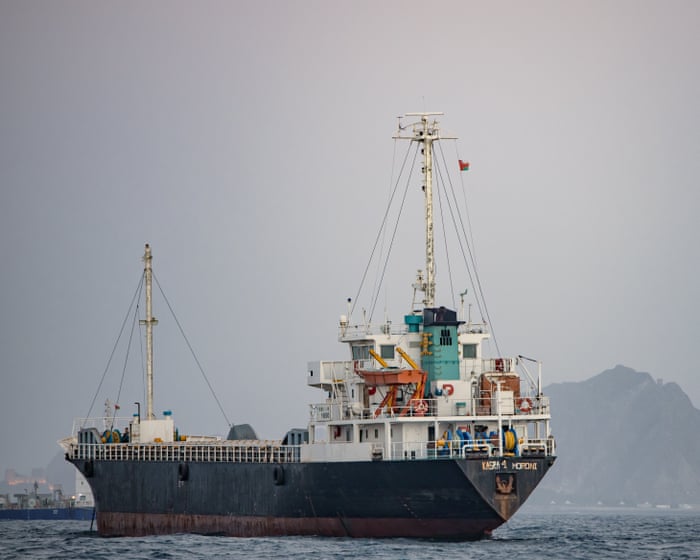
Reported facts: The Guardian live blog headline states oil rose above $90 and that US and Iranian forces exchanged fire while Houthis threatened a naval blockade affecting Saudi Arabia; Worldpanel by Numerator reported UK grocery inflation eased to 2.6% in the four weeks to 12 July and that average household grocery spending over the prior twelve months was £5,530, up £156 year-on-year; the L&VW consortium and Thames Water reportedly agreed to greater public controls and ministerial oversight via a proposed 'golden share.' Attributed claims: geopolitical incidents and their direct link to the oil-price move are presented as part of live coverage but the supplied article excerpt does not include on-the-record statements, casualty counts, timelines, or market data demonstrating causation. Uncertainty: The excerpt lacks corroborating details for the US–Iran exchanges, Houthi blockade threats, and precise market mechanics behind the oil price movement; additional sourcing is needed for those items.
Source and Framing Analysis
This item comes from a live blog style piece that aggregates multiple fast-moving stories (geopolitics and economic data) in one feed. Live coverage can prioritize immediacy over depth; the excerpt provides concrete sourcing for the UK grocery figures but not for the headline geopolitical claims. That framing risks implying a simple cause-effect relationship (clashes → oil spike) that requires market data and official statements to confirm. Readers should therefore treat the headline as an initial report requiring follow-up rather than a finalized account.
Biblical Reflection
The report groups geopolitical tension with economic indicators, reminding Christians that international conflict and everyday household pressures are linked — violence and threats in one region can raise the cost of living elsewhere. The account of easing grocery inflation is real relief for households, yet the article rightly notes the cumulative cost burden remains higher than last year; Christians should hold both truths: that small improvements matter and that many still struggle under rising prices.
The live-blog framing of geopolitical exchanges and maritime threats can compress complex events into a simple causal line (clash → oil spike). As a result, readers should be cautious about assuming escalation or long-term disruption without corroborating details (casualties, official statements, shipping disruptions, sanctions or port closures). The Christian response is to seek truth and to pray for peace while practicing concrete neighbor-love: support those facing higher costs and advocate for policies that protect civilians and global commerce.
Finally, the Thames Water/golden-share detail raises stewardship and accountability issues for public infrastructure — Christians called to care for neighbor and steward creation should welcome accountability and prudent governance that prevent harm and ensure safe, reliable services for vulnerable communities.
Scripture in context
- 1Isaiah 2:4 — Isaiah critiques human reliance on power and foretells a future where nations 'beat swords into plowshares' — a prophetic vision that addresses war's waste and the hope for collective peace and justice in a post-exilic context. — Use this passage as a lens to lament violence that disrupts ordinary life (and markets) and to motivate prayer and action aimed at peace, reconciliation, and protecting the vulnerable who bear the economic fallout.
Faithful Response
Pray regularly for leaders, civilians, and those serving in conflict zones; include prayers for market stability and for families facing higher living costs.
Support local neighbors who are squeezed by rising food prices through charity, food banks, or practical assistance.
Practice careful media discernment: seek multiple reliable sources before forming conclusions about causes and consequences of geopolitical events.
Reflection and Discussion
- 1What assumptions about cause and effect do I bring to headlines that link violence and market movements, and how can I test those assumptions?
- 2In what practical ways can my community live out mercy and stewardship when global events increase local hardship?
- 3How does a Christian commitment to peace shape our political and economic hopes for regions affected by conflict?
Sources
Reporting links are evidence inputs; Sanctuary News' biblical reflection is commentary.
This outlook currently relies on fewer than two linked sources. Broaden verification before teaching from it.
- 1.Oil price rises above $90 as US and Iran exchange fire and Houthis threaten naval blockade in Saudi Arabia - as it happenedprimary_reporting