News Summary
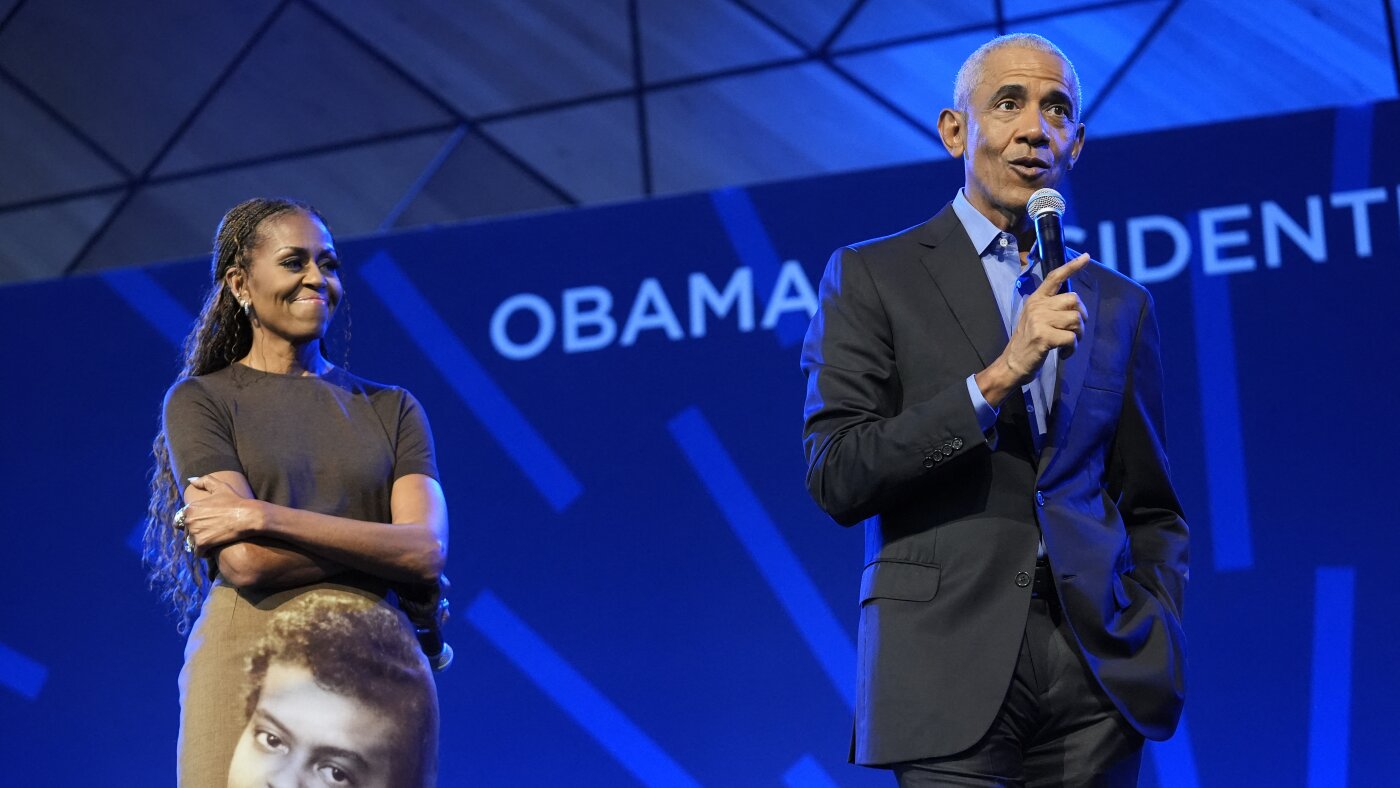
The Obama Presidential Center in Chicago, a more-than-19-acre campus on the city's south side, held a star-studded dedication ceremony on Thursday featuring musical performances and appearances by artists such as Bruce Springsteen, Christina Aguilera and John Legend. The event invited "global leaders, artists, changemakers, and citizens," and all living U.S. presidents planned to attend except Donald Trump; Valerie Jarrett said Trump was welcome to visit the museum but was not invited to the dedication. The campus includes a museum (curators say it aims to inspire change and offer hope), a branch of the Chicago Public Library, an NBA regulation-size basketball court, a Women's Garden honoring female leaders in Chicago, an auditorium, a media suite for visitors, a Wetland Walk, a fruit and vegetable garden and a playground. The center is not the presidential library that houses Barack Obama’s official presidential records; those records are managed largely digitally by the National Archives in the Barack Obama Presidential Library, while the center displays some records and artifacts on loan. The dedication was followed by opening-weekend public programming and the museum opening to visitors the next day.
Biblical Reflection
Viewed through a Christian lens, this event combines legitimate civic and cultural goods — community resources, arts and educational programming, and economic activity — with the human tendency to elevate leaders into public liturgies. The center’s emphasis on hope, change, and community investment aligns with values of neighbor-care and cultural stewardship. At the same time, the article’s celebratory framing and focus on celebrity attendance downplay potentially contentious issues (for example, debates about local impacts, gentrification, or differing political views) and present a largely positive narrative without deep critique. Christians should recognize both the good: tangible community amenities and opportunities for formation, and the limits: public memory and reputation are shaped by selective storytelling. Practically, the piece appears factually accurate in its claims (including the distinction between the center and the official presidential archive) but carries a worldview that privileges ceremonial celebration and cultural prestige. A faithful Christian response is to celebrate genuine community benefit, stay alert to narratives that idolize individuals or silence dissenting local voices, and hold a posture of humility, truth-seeking, and hospitality toward those on different political sides.
Scripture in context
This outlook does not yet include contextual Scripture citations. Do not treat a general biblical theme as an exegetical conclusion.
Faithful Response
No prescribed response is offered. Consider the reflection prompts below in your own church context.
Reflection and Discussion
- 1Whose stories are being highlighted at this center, and whose experiences of the neighborhood are absent or secondary?
- 2How does the framing of leaders as cultural celebrities shape our civic imagination and either strengthen or weaken community solidarity?
- 3When public commemorations exclude political opponents, what does that teach our communities about forgiveness, hospitality, and reconciliation?
Sources
Reporting links are evidence inputs; Sanctuary News' biblical reflection is commentary.
This outlook currently relies on fewer than two linked sources. Broaden verification before teaching from it.
- 1.Original reportprimary