News Summary
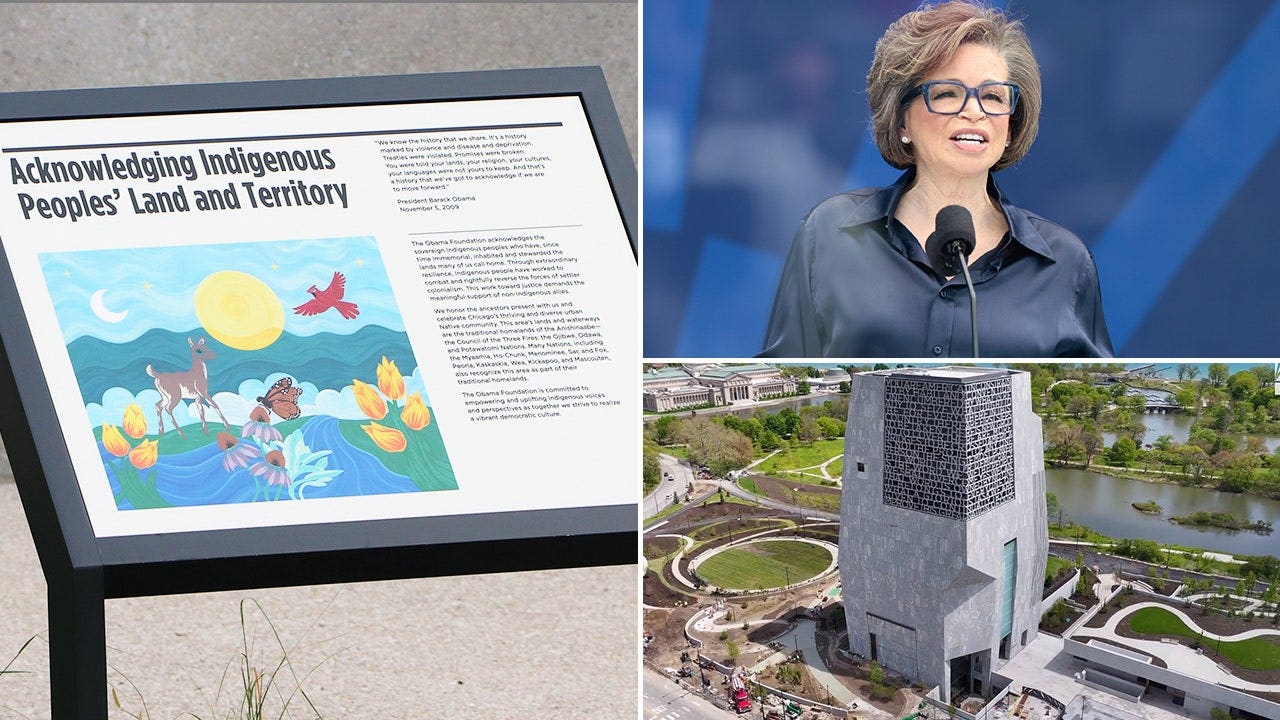
At the Obama Presidential Center's June opening in Chicago, the Obama Foundation installed a permanent display acknowledging Indigenous peoples who historically inhabited the land. The display quotes former President Obama on broken treaties and discusses settler colonialism. Critics — including Illinois Republican Party Chairman Bob Grogan — say the land acknowledgment is ironic because the Center sits on 19.3 acres of Jackson Park public land transferred to the Obama Foundation under a 99-year agreement with a one-time $10 payment. Opponents have challenged the transfer legally and politically, arguing the land and infrastructure investments belong to Chicago taxpayers. The project’s construction costs have approached $1 billion and required taxpayer-funded infrastructure work; critics also note the Foundation has not fulfilled a pledge to build a $470 million endowment. Separately, several subcontractors, including some minority-owned firms, claim they are owed millions for work on the project. The Obama Foundation did not provide comment to the reporting referenced.
Biblical Reflection
From a Christian vantage point this story touches on several moral concerns: truth-telling about historical wrongs, responsible stewardship of public resources, and fairness to workers and communities. Land acknowledgments can be a meaningful step toward recognizing Indigenous suffering and broken promises, which aligns with biblical calls to remember and seek justice for the vulnerable. At the same time, the controversy raises legitimate questions about transparency, public trust, and economic responsibility when public land and taxpayer-funded infrastructure are involved. The article’s framing — emphasizing irony and political criticism — reflects partisan perspectives and highlights voices of opponents; it gives less space to the tribes named in the acknowledgment, community members who supported the Center, or detailed responses from the Foundation. A Christian reading urges careful discernment: hold truth and remembrance alongside calls for accountability and repair; critique legal or fiscal arrangements where they harm neighbors; and avoid using acknowledgment as a substitute for concrete justice.
Scripture in context
This outlook does not yet include contextual Scripture citations. Do not treat a general biblical theme as an exegetical conclusion.
Faithful Response
No prescribed response is offered. Consider the reflection prompts below in your own church context.
Reflection and Discussion
- 1Does the coverage focus more on political symbolism or on whether the acknowledgment leads to tangible steps toward justice and reconciliation?
- 2Whose voices are centered and whose are missing — Indigenous communities, local residents, subcontractors, or institutional leaders — and how does that shape what we accept as the story?
- 3How should Christians balance truthful recognition of historical injustice with a demand for transparency and fair stewardship of public goods?
Sources
Reporting links are evidence inputs; Sanctuary News' biblical reflection is commentary.
This outlook currently relies on fewer than two linked sources. Broaden verification before teaching from it.
- 1.Original reportprimary