News Summary
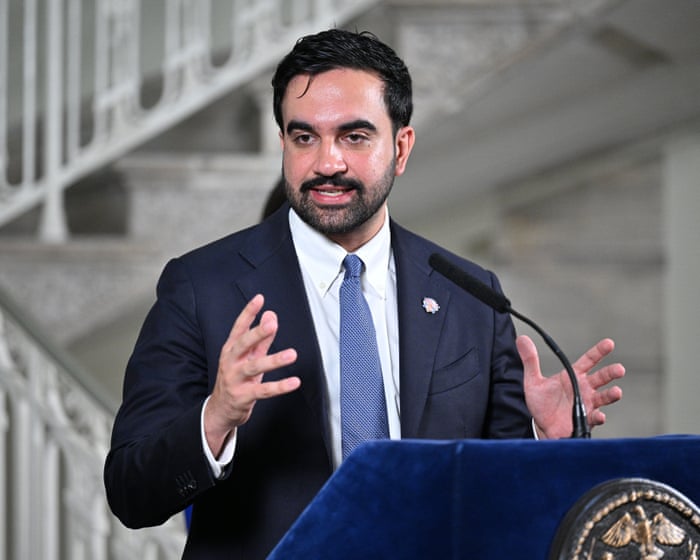
Reported facts: Mayor Zohran Mamdani publicly urged the U.S. federal government to join the ICC and to execute what he described as the ICC's arrest warrant for Benjamin Netanyahu if the prime minister visits New York; Mamdani acknowledged he lacks power as mayor to arrest Netanyahu and had previously said Netanyahu was 'not welcome' in the city. Attributed claims: the article attributes the mayor's calls and quoted language to his press conference statements; it references the existence of an ICC warrant but provides no independent legal document in the text supplied here. Uncertainty: the article does not include corroborating legal documents, the federal government's response, or official reactions from Israeli authorities.
Source and Framing Analysis
The Guardian report accurately attributes statements to Mayor Mamdani and quotes his call to federal authorities. Material uncertainties that affect interpretation include whether the ICC has formally issued a currently enforceable arrest warrant (the article assumes this but does not reproduce court documents), how U.S. federal law and policy interact with ICC warrants, and how symbolic local language may be presented as legal possibility. The story foregrounds the mayor's moral stance but does not provide legal analysis or responses from federal officials, the ICC, or the Israeli government — omissions that matter for understanding concrete consequences.
Biblical Reflection
Mamdani's statement sits at the intersection of a Christian concern for justice and the need for humility about authority and procedure. Pursuing accountability for alleged crimes is consistent with biblical concern for justice, but Christians should also weigh how calls for legal action respect proper authority, due process, and the order of civic institutions. The mayor's public appeal to federal authorities and to an international court highlights legitimate moral outrage but also risks substituting symbolic local rhetoric for the sober, measured pursuit of legal remedies.
From a pastoral perspective, Christians are called to defend the vulnerable and seek justice, yet also to speak and act with humility, recognizing limits of jurisdiction and the danger of language that might inflame already vulnerable communities. The article reflects a worldview that privileges immediate moral clarity and public witness; a Christian response should hold together truth-telling about wrongdoing, careful attention to lawful procedures, and concern for the safety and dignity of neighbors affected by escalatory rhetoric.
Practically, Christians should press for facts and due process, advocate nonviolent means of accountability, and attend pastorally to communities in the city who may feel threatened or vindicated by such statements. Prayerful advocacy for just legal processes, accompanied by pastoral care for those most affected, models a faith that seeks justice, loves mercy, and walks humbly with the responsibilities of a plural public square.
Scripture in context
- 1Micah 6:8 — In Micah, the prophet confronts social injustice and religious formalism in 8th‑century BCE Judah, calling for a faith that pursues justice, loves mercy, and walks humbly with God as the proper response to covenantal failure. — The passage calls Christians to seek justice and mercy together, warning against actions that pursue justice without humility or compassion; it encourages accountable speech and action that protects the vulnerable rather than escalating harm.
- 2Romans 13:1-7 — Paul addresses Christians under Roman rule about the role of governing authorities, urging respect for civil structures while recognizing their role in restraining wrongdoing; the passage is part of a broader argument about Christian conduct in a plural society. — Romans suggests Christians must reckon with legitimate civic authorities and lawful procedures when seeking accountability; it underlines the importance of working through proper institutional channels rather than assuming local offices can substitute for national or international legal mechanisms.
Faithful Response
Pray specifically for wisdom for local, national, and international leaders and for protection of vulnerable communities in New York and abroad.
Seek accurate legal information before endorsing calls for arrest or enforcement; encourage due process and reliance on competent legal institutions.
Support nonviolent, constructive advocacy for accountability (e.g., legal petitions, peaceful public witness, and engagement with elected federal representatives).
Offer pastoral care to neighbors affected by the rhetoric—listen to fears and grief across communities and work to de-escalate tensions in local relationships.
Reflection and Discussion
- 1How does our commitment to both justice and mercy change the way we evaluate public calls for punitive legal action?
- 2When leaders speak emotionally about international crimes, how can we assess the difference between moral urgency and legal practicability?
- 3What responsibilities do Christians have to protect neighbors whose safety might be affected by heated public rhetoric?
Sources
Reporting links are evidence inputs; Sanctuary News' biblical reflection is commentary.
This outlook currently relies on fewer than two linked sources. Broaden verification before teaching from it.
- 1.Mamdani says he can’t arrest Netanyahu as mayor and urges US to enforce ICC warrantprimary_reporting