News Summary
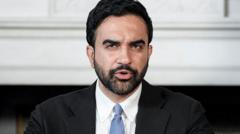
Reported facts: New York City mayor Mamdani retracted an earlier pledge to arrest Israeli Prime Minister Benjamin Netanyahu, saying the mayor’s office lacks legal authority to execute such an arrest, and instead urged U.S. authorities to act on an International Criminal Court arrest warrant. Attributions and uncertainty: the article attributes the statements to the mayor’s public comments; the piece does not provide the full text of the mayor’s original pledge, legal analysis explaining the precise limits of municipal authority, or responses from U.S. or Israeli officials.
Source and Framing Analysis
The BBC report is concise and factual but brief. Material uncertainties include the precise content and timing of Mamdani’s initial pledge, the legal reasoning cited for lack of authority, and any formal legal or diplomatic steps taken by U.S. authorities in response. The framing centers on the retractation and the ICC warrant; it does not explore legal detail or international reactions, which limits readers’ ability to assess practical enforceability or broader diplomatic consequences.
Biblical Reflection
The story reports a local political leader retracting an action she previously promised and redirecting responsibility to national authorities and international law. It highlights tensions between symbolic political gestures and the limits of municipal power, while pointing to an international legal action—the ICC warrant—whose enforcement primarily lies with national governments and international institutions. Christians should notice both the moral impulse behind calls for accountability and the need for careful use of authority and truth-telling.
From a pastoral vantage, the piece raises questions about how public leaders should balance prophetic witness (speaking against perceived injustice) with prudent stewardship of their actual authority. The call for accountability reflects a legitimate concern for justice and the protection of civilians; at the same time, Christians are called to pursue truth and avoid misleading promises that inflame division or raise false expectations. The faithful response includes advocating for justice through appropriate channels, seeking facts before amplifying claims, and prioritizing peacemaking and care for vulnerable people affected by conflict.
Finally, the article reveals an underlying worldview that prizes symbolic action and public moral positioning. Scripture calls the faithful to both speak truth to power and to act with humility, recognizing the limits of one’s office and the necessity of legal and diplomatic processes. Christians should therefore hold leaders accountable for both their words and their methods, encourage responsible pursuit of justice, and pray for discernment in a polarized public square.
Scripture in context
- 1Matthew 5:9 (Sermon on the Mount) — Jesus’ teaching in the Sermon on the Mount lists characteristics of those who belong to his kingdom, including a blessing on peacemakers in the context of a greater call to holiness and mercy. — The passage encourages Christians to seek peace and right relationships even while calling for justice; public calls for accountability should be paired with efforts to reduce harm and pursue reconciliation where possible.
Faithful Response
Pray for discernment for public officials, victims of violence, and all affected by the conflict.
Seek verified information before sharing claims; ask what actions are legally available and who has authority to act.
Support institutions—legal, diplomatic, and humanitarian—that work to protect civilians and pursue accountability.
Speak and act in ways that prioritize the dignity and safety of people directly harmed by conflict, avoiding dehumanizing rhetoric.
Reflection and Discussion
- 1How does this incident challenge our assumptions about who can and should pursue international justice?
- 2In what ways might symbolic political gestures help or harm the cause of peace and protection for civilians?
- 3What responsibilities do Christians have when leaders make public moral claims that exceed their legal authority?
Sources
Reporting links are evidence inputs; Sanctuary News' biblical reflection is commentary.
This outlook currently relies on fewer than two linked sources. Broaden verification before teaching from it.
- 1.Mamdani walks back pledge to arrest Netanyahu citing lack of authorityprimary_reporting