News Summary
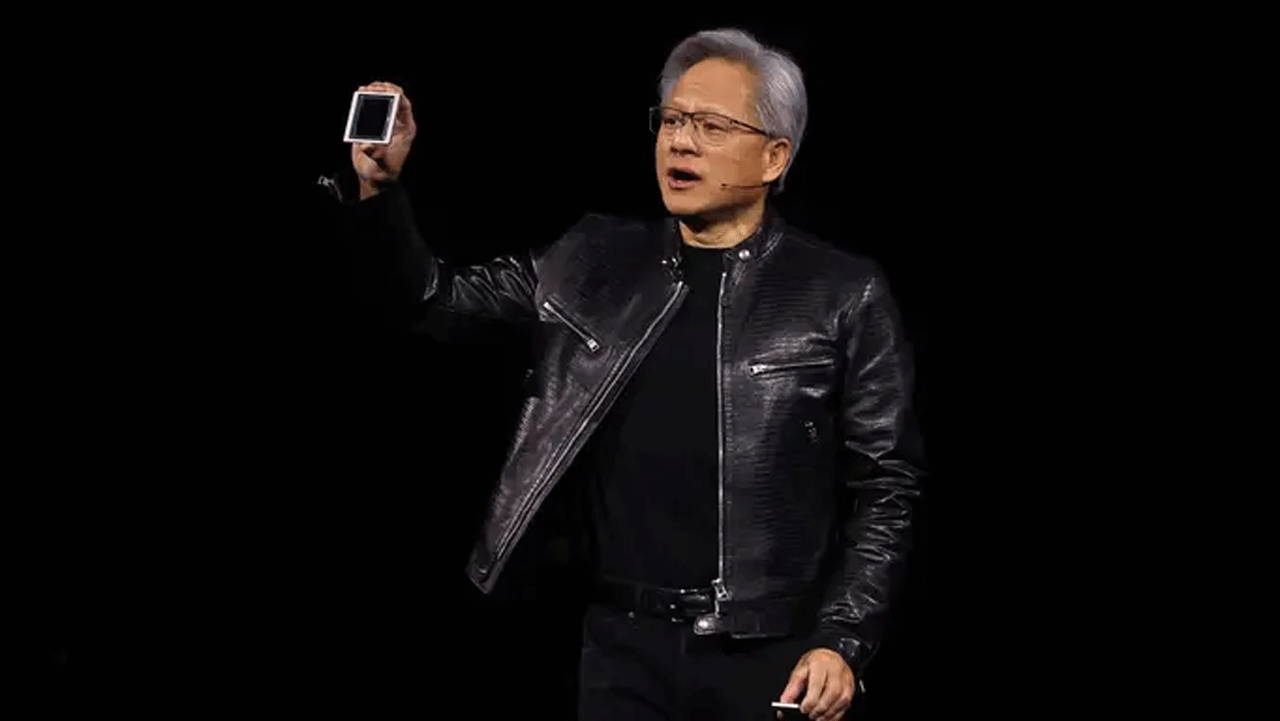
Nvidia CEO Jensen Huang told Fox News that artificial intelligence will transform work similarly to the Industrial Revolution, creating new jobs and reshaping how Americans perform many tasks. Huang urged young people to adopt AI as a tool that augments skills and said AI’s expansion is already increasing demand for skilled labor—citing electricians, welders and construction workers needed to build chip fabs, data centers and manufacturing plants. He highlighted Nvidia’s partnership and $2 billion investment in Coherent, a company making lasers and optics, and said production at Coherent’s Sherman, Texas facility is expected to quadruple in 12–18 months. Huang said AI is more accessible than past technologies because users can direct systems with natural language, argued that productivity gains historically create jobs, and called for the United States to remain a global leader in AI. He acknowledged some AI use cases require caution. The article also references recent U.S. government action banning certain Anthropic models for foreign national use amid national security concerns.
Biblical Reflection
Huang’s message mixes realistic points and corporate interest. His comparison to the Industrial Revolution captures a broad pattern: major technologies change job content, create new industries, and raise productivity. His optimism about job creation is plausible where infrastructure and complementary skills develop, and Nvidia has concrete investments that will generate manufacturing and construction jobs. At the same time, his position as Nvidia’s CEO means he has a stake in promoting rapid adoption and U.S. leadership. The article understates short‑term dislocation risks, unequal distribution of gains, concentration of technical and economic power, and ethical concerns such as surveillance, misinformation, and national‑security vulnerabilities. From a Christian perspective, truth demands we weigh both opportunity and harm: celebrate innovation that benefits neighbors while advocating protection and retraining for those displaced, fair distribution of new prosperity, and prudent guardrails for technologies that affect civic life. Christians should press for policies and corporate practices that combine wise stewardship, courage to regulate dangerous uses, humility about unintended harms, and mercy toward vulnerable workers.
Scripture in context
This outlook does not yet include contextual Scripture citations. Do not treat a general biblical theme as an exegetical conclusion.
Faithful Response
No prescribed response is offered. Consider the reflection prompts below in your own church context.
Reflection and Discussion
- 1Who stands to gain most from this vision of AI, and who may be left behind or harmed?
- 2Are we relying too heavily on market optimism to retrain and protect workers, instead of demanding concrete public and corporate responsibility?
- 3How should moral courage shape policies and corporate choices when powerful technologies pose both great benefit and real risk?
Sources
Reporting links are evidence inputs; Sanctuary News' biblical reflection is commentary.
This outlook currently relies on fewer than two linked sources. Broaden verification before teaching from it.
- 1.Original reportprimary