News Summary
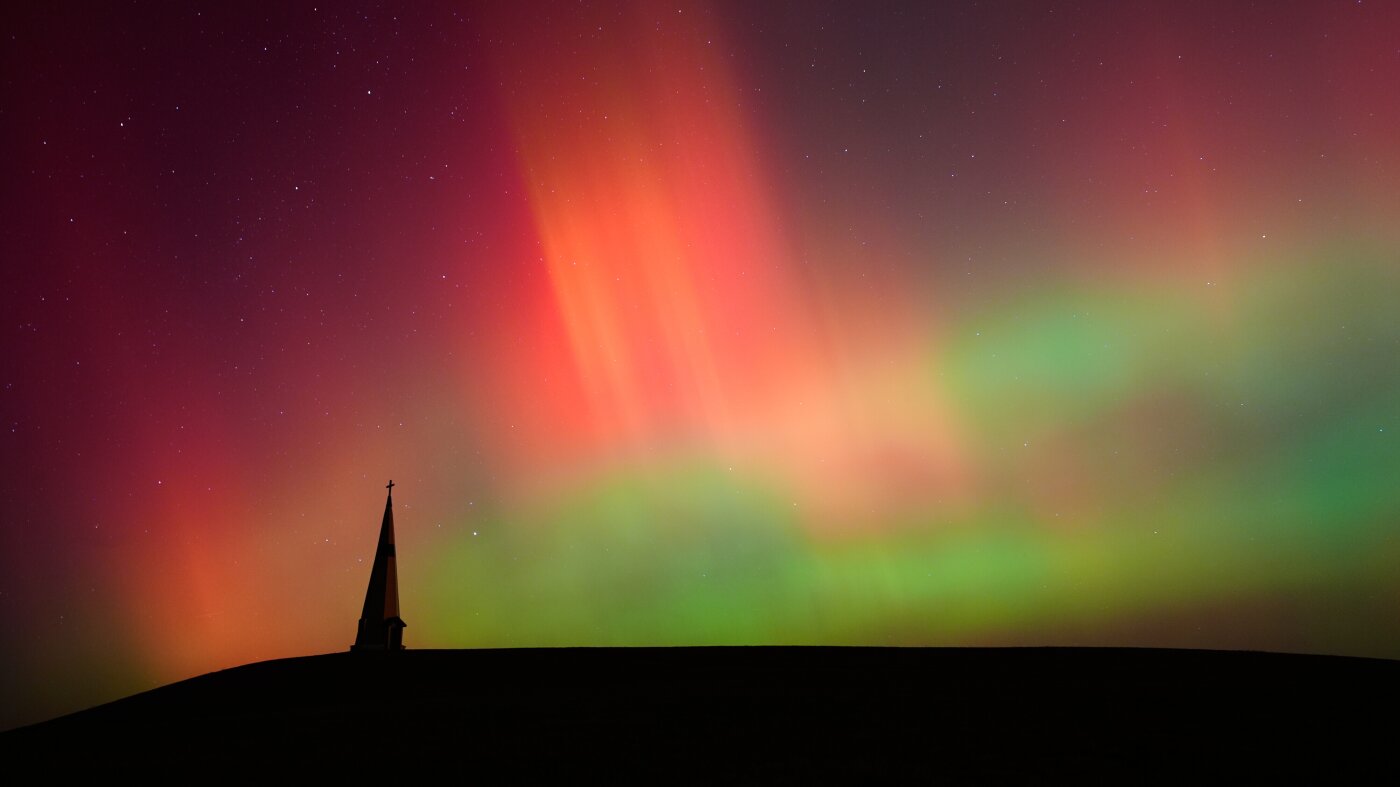
A geomagnetic storm is expected to produce visible auroras (Northern Lights) across the northern United States and much of Canada on Saturday and Sunday nights. NOAA forecasts the storm will be strongest on Saturday night, offering the best viewing then. Auroras are caused when high-energy particles from space collide with atoms in Earth's atmosphere near the planet’s magnetic poles; they are most visible after sunset or before sunrise and can sometimes be seen from up to about 1,000 km away from the overhead display. Scientists note auroras are typically easier to observe in March and November, and are most common at high latitudes such as Alaska, Scandinavia, Russia, and Greenland.
Biblical Reflection
This article is straightforward scientific reporting: it explains a natural phenomenon (auroras) and gives practical information about when and where people might see it. The piece relies on secular scientific authorities (NOAA and NASA) to explain mechanisms and timing. From a Christian perspective, this kind of reporting provides an opportunity to recognize and celebrate the beauty and order of God’s creation without confusing scientific description with theological claims. The article does not make supernatural or omen-based assertions about the lights, which reduces the risk of sensationalism; however, readers should be aware that media coverage of striking natural events can sometimes be framed to attract attention rather than to deepen understanding. Christians can respond with humility and gratitude: humility in acknowledging the limits of our knowledge (scientists still study timing patterns) and gratitude that God has given humans the capacity to study and explain natural processes. This event can point us toward wonder and stewardship rather than fear or superstition.
Scripture in context
This outlook does not yet include contextual Scripture citations. Do not treat a general biblical theme as an exegetical conclusion.
Faithful Response
No prescribed response is offered. Consider the reflection prompts below in your own church context.
Reflection and Discussion
- 1Does presenting the scientific explanation for a natural wonder make it less spiritually meaningful, or can it deepen awe at God’s creation?
- 2When news outlets highlight spectacular natural events, are they informing or sensationalizing — and how does that affect how you interpret the event?
- 3Are you prone to read superstitious or omen-like meanings into natural phenomena, and how does Scripture correct or reframe that tendency?
Sources
Reporting links are evidence inputs; Sanctuary News' biblical reflection is commentary.
This outlook currently relies on fewer than two linked sources. Broaden verification before teaching from it.
- 1.Original reportprimary