News Summary
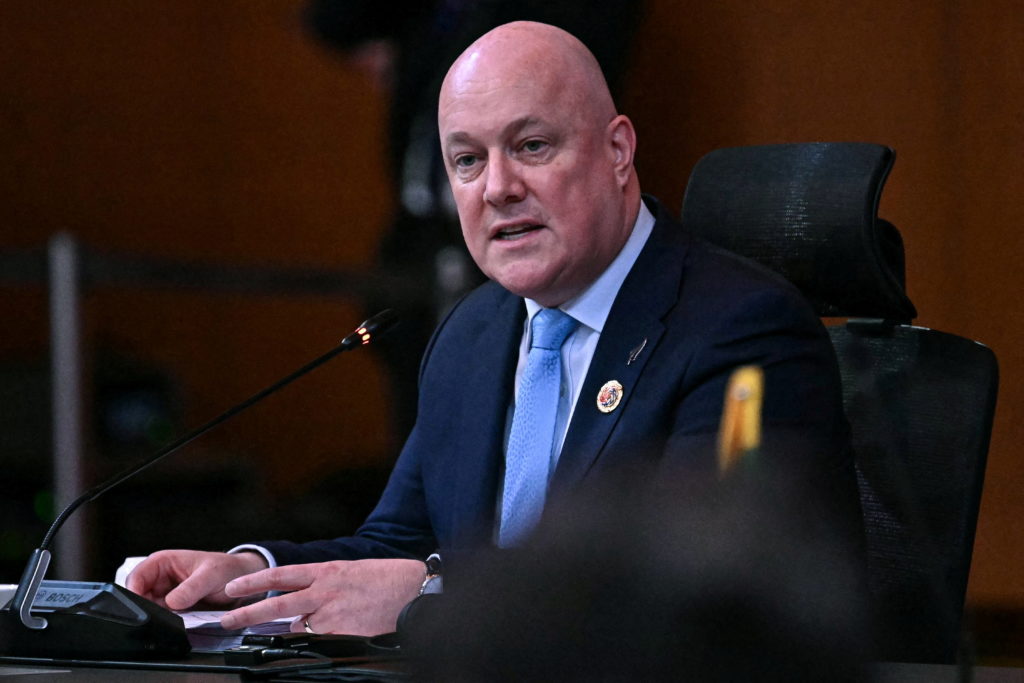
According to a PBS NewsHour report, New Zealand Prime Minister Christopher Luxon unveiled a proposed law that would bar children younger than 16 from using social media platforms. The report attributes to Luxon the statement that there is "harm being done to a generation" of young people. The short item does not include the bill text, enforcement or age-verification details, evidence cited by the government, or reactions from parents, experts, platforms, or other political actors.
Source and Framing Analysis
The cluster relies on a single brief PBS NewsHour item. The framing centers the prime minister's announcement and his characterization of widespread harm; the piece is neutral in tone but very limited in scope. Important omissions include the legislative text, definitions of "social media" and "use," proposed enforcement mechanisms, empirical evidence underlying the claim of generational harm, constitutional or legal analysis, implementation timeline, and stakeholder responses. Because the report presents the claim as attributed to Luxon without supporting material, readers should treat the assertion of widespread harm as an unverified policy rationale rather than an independently established fact.
How sources covered this story
Sanctuary separately assesses reporting quality and alignment with Christian virtues. The virtues assessment considers truthfulness, dignity, compassion, justice, peacemaking, humility, and care for vulnerable people. It does not assess a publisher's faith or reward religious language.
Compare 1 reports
Reporting 72/100Virtues 75/100
- Distinctive contribution
- Specifies the proposed minimum age (under 16) and includes the prime minister's quoted rationale: that there is "harm being done to a generation."
- Framing
- Neutral, factual lead: presents the policy proposal and a brief quote from the prime minister without editorializing or advocacy.
- Omissions or uncertainty
- No detail on how "social media" is defined, how the ban would be enforced or implemented, legal or legislative process, evidence supporting the claim of harm, responses from stakeholders (parents, platforms, child welfare experts), timeline, or exceptions.
- Why these scores
- Concise and accurately attributed: it clearly reports who proposed the measure and the proposed age limit and provides a direct quote. However, the supplied excerpt is brief and lacks important context and specifics (definitions, enforcement, evidence, stakeholder reactions) that would be needed for a fuller assessment. The excerpt is measured and non-sensational, treats the subject matter without dehumanizing or stigmatizing language, and attributes the claim to a named public official. It does not demonstrate explicit emphasis on compassion, justice, or protection of vulnerable people beyond reporting the leader's stated concern, so it scores moderately high for fairness and restraint but does not actively advance the virtues beyond neutral reporting.
Biblical Reflection
A Christian response affirms the moral impulse to protect children and to prioritize the welfare of the vulnerable, while insisting that policy be grounded in truth, justice, mercy, and careful listening. Scripture consistently calls Christians to value and protect children and to act with humility and love toward neighbors; those convictions support advocacy for measures that demonstrably promote flourishing. At the same time, Christians should demand clear evidence for claims that justify broad restrictions, insist on just and proportionate processes, and anticipate unintended consequences that could harm families or push young people into riskier unregulated spaces. Practically, this outlook encourages combining protective regulation (where justified) with education, mental-health supports, parental engagement, and digital literacy efforts, and pursuing public debate with humility and concern for the common good.
Scripture in context
- 1Matthew 18:1-6 — Jesus teaches about the value of children in the kingdom and warns strongly against causing them to stumble; the passage historically functions as a call to protect children and to take seriously the responsibilities of adults toward them. — This passage underscores a moral imperative to protect children from harm; it does not prescribe specific policy instruments, so Christians should apply its ethic by seeking measures that concretely safeguard children without treating them as political pawns.
- 2Philippians 2:3-4 — Paul exhorts believers to act with humility and to consider others' interests above their own, framing Christian behavior around self-giving concern rather than assertion of power. — When Christians engage debates about regulation and protection, this counsel argues for humility, listening, and centering the needs of the most vulnerable rather than pursuing moral certainty or political dominance.
Faithful Response
Pray for wisdom for policymakers, and for families and children affected by online harms.
Seek out and review empirical research on youth mental health and social media, and listen to clinicians, educators, parents, and youth before forming a final judgment.
Engage constructively in civic processes—submit public comments, contact elected representatives, or participate in community forums—advocating for balanced policies that include education, mental-health supports, and narrowly tailored, enforceable protections.
Teach and model digital literacy, healthy boundaries, and compassionate listening in families and church youth programs rather than relying solely on prohibition.
Provide pastoral care and practical support for families and young people who are already harmed or anxious about online activity.
Reflection and Discussion
- 1What concrete evidence would I need before supporting a law that restricts access to technology for children?
- 2How do we balance protecting young people with respecting parental responsibility, civil liberty, and practical enforceability?
- 3Whose voices—children, parents, teachers, mental-health professionals—are being heard or excluded in this debate?
- 4What unintended consequences might a broad prohibition produce, and how can policy be designed to minimize harms while maximizing protection?
Sources
Reporting links are evidence inputs; Sanctuary News' biblical reflection is commentary.
This outlook currently relies on fewer than two linked sources. Broaden verification before teaching from it.
Download source notes