News Summary
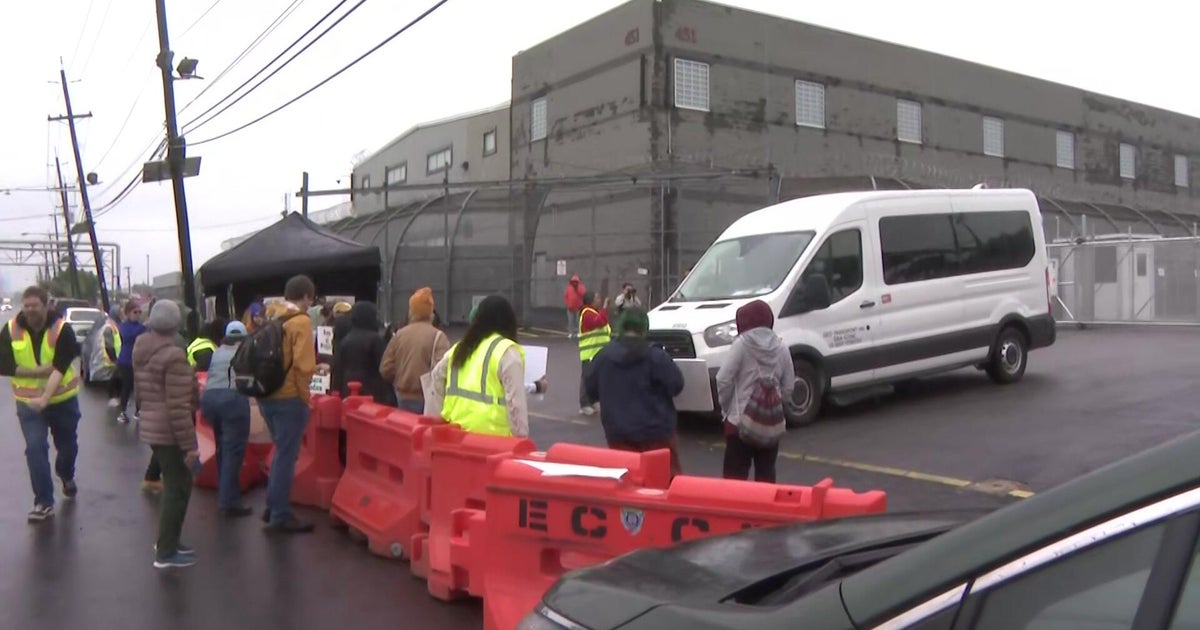
On May 24, 2026, New Jersey Governor Mikie Sherrill asked U.S. Immigration and Customs Enforcement (ICE) for access to Delaney Hall, a detention center in Newark where hundreds of immigrants are being held, after protesters alleged poor and inhumane conditions. Sherrill stated she has long opposed private detention facilities and is seeking to monitor conditions and work with federal officials and advocates. Demonstrations outside the facility continued for several days; on one occasion protesters briefly blocked a white van attempting to leave the property while some detainees signaled to protesters from inside. A woman, Gabriela Soto, said her husband Martin Soto—detained by ICE four months earlier—was being taken toward deportation despite a judge's order for his release; advocates at the scene contested his removal. U.S. Sen. Andy Kim and Rep. Robert Menendez Jr. visited the site and relayed complaints from detainees about medical care, food, water, and judicial processing delays. A Department of Homeland Security spokesperson responded that detainees at Delaney Hall are provided three meals a day, clean water, clothing, bedding, showers, toiletries, medical, dental and mental health services as available, access to phones, and 24-hour emergency care, and that certified dietitians evaluate meals. CBS News reported reaching out to ICE for comment and had not received a response at the time of publication.
Biblical Reflection
Christian concern rightly centers on the dignity and well‑being of vulnerable people. The article presents competing claims: protesters, family members, and elected officials report alleged inhumane conditions and potential legal irregularities; DHS/ICE offers an official account asserting basic needs and medical care are provided. Biblically, we are called both to defend the oppressed and to seek truth (Isaiah 1:17; Micah 6:8). That means advocating for transparent inspection, fair legal process, and humane treatment where problems exist, while also avoiding rushes to judgment based on unverified claims. The story reveals common dynamics: moral outrage drives public oversight (which can be righteous), institutions issue formal rebuttals (which may understate problems), and access—physical and informational—is decisive for truth‑finding. Christians should prioritize compassion for detainees, press for accountability and due process, and evaluate reports by seeking verifiable evidence (inspection reports, medical records, court orders) rather than relying solely on protester testimony or institutional statements. The broader worldview at play contrasts a rights/justice advocacy perspective (emphasizing immediate relief and systemic critique) with an institutional defense posture (emphasizing procedural provision and security). A faithful Christian response holds both the oppressed and the rule of law in tension, pursuing justice with humility and facts.
Scripture in context
This outlook does not yet include contextual Scripture citations. Do not treat a general biblical theme as an exegetical conclusion.
Faithful Response
No prescribed response is offered. Consider the reflection prompts below in your own church context.
Reflection and Discussion
- 1What forms of evidence (inspections, court records, medical documentation) would best validate the competing claims about conditions at Delaney Hall, and are those sources currently accessible?
- 2How does our desire for immediate moral action interact with the biblical requirement to pursue truth and fair process before assigning blame?
- 3In this situation, which practices (public oversight, legislative inquiry, legal advocacy, prayerful accompaniment) most faithfully express Christian love for both detainees and the common good?
Sources
Reporting links are evidence inputs; Sanctuary News' biblical reflection is commentary.
This outlook currently relies on fewer than two linked sources. Broaden verification before teaching from it.
- 1.Original reportprimary