News Summary
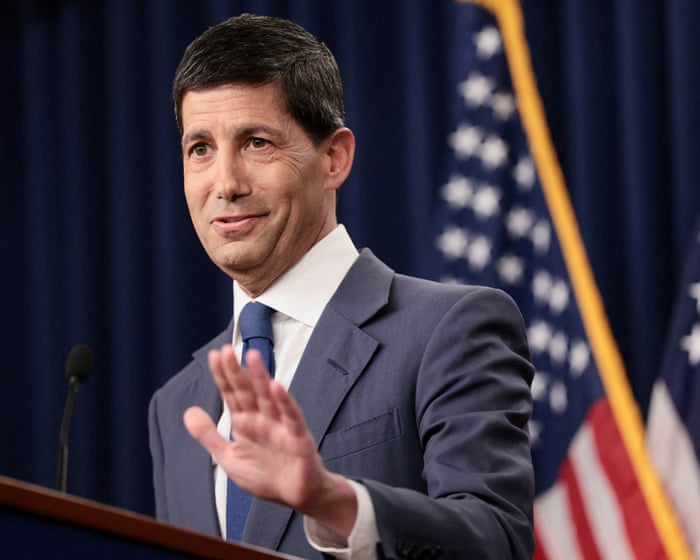
According to a Guardian briefing, newly appointed Federal Reserve chair Kevin Warsh faces an early market test as he prepares to speak at the Jackson Hole conference. The briefing reports that bond markets are showing selling pressure in the roughly $30 trillion U.S. government debt market amid investor anxiety about inflation and fiscal plans; market participants are reportedly looking for signals on the Fed’s commitment to fighting inflation. The Guardian notes Warsh has said his Jackson Hole remarks may emphasize productivity and demographics rather than explicit near-term policy guidance. The briefing also reports that Treasury Secretary Scott Bessent sought to calm investors by committing to at least double Washington’s purchases of U.S. Treasury bonds. These elements are presented as attributed reporting and statements rather than independently verified outcomes.
Source and Framing Analysis
Source: a single short Guardian briefing. Strengths: names principals (Kevin Warsh, Scott Bessent), situates timing (Jackson Hole) and links market anxiety to inflation and fiscal expectations. Limitations and framing concerns: the briefing is compressed and lacks market metrics (recent yield moves, volumes, spreads) and details on the Treasury purchase plan (timing, funding, mechanism). It attributes intentions and characterizations (e.g., "selling pressure intensifying") to market participants without presenting underlying data. An apparent clipping/edit error in the briefing suggests the excerpt may be incomplete. Overall the piece frames the Fed chair as the pivotal speaker, which is reasonable for markets, but that emphasis can understate how fiscal policy, Treasury actions, and investor positioning jointly shape outcomes. Corroboration from additional reporting and primary statements would be needed to assess scope and likely effects.
How sources covered this story
Sanctuary separately assesses reporting quality and alignment with Christian virtues. The virtues assessment considers truthfulness, dignity, compassion, justice, peacemaking, humility, and care for vulnerable people. It does not assess a publisher's faith or reward religious language.
Compare 1 reports
Rank 1
The Guardian: First Thing: New Fed chair Kevin Warsh faces early test amid bond market worriesReporting 75/100Virtues 75/100
- Distinctive contribution
- Names the new Fed chair (Kevin Warsh); identifies Jackson Hole speech focus (productivity and demographics); attributes bond-market anxiety to inflation and Trump fiscal plans; quantifies the market as $30tn; reports that Treasury secretary Scott Bessent committed to at least doubling Treasury purchases and tried to assuage investors.
- Framing
- Framed as an early test for a new Fed chair amid investor “anxiety” and “intensifying” selling pressure; language is mildly urgent/concerned but within normal news framing. The excerpt juxtaposes market stress with official mitigation efforts, implying tension between market forces and policy responses. A stray, unrelated question at the end (“What did Joshua Aviles say about his father’s arrest?”) appears to be an editing or clipping error and interrupts coherence.
- Omissions or uncertainty
- No numerical market-movement data (yields, spreads, recent performance) or dates beyond “this week”; lacks sourcing for some claims (who characterizes selling pressure as intensifying, basis for $30tn figure); no direct quotes or links to Bessent’s statement; no detail on how purchases would be funded or timed; the stray unrelated question suggests an editing lapse, raising uncertainty about excerpt completeness.
- Why these scores
- For a short digest-style excerpt it conveys several concrete facts and attributions (e.g., naming officials and the policy commitment) that are useful and plausibly verifiable. It is concise and topical. Its weaknesses are lack of supporting data, limited sourcing for some assertions, and the apparent clipping/edit error at the end, which slightly reduces clarity and reliability. Overall solid for a brief news summary but not an in-depth report. The excerpt is neutral, fact-focused and does not dehumanize, exploit suffering, or use sensationalist language; it attributes actions to named officials and avoids inflammatory personal attacks. It lacks explicit emphasis on compassion, justice, or affected vulnerable populations (which would raise the score), but it does not violate principles of truthfulness, humility, or dignity in the supplied text. The editing error slightly lowers the perception of care in presentation.
Biblical Reflection
Markets seek clarity; leaders must balance transparency with prudence. Warsh’s Jackson Hole speech—if focused on structural themes like productivity and demographics—could be intended to shape longer-term expectations rather than deliver immediate policy changes, but markets may nevertheless parse any signal for near-term implications. From a Christian perspective: take care to avoid panic or premature certainty; hold public leaders accountable for clarity and stewardship; and keep attention on the consequences of market and policy moves for vulnerable households whose budgets are most exposed to higher borrowing costs.
Scripture in context
- 1Proverbs (general reference) — Wisdom literature in the Hebrew Bible contrasts righteous conduct with dishonest gain and emphasizes fairness in social and economic behavior. — This tradition calls Christians to expect honesty and fairness from economic actors and public stewards. When central bankers and fiscal officials act, transparency and stewardship matter because their decisions materially affect the poor and those without financial buffers.
Faithful Response
Pray for wisdom, integrity, and prudence for central bank and Treasury leaders, and for clarity for markets and policymakers.
Encourage congregational financial readiness: offer basic financial counseling, emergency-savings education, and a benevolence pathway for members whose housing or essential needs are threatened by higher rates.
Inform—help people interpret reporting without amplifying speculation. Share reputable, data-informed explainers about how Fed signals affect mortgages, loans, and pensions.
Advocate for transparency and policies that protect those least able to bear sudden cost increases (renters, low-income households, small municipalities).
Model humility: distinguish reporting and market forecasts from settled facts; avoid partisan framings in pastoral teaching while urging accountability and care for neighbors.
Reflection and Discussion
- 1How should Christians weigh the legitimate need for central-bank independence and careful communication against the demand for immediate clarity from markets and citizens?
- 2When monetary or fiscal signals change borrowing costs, who in our communities is most exposed, and what practical support can the church provide?
- 3How do we keep public prayer for leaders from becoming uncritical trust—what concrete steps toward accountability and justice should accompany our prayers?
Sources
Reporting links are evidence inputs; Sanctuary News' biblical reflection is commentary.
This outlook currently relies on fewer than two linked sources. Broaden verification before teaching from it.
Download source notes