News Summary
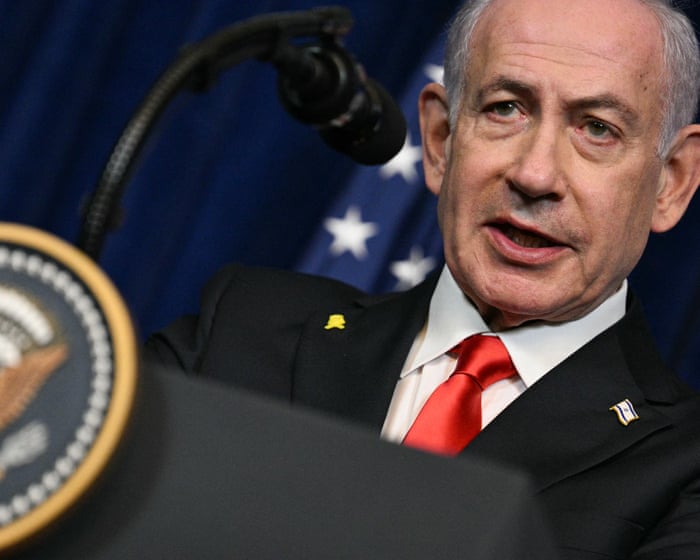
Reported facts: The Guardian states Benjamin Netanyahu and Volodymyr Zelenskyy will arrive in Washington to attend the funeral of former senator Lindsey Graham and are scheduled to seek meetings with Donald Trump. Attributed claims: The article reports that both leaders hope to 'win Trump's ear' as U.S. policy toward conflicts involving Iran (affecting Israel) and Ukraine is reportedly in flux. Uncertainty: The article does not provide confirmations of the exact meeting times, written agendas, or guarantees that meetings will take place or result in policy changes.
Source and Framing Analysis
The Guardian piece is single-source reporting in this package and mixes confirmed scheduling (attendance at a funeral) with interpretive language about motives and policy importance. The phrase 'hopes of winning Trump's ear' frames the visits as primarily strategic attempts to influence one U.S. actor; that framing is plausible given the political context but remains interpretive and not independently documented in the article. The story's material uncertainty centers on whether meetings with Trump are confirmed, what their agendas will be, and how U.S. policy will actually change as a result.
Biblical Reflection
This report highlights the intimate link between personal diplomacy and national security decisions. Christian discernment calls us to notice both the legitimate pastoral element of attending a funeral and the political reality that leaders use moments of access to press urgent national needs. The article frames the visits as efforts to influence one person—Donald Trump—whose favor or counsel could materially affect the lives of millions in conflict zones. That framing is plausible but partly interpretive: access does not guarantee policy change, and the article does not supply documentation of precise meeting agendas or outcomes.
From a Christian vantage, we should resist cynicism that reduces human grief to mere political opportunity, while also refusing naïveté about power. Scripture-shaped wisdom prizes humility, peacemaking, care for the vulnerable, and truth-telling. When statesmen seek audiences with powerful leaders, the faithful response is to pray for clarity and justice, to ask that conversations prioritize civilian protection and de-escalation, and to hold public officials accountable for policies that affect human life. Christians can also call their communities to compassion for those suffering in those wars and to measured, informed civic engagement rather than partisan cheerleading.
Scripture in context
- 1Matthew 5:9 (Sermon on the Mount) — Part of Jesus' Sermon on the Mount, calling his followers to embody kingdom ethics—humility, mercy, and active peacemaking in a broken world. — Leaders and citizens should prioritize peacemaking and protection of the innocent when engaging in diplomacy; Christians should urge policies and conversations that seek to de-escalate violence rather than inflame it.
- 2Philippians 2:3-4 — Paul exhorts believers to humility and considering the interests of others, modeled in Christ's self-giving attitude. — Public leaders, advisors, and citizens alike are called to posture humility and to weigh the needs of others—especially the vulnerable—above personal or partisan gain when shaping or advocating policy.
Faithful Response
Pray specifically for the leaders involved, for those at risk in Ukraine and in the Middle East, and for U.S. decision-makers to pursue de-escalation and civilian protection.
Seek reliable reporting before forming definitive opinions; avoid spreading unverified claims about meetings or intentions.
Contact elected representatives to express concern for humanitarian aid, civilian safety, and diplomatic solutions rather than triumphalism.
Support reputable humanitarian organizations serving civilians affected by the wars and encourage faith communities to provide practical assistance.
Reflection and Discussion
- 1Are we attentive to whether diplomatic access is being used to reduce violence and protect civilians, rather than primarily to secure political advantage?
- 2How does the Christian obligation to love our neighbor shape our expectations of leaders who seek influence over wartime policy?
- 3What signs should we look for that meetings between leaders are translating into concrete protections for vulnerable people rather than rhetorical commitments?
Sources
Reporting links are evidence inputs; Sanctuary News' biblical reflection is commentary.
This outlook currently relies on fewer than two linked sources. Broaden verification before teaching from it.
- 1.Netanyahu and Zelenskyy to arrive in Washington for Graham funeral – with hopes of winning Trump’s earprimary_reporting