News Summary
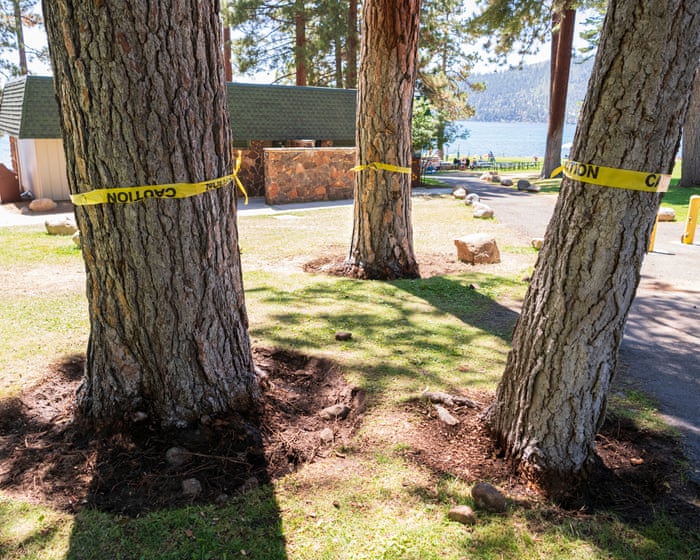
The Guardian reports that nearly 30 pine trees near Burnt Cedar Beach on Lake Tahoe’s Nevada side have been damaged in incidents officials say appear linked and intentional; these incidents have been reported since 2022, include trees described as more than a century old, and are said to have caused hundreds of thousands of dollars in losses. The article attributes beliefs about connection and intent to officials but does not identify suspects, specify forensic findings, or provide detailed valuation breakdowns.
Source and Framing Analysis
The article is concise and relies on official statements about suspected intentional poisoning and linkage across incidents. Material uncertainties that affect interpretation include the absence of named suspects, lack of forensic details (toxic agent, method), and no independent valuation documentation. The framing highlights historic trees and monetary loss, which underscores community impact but could amplify emotional response without additional investigative detail.
Biblical Reflection
This story sits at the intersection of criminal wrongdoing and damage to God’s good creation. Intentionally harming trees—some of them old and part of a shared public landscape—violates duties both to neighbor and to stewardship of the environment. Christians should respond with a balanced posture: we seek truth and justice (holding wrongdoers accountable), mercy where appropriate, and concrete care for the harmed place and community.
Be wary of rushing to conclusions or assigning motive without evidence. The reporting attributes beliefs to officials but lacks publicly verified forensic details and named suspects. Scripture repeatedly calls God’s people to protect the vulnerable and the common good; trees in a public recreation area are part of a communal heritage and ecological system whose loss diminishes neighbors’ wellbeing. At the same time, a Christian response avoids punitive vindictiveness—advocating for lawful investigation and repair while remaining open to restorative outcomes that repair harm and restore the community.
Practically, this is an occasion to pray for wise and thorough investigation, to support stewardship efforts that repair and replace damaged trees, and to model patient truth-seeking rather than sensationalizing loss. Christians can embody humility (waiting for facts), courage (speaking for the voiceless creation and neighbors who depend on the place), and love (working for restoration).
Scripture in context
- 1Genesis 2:15 — In its original context, Genesis 2 describes God placing the first human in the Garden to 'work it and keep it'—a role establishing humanity’s responsibility to tend and steward creation, not to exploit or destroy it. — This passage calls Christians to care for shared places entrusted to human stewardship; intentional harm to public trees is therefore morally objectionable and prompts a response of protection, repair, and advocacy for the common good.
Faithful Response
Pray for investigators, local officials, and community members affected by the loss.
Support local restoration efforts (donate time or funds to tree-planting and public-land stewardship groups).
When speaking or sharing the story, wait for confirmed facts, avoid spreading unverified allegations, and advocate for lawful, restorative accountability.
Reflection and Discussion
- 1How does my faith inform the balance between seeking justice and offering mercy in cases of intentional environmental harm?
- 2In what practical ways can my local church or small group protect and restore community green spaces entrusted to our care?
- 3What does patience for verified facts look like in public conversation, and how can Christians model that restraint?
Sources
Reporting links are evidence inputs; Sanctuary News' biblical reflection is commentary.
This outlook currently relies on fewer than two linked sources. Broaden verification before teaching from it.
- 1.Nearly 30 pine trees intentionally poisoned in Lake Tahoe’s Nevada sideprimary_reporting