News Summary
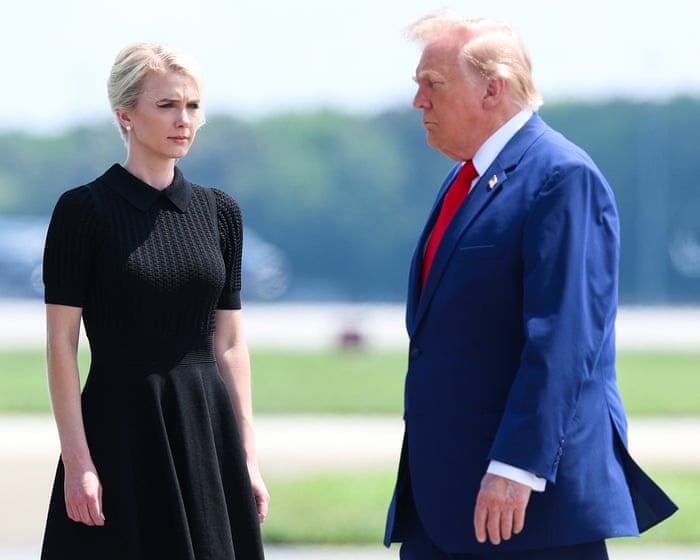
The Guardian published a profile identifying Natalie Harp as President Trump’s executive assistant and reporting that public speculation about her role prompted a strong White House reaction. The piece quotes Harp’s 2020 Republican National Convention remarks — in which she described herself as “a formerly forgotten American from California,” noted her history as a cancer survivor, and compared Donald Trump to the fictional George Bailey — and characterizes her as a devoted, close aide now in the spotlight. The article supplies humanizing detail but does not, in the excerpt provided, document Harp’s formal duties, reproduce a White House statement, or cite independent verification of the broader claims about her influence or the nature of the backlash.
Source and Framing Analysis
Source: The Guardian (profile). Framing: The article foregrounds personal biography and loyalty (cancer survivor, RNC testimony, cultural comparison) and signals controversy by saying speculation sparked a "furious backlash" from the White House. Strengths: clear attribution of Harp’s public RNC remarks and vivid human details that help readers understand why she became a visible figure. Limitations and uncertainties: the excerpt does not show primary documents or direct White House quotes to substantiate the reported backlash, nor does it define Harp’s formal duties, tenure, or specific influence. The framing tends to make Harp an emblem of the president’s inner circle; readers should note the difference between reported quotations and interpretive language in the piece.
How sources covered this story
Sanctuary separately assesses reporting quality and alignment with Christian virtues. The virtues assessment considers truthfulness, dignity, compassion, justice, peacemaking, humility, and care for vulnerable people. It does not assess a publisher's faith or reward religious language.
Compare 1 reports
Reporting 72/100Virtues 76/100
- Distinctive contribution
- Identifies a specific public moment (2020 Republican National Convention) and records Harp’s self-description and quoted comparison to a cultural figure (George Bailey). Mentions her status as a cancer survivor and signals controversy via the phrase about speculation and a "furious backlash" at the White House.
- Framing
- The excerpt frames Harp in a somewhat sympathetic, humanized light (cancer survivor, nostalgic film comparison). At the same time the opening line signals controversy by referencing "speculation" and a "furious backlash," but the excerpt does not explain that controversy. The language is straightforward and narrative rather than analytical.
- Omissions or uncertainty
- The supplied text does not explain what the "speculation" is, what specifically prompted the alleged "furious backlash," or who is making those claims. It omits timeframe and context for the backlash, Harp’s official role and tenure, sourcing for assertions, and any response from Harp or the White House. The excerpt is a partial slice and cannot confirm broader factual claims beyond the quoted material.
- Why these scores
- Within the short excerpt, reporting is specific where it quotes Harp and names the event (2020 RNC), which is good practice. However, the provocative claim about "speculation" prompting a "furious backlash" is unsupported in the excerpt (no attribution or detail), and the passage is a limited snapshot rather than a complete accounting. Overall it is a competent, concise profile excerpt but lacks necessary sourcing and context for the controversy it hints at. The excerpt treats the subject without dehumanization, includes humanizing details (cancer survivor, personal quotation), and avoids sensationalist language beyond the unsupported phrase about backlash. It neither exploits suffering nor dismisses dignity. The score is elevated for respectful tone and truthful quotation but not maximal because the excerpt lacks explanatory context that could aid justice- or compassion-oriented evaluation of the controversy mentioned.
Biblical Reflection
A Christian response centers truth, mercy, justice, peacemaking, humility, and care for vulnerable neighbors. That means: seek verified facts before passing judgment; resist rumor and character attacks on private individuals thrust into public view; uphold institutional transparency and lawful oversight where influence or misconduct is credibly alleged; honor the vocational dignity of staff who serve near power while asking for accountability and servant-hearted leadership. Pray for protection and clarity for those made visible by politics and for wisdom for institutions and journalists to report fairly and accurately.
Scripture in context
- 1Philippians 2:3-8 — Paul urges the Philippian church toward humility, holding up Christ’s humility and service as the model even for those with authority. — This passage invites Christians to value servant-heartedness over proximity to power and to measure public service by humility and care for others rather than by access or prestige. It calls both those who serve near leaders and those who observe them to seek accountability without demeaning human dignity.
Faithful Response
Pray for clarity, truth, and protection for individuals who become targets of public speculation.
Avoid sharing or amplifying unverified personal allegations; rely on documented statements and named sources.
Encourage and support institutional transparency and lawful mechanisms of oversight where questions about influence or responsibility arise.
Extend compassion to private individuals thrust into media scrutiny while still asking sober questions about accountability.
Reflection and Discussion
- 1How does the church balance honoring faithful vocational service with calling for institutional transparency and accountability?
- 2In what ways might admiration for loyalty lead us to overlook structures that leave vulnerable people at risk?
- 3When a staffer becomes the story, how can Christians practice both justice and mercy in public conversation?
Sources
Reporting links are evidence inputs; Sanctuary News' biblical reflection is commentary.
This outlook currently relies on fewer than two linked sources. Broaden verification before teaching from it.
Download source notes