News Summary
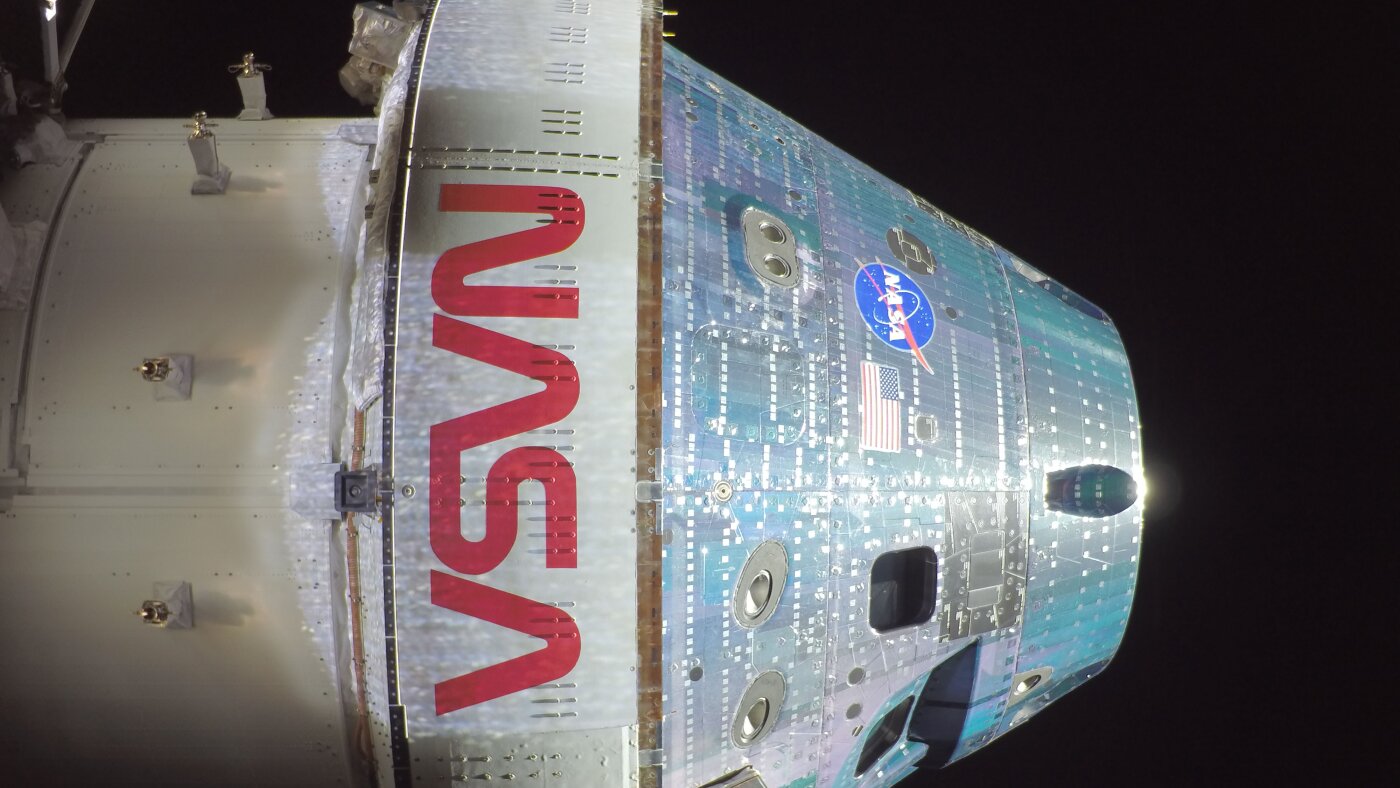
NASA's Artemis II crew will make a lunar flyby on Monday after launching from Kennedy Space Center. The Orion spacecraft is in the Moon's sphere of influence and during the flyby the crew will surpass the human distance record set by Apollo 13 (248,655 statute miles), with the mission's maximum distance expected to be about 252,760 statute miles. The closest approach to the lunar surface will be approximately 4,070 miles. As the vehicle passes behind the Moon, communications with Earth will be blocked for about 40 minutes. The crew will observe about 35 preidentified geological features and carry out ten science objectives (including observing color variations to infer mineralogy), photographing sites and relaying descriptions to scientists at Johnson Space Center. Targets include past Apollo 12 and 14 landing sites and a potential future landing area; the crew will also get a view toward the lunar south pole. Artemis II is a test flight for Orion's systems: crew have practiced manual control for future rendezvous, tested life-support systems (including carbon dioxide scrubbers), donned suits midflight, and used the onboard Universal Waste Management System (the deep-space toilet), which experienced a few minor issues that have been addressed. The flyby concludes Monday night and the mission plans to return to Earth with a planned Pacific Ocean splashdown off San Diego on Friday evening.
Biblical Reflection
This article reports on a scientific and engineering milestone: human-crewed deep-space exploration and spacecraft testing. The tone is informational and celebratory of human curiosity, technical skill, and the scientific process. From a Christian perspective, the mission can be seen as an expression of God-given curiosity and creativity—the desire to understand creation and extend human knowledge. Scripture affirms that God made the heavens and entrusted humanity with stewardship (Genesis 1:28; Psalm 8). At the same time, Christians should guard against two potential distortions: 1) unreflective triumphalism that elevates technology and human achievement above dependence on God, and 2) neglect of earthly responsibilities by framing exploration as an end in itself. The article largely avoids moralizing and focuses on facts and science objectives, but it assumes the intrinsic value of exploration and progress without exploring broader ethical or stewardship trade-offs (e.g., resource priorities, environmental costs). Practically, the story invites gratitude for human ingenuity, careful scrutiny of the motives and implications of large projects, and humility about human limits. Christians can celebrate the pursuit of knowledge while insisting it be guided by wisdom, justice, and love for neighbor.
Scripture in context
This outlook does not yet include contextual Scripture citations. Do not treat a general biblical theme as an exegetical conclusion.
Faithful Response
No prescribed response is offered. Consider the reflection prompts below in your own church context.
Reflection and Discussion
- 1Does our admiration for technological achievement tend to elevate human ability above humble dependence on God, or can it be integrated into faithful stewardship of creation?
- 2What assumptions about human progress and priorities are implicit when large resources are invested in space exploration, and how should Christians weigh those investments against needs on Earth?
- 3How does celebrating exploration shape our view of God's world—do we see discovery as honoring the Creator, or risk treating creation merely as a resource for conquest?
Sources
Reporting links are evidence inputs; Sanctuary News' biblical reflection is commentary.
This outlook currently relies on fewer than two linked sources. Broaden verification before teaching from it.
- 1.Original reportprimary