News Summary
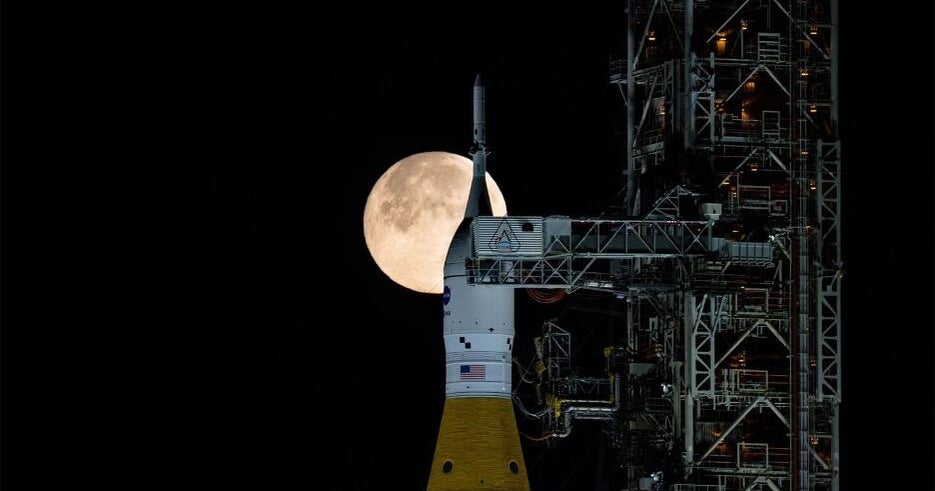
NASA scheduled the Artemis II launch for April 1 at 6:24 p.m. EDT, carrying four crew members — Commander Reid Wiseman, Pilot Victor Glover, Christina Koch, and Canadian astronaut Jeremy Hansen — atop the Space Launch System (SLS) rocket. The mission is a roughly nine-day test flight in which the Orion crew capsule (named Integrity) will perform systems checks, including life support, communications, navigation, waste management, and rendezvous/maneuvering procedures, while following a free-return trajectory that will carry the spacecraft about 4,100 miles from the Moon and return the crew to a planned Pacific Ocean splashdown on April 10. Artemis II is the SLS rocket's first crewed flight and Orion's first piloted mission; the rocket previously flew once uncrewed. Launches were previously delayed by hydrogen leaks and an upper-stage pressurization issue that NASA says were resolved. Engineers also reviewed damage to the heat shield observed on the uncrewed Artemis I reentry and plan to use a different reentry trajectory for Artemis II to manage heating; a different heat-shield design is planned for a later mission. The flight will include two rocket firings after launch to place the spacecraft in a high elliptical orbit, a 24-hour test orbit to verify systems, and a trans-lunar injection burn if flight controllers give the final go. The mission is explicitly described as a test to validate hardware and procedures ahead of planned future Artemis missions that aim to return humans to the lunar surface and establish sustained operations near the Moon.
Biblical Reflection
This mission showcases human curiosity, technical skill, and the careful testing culture required when lives are at stake. Biblically, exploration can reflect God-given creativity and stewardship (Genesis 1:28) and a desire to learn about the created order. At the same time, the coverage frames the effort in competitive, nationalistic terms (a "space race" with China) and in language of records and milestones. Christians should celebrate the pursuit of knowledge and the protection of human life, while also watching for rhetoric that turns exploration into purely nationalist prestige or treats astronauts primarily as instruments of technological achievement. The article emphasizes both the bravery of volunteers and the real risks involved; a faithful response values transparency, prudence, and accountability in how scientific institutions manage risk and communicate uncertainties to the public. Finally, wonder at the heavens (Psalm 8) should lead to humility: achievements do not remove our dependence on God, nor do they justify disregard for human life or the vulnerable. Praise and careful discernment can coexist—rejoice in human ingenuity while insisting on ethical stewardship, clear communication about risks, and motives aligned with the common good rather than prestige alone.
Scripture in context
This outlook does not yet include contextual Scripture citations. Do not treat a general biblical theme as an exegetical conclusion.
Faithful Response
No prescribed response is offered. Consider the reflection prompts below in your own church context.
Reflection and Discussion
- 1What language in coverage ("race," "win," "record") frames exploration as competition rather than shared human curiosity or stewardship, and how does that shape public support and priorities?
- 2Are the risks and uncertainties being communicated transparently, or are milestones and hero narratives overshadowing questions about safety, cost, and long-term purpose?
- 3Does our excitement about technological capability keep us humble before God’s creation and focused on the common good, or does it promote pride and national prestige as ends in themselves?
Sources
Reporting links are evidence inputs; Sanctuary News' biblical reflection is commentary.
This outlook currently relies on fewer than two linked sources. Broaden verification before teaching from it.
- 1.Original reportprimary