News Summary
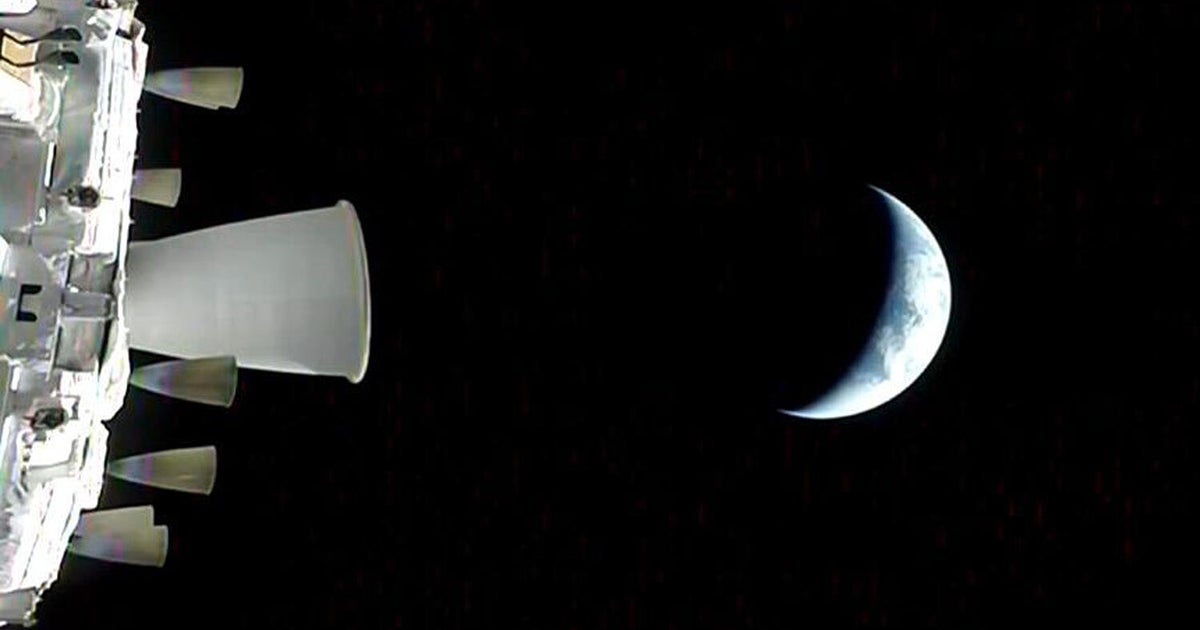
NASA's Mission Management Team cleared the Orion capsule and its four-person Artemis II crew for a trans‑lunar injection (TLI) burn to break out of Earth orbit and head toward the Moon. The crew — commander Reid Wiseman, Victor Glover, Christina Koch and Canadian astronaut Jeremy Hansen — launched from Kennedy Space Center the previous day and spent the first day testing Orion systems and adjusting their highly elliptical orbit. The scheduled TLI burn was to begin at 7:49 p.m. EDT, use the service module engine for about five minutes and 51 seconds, and accelerate Orion to roughly 25,000 mph to escape Earth's gravity for a roughly four-day trip to the Moon. The mission will carry the crew around the lunar far side and return them to Earth late next week; during the flight they are expected to reach about 252,455 miles from Earth, surpassing a previous Apollo-era distance record. The flight is intended to validate Orion and mission procedures as a precursor to planned lunar landings and increased cadence of missions in the coming years. The article reports NASA plans that include additional Artemis flights to rehearse docking with commercial lunar landers and states an intention to spend $20 billion over seven years to increase launch cadence, while noting Lockheed Martin built the Orion capsule.
Biblical Reflection
From a biblical perspective, human exploration of creation can reflect curiosity and the stewardship mandate God gave humanity (Genesis 1–2). The article presents exploration and technological testing as good and necessary steps for future lunar landings — a posture broadly consistent with responsible stewardship and the use of gifts and knowledge. At the same time, watch for two distortions: (1) triumphal language that elevates human achievement above God — media and institutional narratives often frame exploration as an ultimate good in itself rather than as a way to glorify the Creator — and (2) certainty about future budgets, schedules, and outcomes. The piece reports NASA's objectives and projected spending as plans, not guaranteed results; budgets, timelines and technical risks can change. Practically, Christians can celebrate the wonder of the heavens (Psalm 19) and the advance of knowledge while asking whether large public expenditures and priorities serve the common good and the vulnerable. Also note minor factual inconsistencies can appear in coverage (names, titles, or attributions); discernment requires checking primary sources (NASA statements/releases) rather than relying solely on a single news summary.
Scripture in context
This outlook does not yet include contextual Scripture citations. Do not treat a general biblical theme as an exegetical conclusion.
Faithful Response
No prescribed response is offered. Consider the reflection prompts below in your own church context.
Reflection and Discussion
- 1How does this coverage frame space exploration: as stewardship and discovery, national prestige, technological triumph, or something else, and what assumptions flow from that framing?
- 2What implicit priorities are revealed when society allocates billions for space infrastructure — how should Christians weigh such investments against other moral obligations?
- 3Are we praising human ingenuity rightly, acknowledging God's sovereignty and goodness, or allowing technological success to become a source of pride or idolatry?
Sources
Reporting links are evidence inputs; Sanctuary News' biblical reflection is commentary.
This outlook currently relies on fewer than two linked sources. Broaden verification before teaching from it.
- 1.Original reportprimary