News Summary
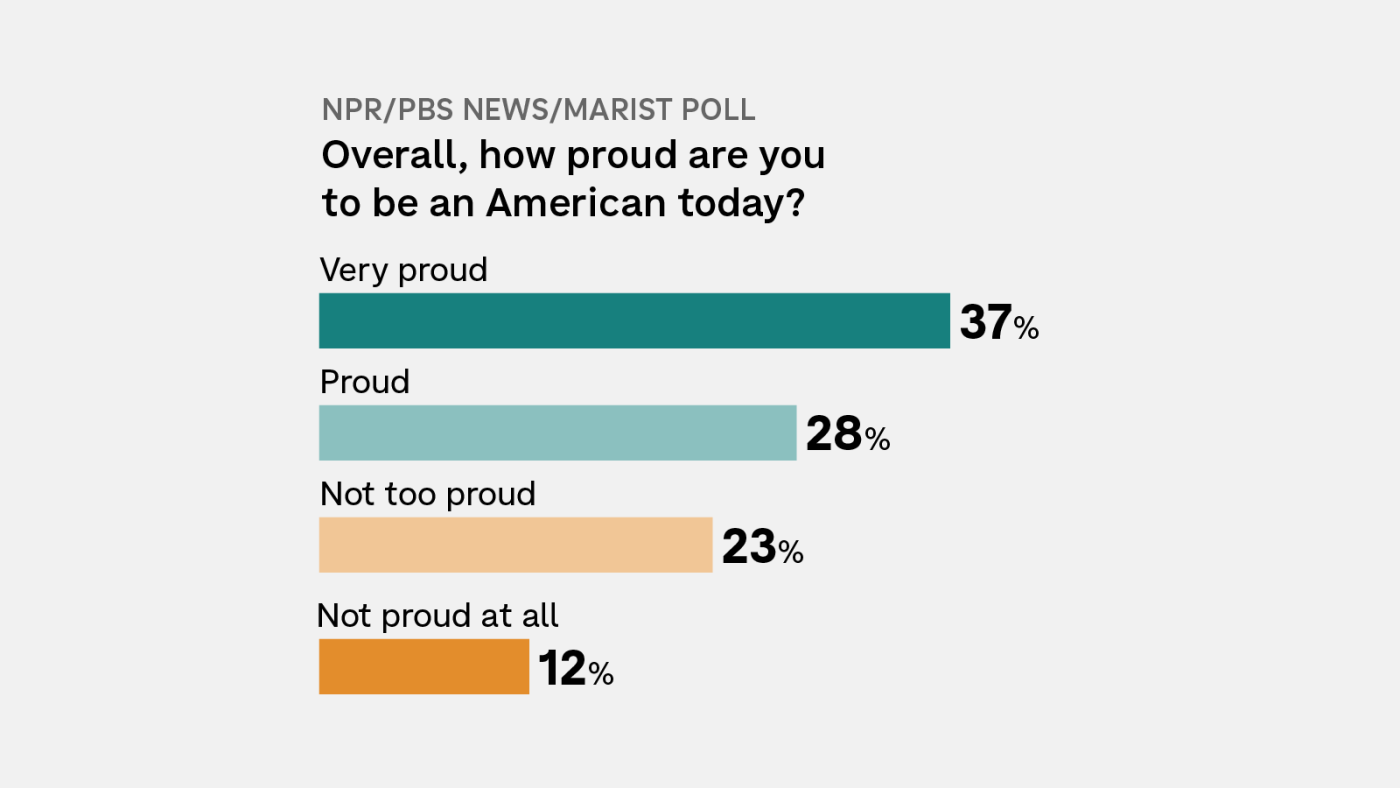
A nationwide NPR/PBS News/Marist poll of 1,340 adults conducted June 8–11 (±3.0 percentage points) finds most Americans say they are proud to be American, while substantial shares express concern about the country's direction. Key findings: 35% said they are not proud to be American; about 83% say the country has moved away from its founding principles (roughly 50% say it has moved "far" away, 36% "somewhat," and 16% say it still represents those principles). Responses vary by party, age and other demographics: Democrats are far more likely than Republicans to say the nation has moved away from founding principles, and younger generations are modestly more likely than older generations to say the country still aligns with those ideals. A large majority (82%) say a serious threat to democracy exists, a four-point increase since February. On support for violence as a means to "course correct," 12% strongly agree violence is needed (down from 25% in an October 2025 poll wave), while 35% disagree with using violence and only 27% strongly disagree (down from 36% previously). Most respondents nevertheless say America's best days are yet to come, yet 59% are not confident that future generations will be better off by the nation's 300th anniversary. The article supplements poll numbers with a range of interview quotes from individuals across the political spectrum.
Biblical Reflection
The poll reports widespread pride alongside deep concern — a mix of hope and anxiety. The article largely reports numbers and varied personal reactions without overt editorializing, but its selection of anecdotes can shape readers’ emotional responses. From a Christian perspective, the data reveal both opportunities and risks: the opportunity to practice patient, humble civic love toward neighbors who see the country's story differently; and the risk that fear, tribalism, or cynicism could harden into anger or justify violence. Christians should treat polls as diagnostic, not determinative — they show perceptions and pressures but do not settle moral truth. We should press for truth (accurate information, honest debate), mercy (charity toward those who feel shame or fear), and courage to pursue justice where founding ideals were never applied equally. Where the poll highlights willingness to consider violence, the Christian imperative for peace and reconciliation is urgent: to reject violence as a political solution, to advocate for lawful reform, and to embody humility and repentance when national pride blinds us to wrongdoing. Finally, Christians can help steward institutions by promoting civic virtues — truth-telling, fair process, and the common good — resisting both triumphalism and despair.
Scripture in context
This outlook does not yet include contextual Scripture citations. Do not treat a general biblical theme as an exegetical conclusion.
Faithful Response
No prescribed response is offered. Consider the reflection prompts below in your own church context.
Reflection and Discussion
- 1Whose perspectives are centering the language of 'founding principles,' and how might different histories and experiences change what those words mean?
- 2How can Christians hold legitimate patriotic affection while also confessing and working to repair injustices the nation has committed?
- 3What emotional currents (fear, shame, nostalgia, hope) in public opinion might be driving talk of violence or civic breakdown, and how should that shape our public response?
Sources
Reporting links are evidence inputs; Sanctuary News' biblical reflection is commentary.
This outlook currently relies on fewer than two linked sources. Broaden verification before teaching from it.
- 1.Original reportprimary