News Summary
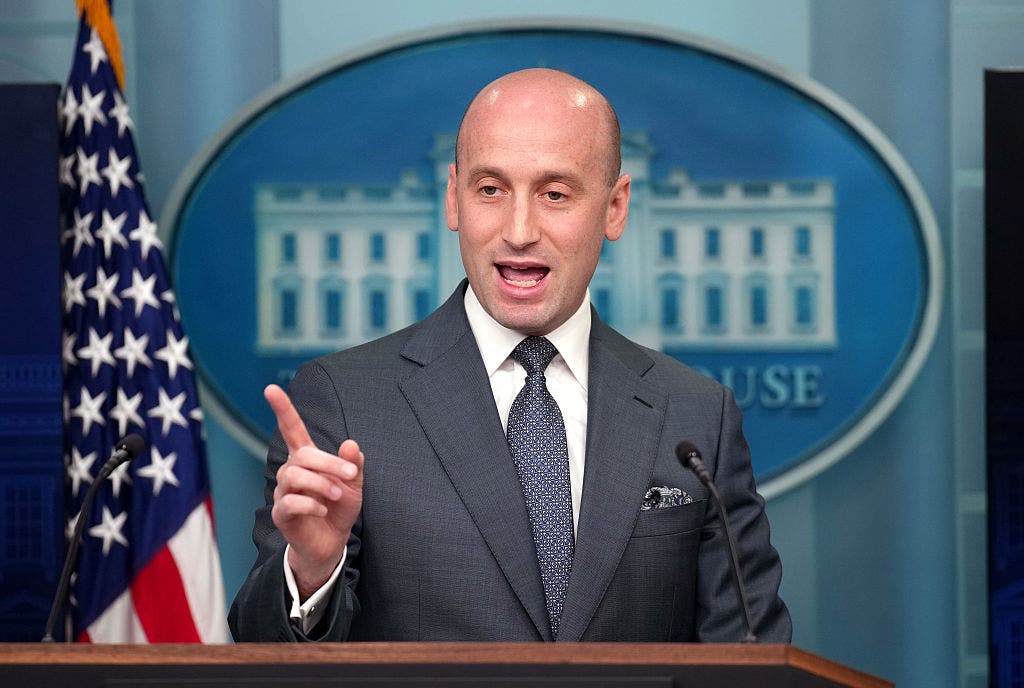
Stephen Miller, White House Deputy Chief of Staff for Policy, criticized Supreme Court Justices Amy Coney Barrett and Chief Justice John Roberts on Fox News' The Ingraham Angle after the Court issued a 5-4 decision upholding a Mississippi law that allows states to count mail-in ballots received after Election Day. Barrett authored the majority opinion, joined by Roberts, Sonia Sotomayor, Elena Kagan and Ketanji Brown Jackson, holding that federal law establishes an "Election Day" for when voters make a choice but does not prescribe when states must receive ballots. Justice Samuel Alito wrote a dissent warning the ruling could undermine trust in elections. Miller accused Roberts and Barrett of "caving to the radical left," argued the decision increases the need for federal election-integrity legislation (referencing the SAVE America Act), and expressed concern about potential voter fraud. The report notes the remarks were made on Laura Ingraham's program and credits Fox News staff contributors.
Biblical Reflection
This report is a political commentary built around a recent Supreme Court decision and a partisan reaction. The factual elements—who wrote and joined the opinions, the Court's holding about what federal law does and does not specify, and Alito's dissent—are reportable legal facts. Miller's statements are opinionated and framed to advance a policy priority (stronger federal ballot rules) and to mobilize political support; phrases like "caving to the radical left" are rhetorical and intended to polarize. From a Christian perspective, two responsibilities stand out: first, to seek truth and base claims on evidence rather than inflammatory language; second, to care for civic institutions by promoting both accountability and trust. Concerns about election integrity merit sober attention and lawful remedies, but Christians should resist amplifying fear or partisan labels without substantiation. The rule of law and impartial adjudication are important for neighbor-love and social stability; advocating for clearer, lawfully enacted standards is more constructive than personal attacks on judges. Prayful engagement includes advocating for justice and transparency while speaking with humility, pursuing facts, and working for the common good rather than partisan triumph.
Scripture in context
This outlook does not yet include contextual Scripture citations. Do not treat a general biblical theme as an exegetical conclusion.
Faithful Response
No prescribed response is offered. Consider the reflection prompts below in your own church context.
Reflection and Discussion
- 1Are the claims about widespread fraud supported by verifiable evidence, or are they primarily rhetorical cues that deepen partisan mistrust?
- 2How can Christians advocate for clearer, fair election rules without contributing to polarization or undermining confidence in legal institutions?
- 3When a court decision leaves gaps for legislatures to fill, whose responsibility is it to pursue solutions—and how should Christians participate in that process?
Sources
Reporting links are evidence inputs; Sanctuary News' biblical reflection is commentary.
This outlook currently relies on fewer than two linked sources. Broaden verification before teaching from it.
- 1.Original reportprimary